






Definition and Purpose of Rule 17.200—Form 208
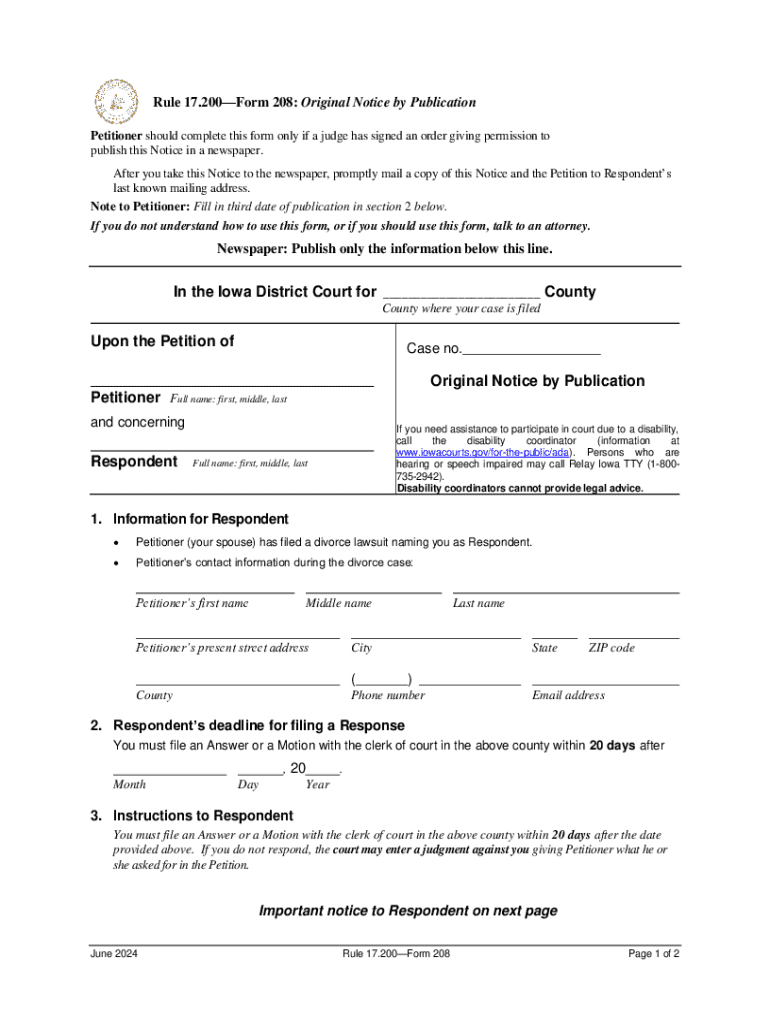
Rule 17.200—Form 208, known as the "Original Notice by Publication," is a crucial legal document used in divorce cases in Iowa. Its primary purpose is to notify a respondent of a legal action when their whereabouts are unknown. The form serves the function of a legal notice, making the public aware of the proceedings, and ensuring due process is followed. By publishing the notice in a newspaper, the court facilitates the notification process when traditional methods such as personal delivery are not viable.
How to Use Rule 17.200—Form 208
Using Rule 17.200—Form 208 involves a series of steps that must be meticulously followed to ensure compliance. The petitioner must first obtain court permission to publish the notice. Once granted, the notice is published in a newspaper, typically one that circulates within the county where the legal proceedings are taking place. This publication acts as a substitute for personal service.
- Petition the court for permission to use the form.
- Choose a newspaper for publication, ideally one with broad reach in the relevant area.
- Draft the notice in compliance with legal requirements, ensuring all pertinent details of the case are included.
- Submit the notice for publication.
Steps to Complete Rule 17.200—Form 208
Completing Rule 17.200—Form 208 requires attention to detail and adherence to specific guidelines:
- Obtain Court Approval: Seek approval from the court to utilize the notice by publication, demonstrating that other means of notification have been exhausted.
- Select a Newspaper: Determine which newspaper will publish the notice, considering factors like reach and publication frequency.
- Draft the Notice: Utilize a standard template to draft your notice, ensuring it includes all necessary information, such as the names of the parties involved and the nature of the proceedings.
- File with the Newspaper: Submit the notice to the chosen publication, adhering to any deadlines or submission guidelines they might have.
- Proof of Publication: Obtain a certificate of publication from the newspaper, which serves as evidence that the notice has been published.
Why Should You Use Rule 17.200—Form 208?
Rule 17.200—Form 208 is vital when the petitioner cannot otherwise locate the respondent. It ensures that the legal process remains fair and transparent, allowing the respondent an opportunity to participate in the proceedings. Using this form fulfills legal obligations and helps move the case forward without unnecessary delays. This approach is often a last resort after other means of delivering notice have failed.
Key Elements of Rule 17.200—Form 208
Several key elements must be included when preparing Rule 17.200—Form 208:
- Case Information: Details about the court case, including docket numbers and the involved parties.
- Publication Details: The name and location of the newspaper where the notice will appear.
- Service Information: A clear outline of how the notice serves the role of informing the respondent.
Legal Use and Implications
The legal use of Rule 17.200—Form 208 encompasses several critical aspects:
- Sanctioned by Court: Usage of the form must be sanctioned by the court, confirming it as a legitimate method of serving notice.
- Facilitates Legal Compliance: Ensures that all parties involved understand their rights and responsibilities, maintaining the integrity of the legal process.
State-Specific Regulations
While Rule 17.200—Form 208 is specific to Iowa, similar notices are used in other states, each with its own regulations. Understanding the nuances that apply within Iowa’s jurisdiction is crucial:
- Publication Timing: Specific timelines for how long the notice must be published vary by locality.
- Format Specifications: Requirements regarding the format and content of the notice are dictated by Iowa statutes.
Who Typically Uses Rule 17.200—Form 208?
Rule 17.200—Form 208 is primarily used by petitioners in legal divorce proceedings when the respondent cannot be located. Lawyers, legal aides, and paralegal professionals frequently handle the completion and submission of this form on behalf of their clients. It is a crucial tool within family law, often employed when other avenues of contact are unavailable or impractical.
Examples and Practical Scenarios
Real-world scenarios where Rule 17.200—Form 208 is used include instances of:
- Absentee Respondents: Cases where a respondent's location is unknown due to relocation or abandonment.
- Urgent Proceedings: Situations where timely notification is critical to the judicial process, often necessitating publication to maintain procedural momentum.
This comprehensive overview outlines the critical aspects of Rule 17.200—Form 208, guiding users through its purpose, implementation, and legal implications. Understanding the importance of this form ensures that individuals and legal practitioners effectively navigate its requirements for successful legal proceedings.