






Definition and Meaning of Legionnaires' Disease Control Guideline
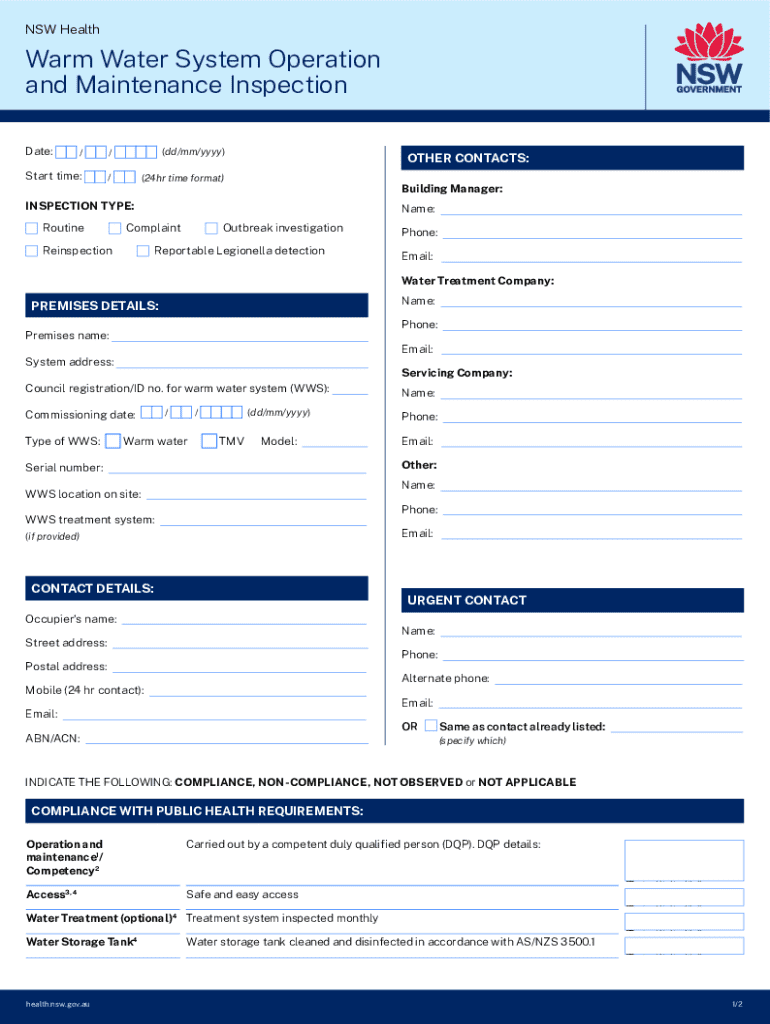
The Legionnaires' disease control guideline, as issued by NSW Health, is an essential protocol designed to prevent and manage the risk of Legionnaires' disease, a severe form of pneumonia caused by the Legionella bacteria. This guideline provides a comprehensive framework for maintaining and monitoring water systems, particularly warm water systems, to minimize the proliferation of Legionella. Key elements include routine inspections, maintenance standards, and testing procedures that align with public health regulations.
Importance of Monitoring Water Systems
- Routine Inspections: Regular monitoring ensures that water systems comply with safety standards.
- Maintenance Standards: Guidelines specify practices to effectively manage system cleanliness and functionality.
- Testing Procedures: Frequent testing helps in early detection and prevention of Legionella growth.
How to Use the Legionnaires' Disease Control Guideline
Implementing the guideline effectively requires understanding its core components and integrating them into regular operational procedures. Entities responsible for water systems must adhere to outlined steps to maintain compliance and reduce health risks.
Key Steps for Compliance
- Assessment of Water Systems: Begin with identifying and evaluating all water systems prone to Legionella contamination.
- Implementation of Management Plans: Develop comprehensive water management plans according to the guideline's standards.
- Regular Testing and Documentation: Ensure engagements in scheduled inspections and properly document all processes and outcomes.
Steps to Complete Compliance with Guidelines
Adhering to the guideline involves following structured processes to ensure all necessary actions are taken for effective Legionella control. This step-by-step approach solidifies both preventive and corrective measures.
Process Overview
- Identification of Risk Areas: Assess and earmark high-risk zones within systems.
- Implementation of Control Measures: Initiate corrective actions and continuous monitoring.
- Documentation: Keep detailed records of all maintenance and testing activities to guarantee accountability and traceability.
Key Elements of the Legionnaires' Disease Control Guideline
The guideline is built upon several fundamental components that collectively form a robust framework for controlling Legionella risks. Understanding these elements is crucial for executing the program effectively.
Primary Components
- Regular Inspections: Schedule systematic examinations to identify potential breeding grounds for bacteria.
- Thermal Treatment Solutions: Use heat treatments as a primary method to control bacterial growth.
- Chemical Treatment Methods: Utilize approved chemicals in the eradication and control of bacteria within water systems.
Important Terms Related to the Guideline
Familiarity with key terminology associated with the Legionnaires' disease control guideline enhances comprehension and execution.
Essential Terms and Definitions
- Legionella: Bacteria responsible for causing Legionnaires' disease.
- Warm Water Systems: Systems that utilize heated water, often susceptible to bacterial growth.
- Monitoring: Routine surveillance and assessment to prevent contamination.
State-Specific Rules and Considerations
While the guideline is issued by NSW Health, it's vital to note any similar adaptations within the United States that may modify compliance requirements.
Understanding U.S. Regulations
- Federal vs. State Regulations: Awareness of both federal and specific state regulations affecting Legionella control.
- Adaptability: Potential modifications to align with U.S. standards and practices.
Examples of Using the Legionnaires' Disease Control Guideline
Real-world scenarios illustrate the application of the guideline in various operational settings. These examples underscore the importance of diligent adherence.
Practical Scenarios
- Hospital Facilities: Implementation to prevent outbreaks in healthcare settings where patients have heightened vulnerability.
- Office Buildings: Use in large buildings to maintain safe occupational environments.
- Retirement Homes: Application to protect elderly residents who are at higher risk of severe symptoms.
Penalties for Non-Compliance
Non-adherence to the Legionnaires' disease control guideline can result in penalties that underscore the necessity of rigorous compliance.
Potential Consequences
- Fines and Legal Action: Financial and legal repercussions for failing to comply with established safety measures.
- Public Health Threats: Elevated risk of widespread illness in cases of negligence and inadequate operational controls.
Software Compatibility and Integration
To facilitate adherence and documentation, employing compatible software systems can streamline processes associated with guideline compliance.
Technology Solutions
- Document Management Software: Tools like DocHub that allow for editing, annotating, and securely managing compliance paperwork.
- Digital Forms: Integration of digital templates for efficient data collection and processing.
Each block includes thorough explanations, examples, and processes, ensuring the content is comprehensive and practical for users navigating compliance with the Legionnaires' disease control guideline.