






Definition and Purpose of the Athens Campus Enrollment Plan
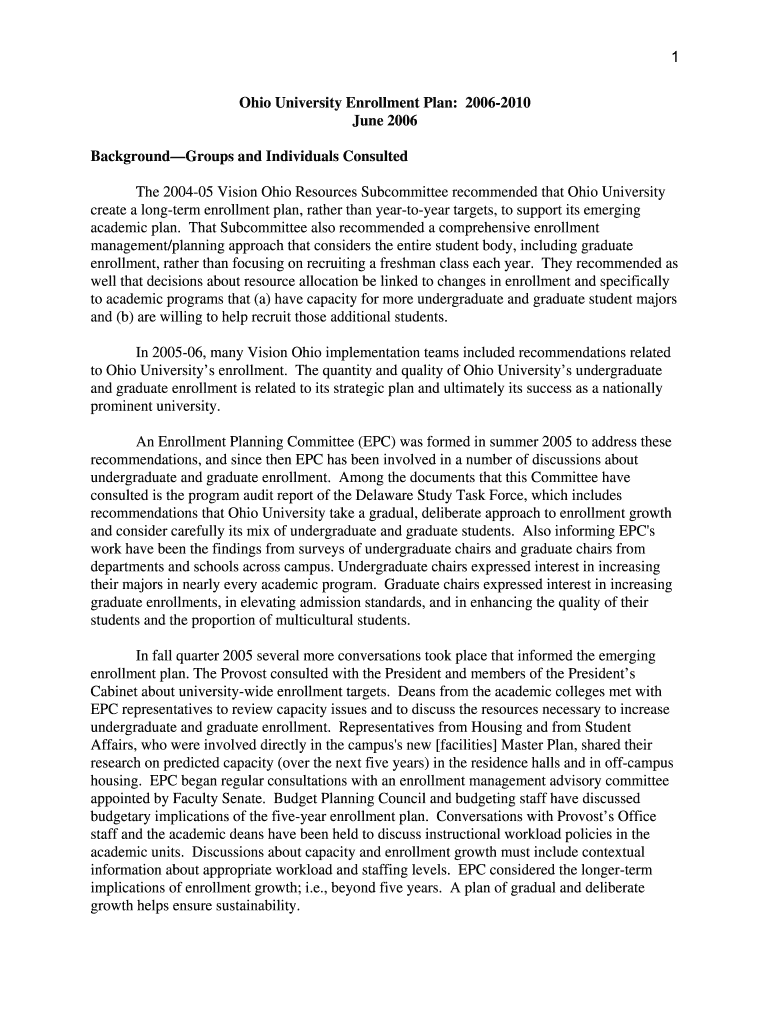
The Athens Campus Enrollment Plan - Ohio University is a strategic document aimed at guiding the increase of student enrollment numbers on campus. The plan is structured to achieve sustainable growth through careful planning and resource management. It details the methodologies for increasing both undergraduate and graduate student populations while aligning these goals with academic capacities and institutional resources. The emphasis is on a balanced approach that supports diversity, retention, and academic excellence.
Key Objectives of the Enrollment Plan
- Gradual increase in student enrollment to ensure resource sustainability.
- Enhancement of student diversity across the university.
- Improvement in student retention rates through targeted strategies.
- Development of a scholarship framework to support increased enrollment.
- Addressing infrastructure needs to accommodate growing student numbers.
Steps to Complete the Enrollment Plan
To effectively utilize the Athens Campus Enrollment Plan, there are several crucial steps that stakeholders must follow:
- Review the Document: Begin by thoroughly reading the entire document to understand its goals and strategies.
- Stakeholder Consultation: Engage with various stakeholders, including academic departments and administrative units, to gather input and ensure alignment.
- Resource Assessment: Evaluate current academic program capacities and identify necessary resources to support increasing enrollment.
- Strategy Development: Develop targeted initiatives to enhance diversity and retention as outlined in the plan.
- Implementation Timeline: Establish a timeline for implementing the strategies, ensuring that each phase aligns with academic and fiscal calendars.
- Monitoring and Evaluation: Set up a system for ongoing monitoring and evaluation to track progress and make necessary adjustments.
Benefits of Implementing the Enrollment Plan
Implementing this enrollment plan provides several advantages to Ohio University and its stakeholders:
- Sustainability: Ensures that growth aligns with available resources and institutional goals, aiding in long-term sustainability.
- Diversity: Promotes an inclusive campus environment by actively increasing student diversity.
- Academic Excellence: Aligns enrollment targets with academic capacities to maintain high educational standards.
- Resource Optimization: Allocates academic and physical resources efficiently to support increased student numbers.
Important Terms and Definitions
Understanding specific terminology within the Athens Campus Enrollment Plan is critical for effective implementation:
- Enrollment Capacity: The maximum number of students that can be accommodated in a given academic year based on available resources.
- Stakeholders: Individuals or groups with a vested interest in the enrollment process, including faculty, staff, and students.
- Retention Rate: The percentage of students who continue their studies from year to year within the university.
- Infrastructure Needs: Physical and technological improvements required to support increased enrollment.
Eligibility Criteria for Enrollment
The plan outlines who is eligible for the enrollment process within the strategic framework it establishes:
- Undergraduate and Graduate Students: Initially focuses on prospective and current students who meet Ohio University’s academic requirements.
- International Students: Includes strategies for increasing international student enrollment while ensuring compliance with visa and admission standards.
- Non-Traditional Students: Accommodates part-time learners, adult students, and those returning to education after a break.


Compliance and Legal Considerations
Legal compliance is a critical aspect of the Athens Campus Enrollment Plan:
- Regulatory Alignment: Ensures that enrollment strategies comply with federal and state educational regulations.
- Data Protection: Adheres to data protection laws, safeguarding personal information of applicants and students.
- Non-Discrimination Policies: Compliance with anti-discrimination laws to ensure equal opportunity in the enrollment process.
State-Specific Rules and Variations
While the Athens Campus Enrollment Plan primarily applies to Ohio University, certain state-specific rules may influence its implementation:
- Ohio Educational Standards: The plan must comply with state educational mandates and funding requirements.
- State Grants and Funding: Opportunities available through state-level financial aid programs may support enrollment goals.
- Regional Demographics: Strategies may be adapted based on regional demographic trends within Ohio.
Monitoring and Evaluation of the Plan
An essential aspect of the plan involves ongoing monitoring and evaluation to ensure goals are being met:
- Performance Metrics: Establish key performance indicators (KPIs) related to enrollment numbers, diversity increases, and retention rates.
- Feedback Mechanisms: Implement systems for collecting feedback from stakeholders to inform ongoing improvements.
- Periodic Reviews: Conduct regular reviews and updates of the plan to remain responsive to changing educational landscapes and institutional needs.