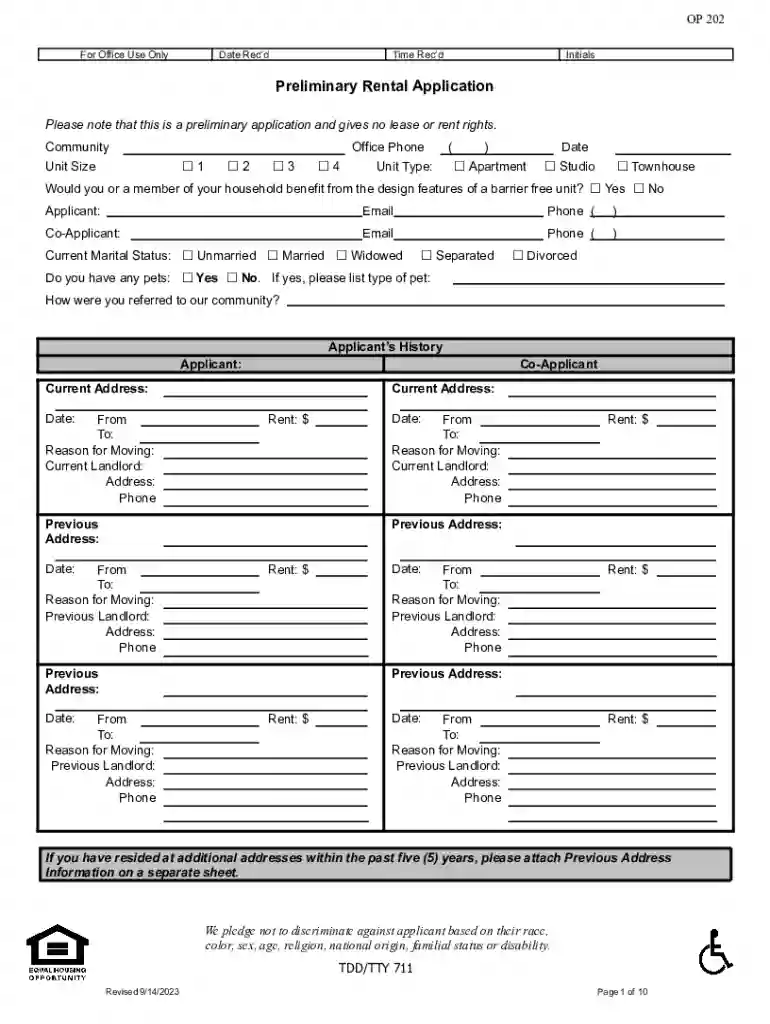
Definition and Purpose of the Preliminary Rental Application
A Preliminary Rental Application serves as an initial step in the rental application process by collecting essential information from potential tenants. It is designed to capture comprehensive details about the applicant's background to assist landlords and property managers in assessing their suitability for tenancy. This preliminary document emphasizes the gathering of personal, financial, and housing history data to facilitate informed decision-making while ensuring adherence to fair housing laws. It is crucial for landlords to screen applicants and evaluate their ability to meet rental obligations responsibly.
Essential Components of the Application
- Applicant Information: Includes personal details such as name, date of birth, and contact information.
- Employment History: Captures current and past employment details, including employer names, contact numbers, and length of employment.
- Income Sources: Requires documentation or statements that verify the income and financial stability of the applicant.
- References: Involves providing personal or professional references that can vouch for the applicant’s character and reliability.
- Consent for Background Checks: Requests authorization to perform criminal history checks and credit report inquiries to ensure trustworthiness.
By compiling this information, property managers and landlords can make preliminary evaluations of potential tenants before proceeding to the final stages of the rental process.
Steps to Complete the Preliminary Rental Application
Filling out a Preliminary Rental Application involves several key steps, each aimed at providing a well-rounded view of the applicant's suitability for tenancy.
- Gather Required Information: Before starting the application, collect all necessary documents, including identification, proof of income, and employment history.
- Complete Personal Details: Fill in sections that require basic information such as name, phone number, and address.
- Provide Employment and Income Information: List current and previous employers, including contact details, and provide proof of income such as pay stubs or tax returns.
- List References: Include personal or professional references who can provide insight into the applicant's character.
- Authorize Consent for Background Checks: Sign the necessary sections that allow the landlord to conduct credit and criminal history checks.
- Review and Submit: Double-check the information for accuracy before submitting the form to the property owner or manager.
Important Considerations
- Accuracy: Ensure all information is accurate and current to avoid delays in processing.
- Completeness: Fill in all mandatory fields to prevent the application from being rejected due to incomplete information.
- Honesty: Provide truthful information, as background checks will verify the data submitted.
Typical Users
- Prospective Tenants: Including individuals or families who intend to rent a house, apartment, or condo.
- Landlords and Property Managers: Professionals responsible for managing rental properties and evaluating potential tenants for their properties.
- Real Estate Agents: Sometimes involved in facilitating the rental process on behalf of landlords or prospective tenants.
By utilizing this application, landlords can better understand a tenant's reliability and potential risk, making it a critical tool in property management.
Legal Use of the Preliminary Rental Application
Legal compliance is an essential aspect of collecting and using the information provided in the Preliminary Rental Application.
Legal Protections and Obligations
- Fair Housing Laws: The application must comply with federal, state, and local fair housing laws, which prohibit discrimination based on race, color, sex, age, religion, national origin, familial status, or disability.
- Privacy Laws: Applicants' personal information must be handled in accordance with privacy laws to ensure confidentiality and security.
- Consent for Background Checks: Legal authorization to perform credit and criminal history checks must be obtained, usually through a signed consent form.
Landlords using the Preliminary Rental Application are obligated to follow these legal guidelines to avoid legal repercussions and disputes.
Key Elements of the Preliminary Rental Application
The application is composed of various sections that capture a detailed overview of the applicant’s background and financial situation.
Sections and Features
- Personal Information: Collects details such as name, address, and contact information.
- Employment and Income: Documents employment history and current income sources to assess financial stability.
- Rental History: Examines previous rental experiences, including any issues or commendations.
- References: Includes personal or professional contacts for character verification.
- Background Checks: Seeks consent for credit and criminal history checks to evaluate the applicant’s reliability.
These key elements allow landlords to conduct a thorough evaluation of potential tenants, ensuring only qualified individuals proceed to the final stages of the rental process.
State-Specific Rules for Preliminary Rental Application
Rental application processes and requirements can vary significantly depending on state laws and regulations.
Regional Variations
- Consent Laws: States may have different requirements for obtaining consent for credit and background checks.
- Disclosure Requirements: Certain states might require additional disclosures within the application process.
- Fees and Charges: Some states limit the amount a landlord can charge for the application process.
Understanding these state-specific rules is critical for both landlords and tenants to ensure compliance with local regulations and avoid potential legal issues.
Examples of Using the Preliminary Rental Application
Real-world applications of the Preliminary Rental Application can illustrate its utility in various scenarios.
Practical Scenarios
- First-time Renters: Individuals with no previous rental history can use the application to provide detailed employment and character references.
- Multi-Family Applications: When more than one tenant, such as a couple or roommates, applies together, ensuring all applicants fill out sections appropriately clarifies joint financial responsibility.
- High-Value Rentals: For properties with premium rents, detailed financial and employment histories can offer peace of mind to landlords regarding the tenant's ability to afford the property.
These examples show how the Preliminary Rental Application functions in varied contexts, providing landlords with the information needed to make informed decisions.
Form Variants and Alternatives
Some property managers may encounter different versions or alternatives to the Preliminary Rental Application.
Options and Variations
- Digital vs. Paper Forms: Applications can be completed electronically or on paper, each offering unique advantages such as ease of sharing or wider accessibility.
- Form Specifics: Minor variations might exist in the form structure or questions asked, depending on regional regulations or landlord preferences.
Recognizing these variations can help tenants and landlords adapt to different application processes efficiently.