






Understanding the Cottage Owner Rental Agreement 2019
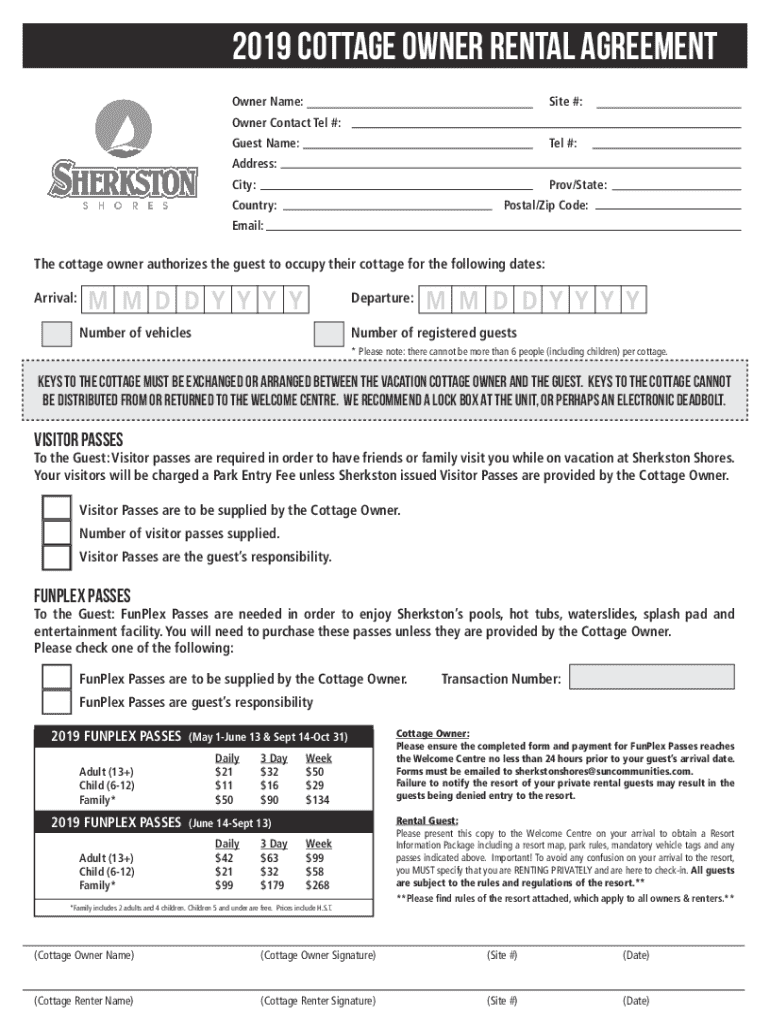
This section provides a comprehensive overview of the Cottage Owner Rental Agreement from 2019. This document serves as a formal contract outlining the terms and conditions for renting a cottage, ensuring clarity and mutual understanding between the owner and the renter.
- Contractual Purpose: The agreement aims to establish legal responsibilities and expectations, including rental logistics and property use.
- Content Overview: The document typically covers essential information such as owner and guest details, rental dates, and property limits.
Steps to Complete the Cottage Owner Rental Agreement 2019
Completing the Cottage Owner Rental Agreement 2019 involves several key steps to ensure accuracy and compliance. Follow these steps for a streamlined process:
- Gather Required Information: Collect details about the owner, guests, rental dates, and any additional specifications, such as vehicle allowances.
- Fill Out Personal Details: Enter the contact information for both the owner and the guests, ensuring all details are current.
- Provide Rental Dates: Specify the start and end dates of the rental period to prevent misunderstandings.
- Outline Property Use: Detail the number of guests and vehicles allowed, aligning with property limitations.
- Sign and Date the Agreement: Upon completion, all parties should review, sign, and date the document to affirm their understanding and commitment.
Key Elements of the Cottage Owner Rental Agreement 2019
Understanding the core components of this rental agreement is crucial for effective use and compliance:
- Owner and Guest Information: Critical for legal identification and communication purposes.
- Rental Duration: Clearly specifies the occupancy period to set clear tenancy expectations.
- Property Regulations: Indicates rules for vehicle and guest limits, as well as any additional restrictions.
- Pricing and Payment: Includes costs associated with the rental and pricing for any provided amenities, such as FunPlex passes.
- Security Protocols: Details the key exchange process, ensuring security and accessibility.
Legal Obligations and Use
Understanding the legal use of this agreement helps in maintaining compliance within applicable U.S. laws:
- Legally Binding Nature: Once signed by both parties, this agreement serves as a legally binding document.
- Compliance Requirements: Both parties must adhere to the outlined terms to avoid potential legal disputes.
- Importance of Notification: Emphasizes the need for notifying the resort management to ensure proper guest admission and security.
Advantages of Using the Cottage Owner Rental Agreement 2019
Using this rental agreement offers multiple benefits to both cottage owners and guests:
- Clear Expectations: Sets defined terms for use, which reduces the likelihood of disputes.
- Data Security: Ensures personal and financial information is safely managed through protected document practices.
- Flexibility in Terms: Allows users to outline specific conditions tailored to individual needs.
Who Typically Uses the Cottage Owner Rental Agreement 2019
This document is predominantly used by:
- Cottage Owners: Individuals or entities renting out properties to guests.
- Tenants or Guests: Persons seeking short-term accommodations in a cottage setting.
- Property Managers: Professionals managing multiple rentals on behalf of owners.


Common Terms and Conditions Explained
To alleviate confusion, here are explanations for common terms found in the 2019 agreement:
- Guest Limits: Maximum number of occupants allowed to avoid overcrowding.
- Key Exchange Procedure: Defines how keys are distributed to renters to ensure security.
- FunPlex Pass Requirement: Optional amenity providing access to recreational facilities, listed along with associated costs.
State-Specific Guidelines for Cottage Rentals
Though the core components of the rental agreement remain consistent, state-specific variations may affect its implementation:
- Local Regulations: Certain states might have unique requirements regarding taxation or visitor limits.
- Environmental Considerations: Some regions may enforce policies related to environmental preservation or noise control.
- Zoning Laws: Different areas could stipulate alternative zoning laws affecting rental agreements.