
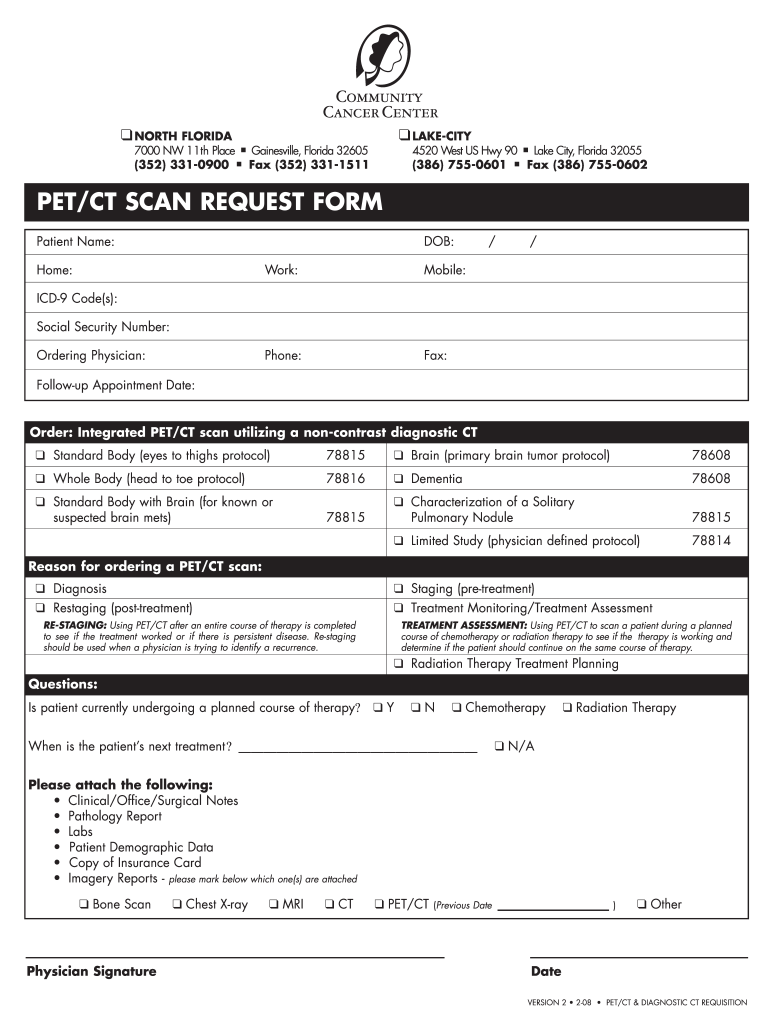







Overview of the CT Scan Request Form
The CT scan request form is a critical document utilized by healthcare providers to authorize diagnostic imaging services. Through this form, practitioners can communicate essential patient information and specific scan requests to imaging facilities. Accurate completion of the form ensures that the right procedure is conducted for the patient's needs, and it facilitates effective communication between referring physicians and radiology departments.
Key Elements of the CT Scan Request Form
The structure of a typical CT scan request form is designed to capture all pertinent information necessary for processing the imaging request accurately:
-
Patient Information: This includes the patient's full name, date of birth, contact details, and insurance information. Gathering complete patient data helps in identifying the individual and confirming eligibility for insurance coverage.
-
Ordering Physician Details: The physician's name, contact number, and medical practice information must be included. This information allows radiologists and staff to reach out for any clarifications regarding the request.
-
Specific Scan Types: The form should clearly specify which type of CT scan is being ordered, such as abdomen, pelvis, chest, or specialized scans like CT angiography. This precision guides the imaging facility in preparing for the procedure accordingly.
-
Purpose of the Scan: The reason for ordering the scan needs to be documented. Common reasons may include assessing a suspected condition, monitoring a known disease, or conducting a routine check-up.
-
Attachments Required: Often, the form requires additional documentation such as clinical notes or prior imaging results. This information can be crucial for ensuring the thorough evaluation of the patient's condition.
Steps to Complete the CT Scan Request Form
Properly completing the CT scan request form involves several key steps:
-
Gather Patient and Physician Information: Ensure that the patient's and ordering physician's information is accurate. This reduces the risk of delays in processing the scan.
-
Select the Type of Scan: Indicate the specific scan type required. Familiarizing yourself with common CT scans can be helpful. For instance, if assessing for cancer, a chest CT might be indicated.
-
State the Purpose Clearly: Clearly articulate why the scan is necessary. Detailed notes can provide imaging personnel context that may assist in interpreting the results later.
-
Attach Required Documents: Include any necessary clinical notes or previous imaging that may be relevant for a comprehensive evaluation.
-
Review for Accuracy: Before submitting the form, review all entries for completeness and accuracy to prevent any processing issues later.
Legal Use of the CT Scan Request Form
The CT scan request form has legal implications, particularly in terms of patient consent and insurance processing. Healthcare providers must ensure that they comply with pertinent regulations, including:
-
Patient Authorization: Obtaining patient consent for the procedures is vital. The form often requires a section for the patient’s signature, indicating they understand and agree to the requested imaging services.
-
Insurance Verification: The information provided on the form is used for insurance claims, so accuracy is essential to avoid issues with reimbursement.
State-Specific Rules for the CT Scan Request Form
Regulations governing the use of CT scan request forms can vary by state. Healthcare providers must be aware of these differences to ensure compliance. Key considerations may include:
-
Documentation Requirements: Certain states might mandate specific documentation or additional forms to be submitted alongside the CT scan request.
-
Insurance Guidelines: Each state can have different rules regarding insurance coverage for CT scans, often influenced by local healthcare regulations or payer requirements.
Examples of Using the CT Scan Request Form
Real-world applications of the CT scan request form illustrate its importance. Consider the following scenarios:
-
Referral from Primary Care: A patient is referred by their primary care physician for a chest CT scan to evaluate potential lung disease. The physician completes the form, specifying indications such as persistent cough and unexplained weight loss.
-
Emergency Situations: In an emergency department, a CT scan request form is filled out quickly to assess a patient for possible internal injuries after a car accident. The urgency dictates careful attention to the required fields without compromising thoroughness.
-
Routine Screening: For patients with a familial risk of certain conditions, a healthcare provider may order periodic CT scans to monitor changes over time. Documentation on the request form can guide future assessments.
Emphasizing clarity, accuracy, and legal compliance in the CT scan request form streamlines the imaging process and enhances patient care. Proper use of this form not only assists in efficiently obtaining diagnostic services but also safeguards the legal and clinical interests of both patients and providers.




