Definition and Meaning
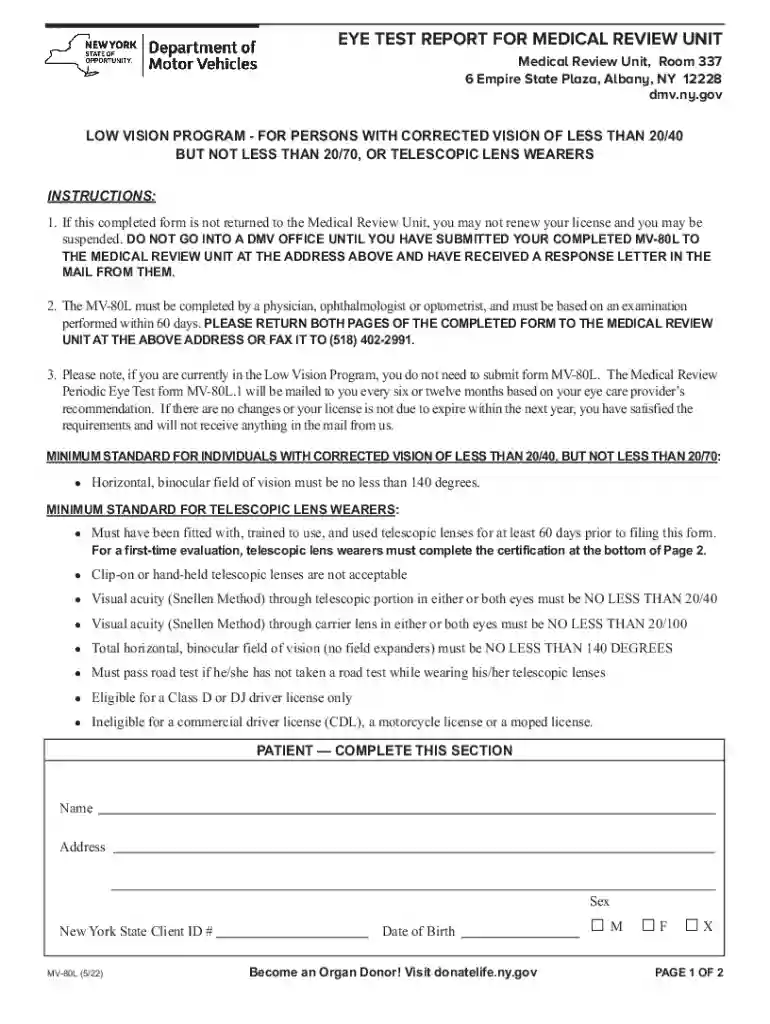
The Eye Test Report for Medical Review Unit is a specialized form required for individuals in New York who need to undergo a vision assessment due to low vision or the use of telescopic lenses. The form, identified as MV-80L, is completed by a qualified eye care professional based on the results of a recent eye examination. This document serves to verify compliance with specific visual acuity and field of vision requirements mandated for certain medical and licensing purposes.
How to Use the Eye Test Report for Medical Review Unit
Using the Eye Test Report involves several steps that ensure the form is completed accurately and submitted correctly:
- Schedule an Eye Exam: Arrange an appointment with a qualified optometrist or ophthalmologist to assess your vision.
- Complete the Form with a Professional: During your appointment, the eye care professional will fill out the MV-80L based on the examination results.
- Review for Accuracy: Before leaving the appointment, verify that all sections are completed and correct.
- Submit the Form: Follow the specific instructions given for submission, whether it's to a driving license authority or another relevant body.
Steps to Complete the Eye Test Report for Medical Review Unit
Completing this form requires careful attention to detail and adherence to prescribed steps:
- Patient Information: Enter personal details, including name, address, contact information, and any unique identifiers such as a driver's license number.
- Vision Assessment: The eye care professional will document the results of your vision test, indicating levels of visual acuity and field of vision.
- Professional Certification: The optometrist or ophthalmologist must certify the results by signing and providing their credentials, including license number.
- Additional Notes: If applicable, the professional may add commentary on any specific conditions or optometric recommendations.
Key Elements of the Eye Test Report for Medical Review Unit
Several crucial components must be included in the Eye Test Report for it to be considered valid:
- Patient's Visual Acuity: Documented in detail, indicating both the clarity of vision with and without corrective lenses.
- Field of Vision: Specifics on the patient's peripheral vision range.
- Use of Telescopic Lenses: Any reliance on telescopic lenses for improved vision must be noted.
- Eye Care Professional's Information: Essential credentials and contact details of the professional completing the form.
State-Specific Rules for the Eye Test Report for Medical Review Unit
While the Eye Test Report is focused on New York's requirements, understanding state-specific rules can help optimize its use:
- Minimum Visual Standards: Each state may have slightly varying requirements for visual acuity and field of vision. In New York, adherence to detailed standards as outlined in the MV-80L is mandatory.
- Renewal Protocols: Certain states might require periodic re-assessment, especially for individuals with rapidly changing vision conditions.
Examples of Using the Eye Test Report for Medical Review Unit
Practical scenarios where this form is applicable include:
- License Renewal for Low Vision: An individual nearing license renewal time who has been diagnosed with progressive vision issues.
- New Driver's Application: A young driver with a congenital vision condition requiring official documentation for initial licensing.
- Vision-based Restriction Amendments: Removal or addition of driving restrictions based on changes in visual capabilities.
Required Documents
To complete the Eye Test Report effectively, several documents may be necessary:
- Previous Vision Reports: If available, to provide a history of the individual's vision changes.
- Driver’s License: For identification and correlation purposes.
- Prescription Details: Current prescriptions for corrective lenses, if applicable, to verify the use of corrective measures.
Submission Methods: How to Submit the Eye Test Report
Understanding submission options allows for smooth processing:
- Online Submissions: Certain administrative bodies may offer online submission through secure portals.
- Postal Mail: If not available online, mailing in the completed form is a standard approach.
- In-Person: Presenting the form directly to a local DMV office might be required for immediate processing or adjustments.
In summary, the Eye Test Report for Medical Review Unit is an essential document for New Yorkers with low vision or telescopic lenses, ensuring compliance with state regulations and supporting the safe authorization of driving privileges.