Definition & Meaning
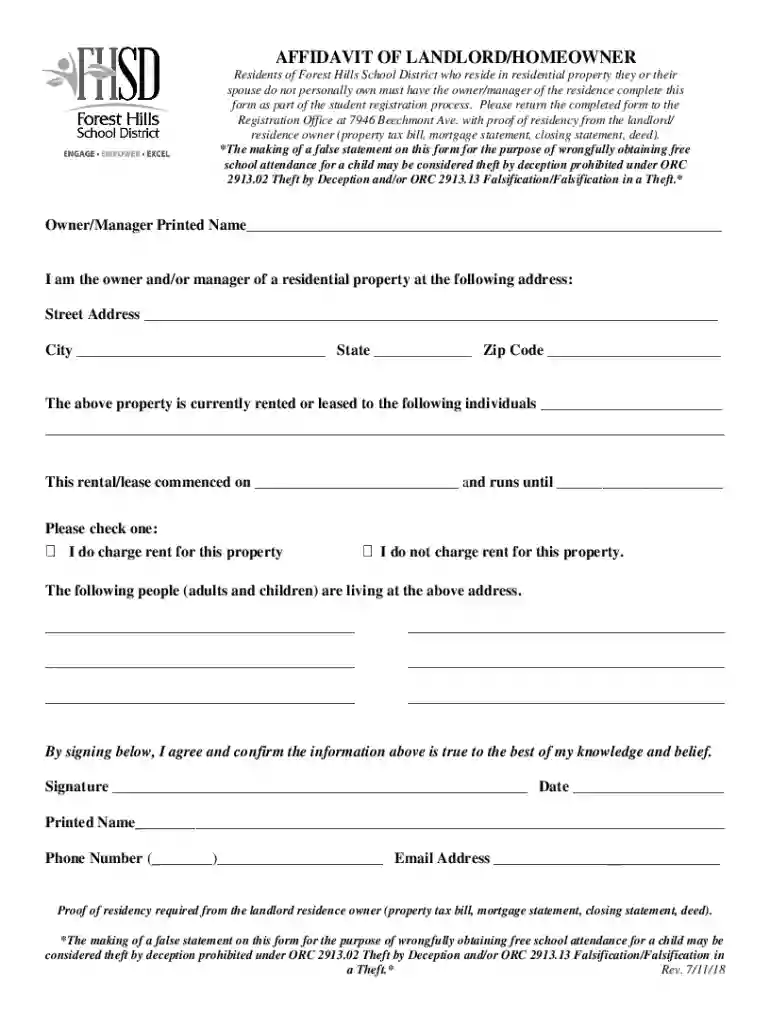
The "Affidavit of Landlord Homeowner - Forest Hills School" is a legal document required for residents within the Forest Hills School District who do not own their place of residence. The primary purpose of this affidavit is to confirm a student's residency for school registration purposes when the student's family does not own the property in which they reside. The property owner or manager completes the form, providing critical details about the rental arrangement and confirming residency. False information can lead to legal consequences, emphasizing the importance of accuracy and honesty.
How to Use the Affidavit
Once you have the affidavit, it serves as a formal declaration by the homeowner or property manager, affirming the residency of a student within the school district.
- Completion: The property owner or manager accurately fills out all sections of the form, ensuring all information aligns with the rental agreement.
- Accompanying Documents: Secure additional documentation for proof of residency, such as utility bills or lease agreements, to accompany the affidavit.
- Submission: The completed affidavit is submitted to the relevant school district office during the student registration phase.
Steps to Complete the Affidavit
Completing the affidavit involves several steps, each demanding attention to detail:
- Gather Information: Collect all necessary information about the rental property, including the full address, lease details, and the names of the occupants.
- Fill Out the Form: Provide each tenant's details; ensure every detail is accurate to avoid potential verification issues..
- Verification: Have the affidavit notarized if required, attesting to the truthfulness of the claims made in the document by a legal authority.
- Attach Proof: Attach copies of supporting documents to validate residency.
- Submit to the School: Deliver the completed and notarized affidavit, along with the supporting documents, to the school district office.
Key Elements of the Form
Understanding what the affidavit comprises ensures accurate completion:
- Landlord Information: Includes the owner’s or property manager's full name, contact details, and the address of the property.
- Tenant Details: Names and relationship of each family member residing in the property, especially the student.
- Lease Agreement Summary: A brief overview of the lease terms, highlighting the length of stay and any specific agreements made.
- Confirmation Clause: The declaration of truthfulness that bears legal responsibility for the information provided.
- Signature Block: Fields for signatures of the landlord, tenant, and possibly a notary public.
Legal Use of the Affidavit
The affidavit serves a significant legal purpose:
- Verification of Residency: The school requires confirmation that the student lives within district boundaries.
- Legal Accountability: Affirms full accountability on the property owner's part for the accuracy of the information, with legal penalties for falsification.
- Protection Against Fraud: Deters misuse of school district resources by ensuring residents can only access educational resources allocated to their area.
Penalties for Non-Compliance
Failure to submit a truthful affidavit can result in:
- Immediate Rejection: The most immediate consequence is the refusal of the student's registration request.
- Potential Fines: Legal action and fines against the homeowner may arise in instances of deliberate falsification.
- Revocation of Enrollment: If fraud is discovered post-enrollment, the student may be removed from the district's schools.
Required Documents
Ensure documentation supports the residency claims:
- Proof of Address: Utility bills, lease agreements, rental receipts, or mortgage payments showing the tenant's name.
- Identification Documents: Government-issued IDs for verification of identities.
- Lease Agreement: A copy of the formal rental agreement outlining the tenant's lease terms and conditions.