






Key Elements of the Alaska Residential Lease Agreement
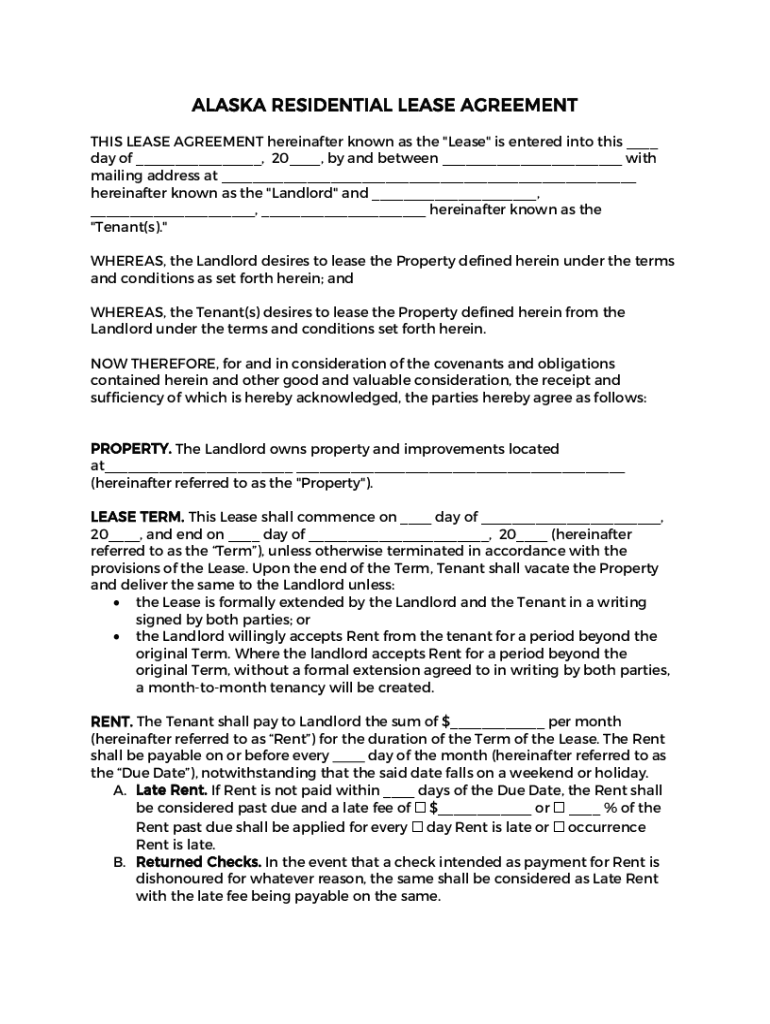
The Alaska Residential Lease Agreement is crucial for delineating the terms and conditions between a landlord and tenant. Core components include:
- Lease Term: Defines the duration of the lease, whether it's a fixed-term lease or month-to-month arrangement.
- Rent Payment: Specifies the rental amount, due date, and acceptable payment methods.
- Security Deposit: Details the amount required as a security deposit and the conditions for its return at the lease's end.
- Use of the Property: Outlines permissible uses of the rental property and any restrictions, such as business operations or subletting.
- Maintenance Responsibilities: Divides the maintenance roles and duties between the landlord and tenant, covering repairs, yard maintenance, and utilities.
Legal Compliance and Tenant Rights
Ensuring the compliance of residential lease agreements with Alaska state laws is imperative for both parties. Crucial aspects include:
- Quiet Enjoyment: Tenants are entitled to peaceful enjoyment of the property without unwarranted disturbances.
- Default and Abandonment: Procedures for handling tenant defaults on rent or abandonment of the property are clearly outlined.
- Dispute Resolution: Methods for resolving disputes, which may include mediation or arbitration, are established in the agreement.
Required Disclosures
The agreement mandates specific disclosures critical to tenant awareness and safety:
- Lead-Based Paint Warnings: For properties built before 1978, landlords must disclose known information about lead-based paint hazards.
- Occupancy Limits: Specifies the number of occupants allowed to reside in the rental property.
Steps to Complete the Alaska Residential Lease Agreement
Completing the Alaska Residential Lease Agreement involves multiple steps, ensuring thorough documentation and clarity:
- Draft the Agreement: Use a template to outline terms and customize according to specific tenant and property requirements.
- Review with Parties: Both landlord and tenant should review the agreement for understanding and mutually acceptable terms.
- Include Required Disclosures: Ensure all legal disclosures are included as per state requirements.
- Sign and Date: Both parties must sign and date the agreement, with any amendments initialed.
- Distribute Copies: Each party should keep a signed copy for their records.
How to Obtain the Alaska Residential Lease Agreement
Acquiring the Alaska Residential Lease Agreement can be straightforward:
- Online Templates: Websites specializing in legal forms often offer downloadable templates tailored to state requirements.
- Legal Services: Engaging an attorney or using legal aid services can provide customized agreements, particularly for unique leasing situations.
Legal Use of the Alaska Residential Lease Agreement
Legitimacy and enforceability are paramount for the lease agreement:
- ESIGN Act Compliance: Allows for the use of electronic signatures, making the agreement legally binding when executed online.
- Local Court Recognized: Properly executed agreements are recognized in Alaska courts, providing a legal framework for resolving disputes.
State-Specific Rules for the Alaska Residential Lease Agreement
Understanding Alaska-specific rules is necessary for compliant agreements:
- Statutory Limitations: There are legal limits on security deposit amounts and requirements for their management.
- Notice Periods: Specific notice periods are required for termination or modification of the lease agreement.
Practical Examples and Scenarios
Practical scenarios highlight the application of lease agreements:
- Short-Term Rentals: For temporary leases, landlords may require additional clauses to address unique issues like vacation rental terms.
- Pet Policies: Agreements may include specific pet policies, including size and breed restrictions or additional fees.
Important Terms Related to Alaska Residential Lease Agreements
Understanding terms specific to residential leases in Alaska enhances comprehension:
- Joint and Several Liability: When multiple tenants sign the agreement, they may be jointly liable for rent and other obligations.
- Sublease Agreement: A tenant may need landlord approval to allow another party to rent a portion or all the property under a sublease agreement.
Who Typically Uses the Alaska Residential Lease Agreement
Different parties leverage these agreements based on their needs:
- Landlords: Utilize the agreement to protect their property interests and outline tenant obligations.
- Tenants: Use it to understand their rights and responsibilities regarding property use and maintenance.