Key Elements of the IV Infusion Consent Form
The IV Infusion Consent Form is a pivotal document in medical practice, serving as a detailed agreement between the patient and healthcare provider. The key elements of this form include:
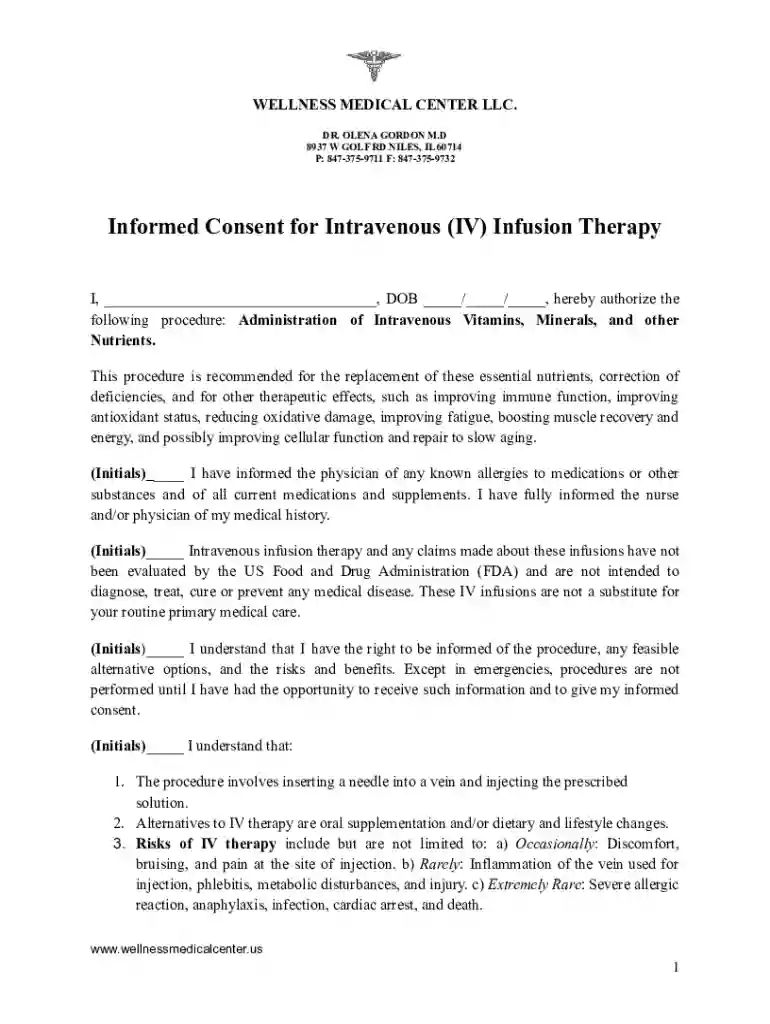
- Procedure Description: Provides a comprehensive explanation of the IV infusion therapy procedure, including its purpose and methodology.
- Risks and Benefits: Lists potential benefits for the patient, such as symptom relief or medical improvement, alongside possible risks like adverse reactions or complications.
- Alternative Options: Outlines alternative treatments available, allowing patients to understand their options.
- Non-FDA Evaluation: Clarifies that the treatment is not FDA-evaluated, which is crucial for informed decision-making.
- Patient Rights and Responsibilities: Informs patients of their rights, including the right to withdraw consent at any time, and details their financial responsibilities for non-covered services.
Each of these elements ensures that patients are adequately informed and can make autonomous decisions regarding their health.
How to Use the IV Infusion Consent Form
Using the IV Infusion Consent Form involves several critical steps to ensure its efficacy and compliance with legal standards. The following process should be followed:
- Acquire the Form: Obtain the form from a medical provider or secure online databases for legal forms.
- Review the Content: Thoroughly read through the entire document to understand the treatment implications.
- Consult with Medical Staff: Engage healthcare providers to clarify any doubts or provide additional explanations about the procedure or risks.
- Complete Personal Information: Accurately fill in personal details such as name, address, and contact information.
- Acknowledge Sections: Sign or initial specified sections acknowledging comprehension of risks, benefits, and alternatives.
- Submit the Form: Return the completed form to the medical facility's designated department.
These steps ensure that the form is properly utilized, reflecting a patient's informed consent.
Important Terms Related to IV Infusion Consent Form
The IV Infusion Consent Form comprises several key terms that are crucial for comprehension. Understanding these terminologies contributes to effective communication between patient and provider:
- Informed Consent: Refers to a patient’s voluntary agreement to undergo a specific medical procedure after having understood its risks, benefits, and implications.
- Intravenous (IV) Therapy: Administration of fluids, medications, or nutrients directly into a vein.
- FDA: The Food and Drug Administration, a U.S. agency responsible for regulating food, drugs, and other health-related products and services.
- Complications: Potentially adverse developments during or after the medical procedure.
- Alternative Treatments: Other available medical procedures or practices that can be considered instead of the proposed therapy.
Mastering these terms can facilitate more meaningful discussions about the consent process.
Steps to Complete the IV Infusion Consent Form
Completing the IV Infusion Consent Form involves precise adherence to procedural instructions. The following sequence guides this process:
- Identification: Fill out personal and contact information at the top of the form.
- Understanding of Procedure: Carefully read the detailed description of the IV infusion therapy and its intended outcomes.
- Risk Assessment: Review the listed risks and potential side effects associated with the therapy.
- Assessment of Alternatives: Consider alternative medical options or treatments presented on the form.
- Consent and Acknowledgement: Provide a signature to acknowledge comprehension and acceptance of the terms.
- Date and Time: Record the date and time of signing to validate the consent’s currency and relevance.
Following these steps ensures that the form is completed thoroughly and accurately, upholding patient autonomy.
Legal Use of the IV Infusion Consent Form
The legal use of the IV Infusion Consent Form is paramount, as it serves as a legal document binding the patient and healthcare provider. Its significance includes:
- Documentation of Consent: Legally records that the patient has agreed to the procedure after being fully informed.
- Protection for Providers: Offers a level of protection for medical practitioners against claims of unauthorized procedures.
- Rights Reinforcement: Emphasizes patients' rights to informed decision-making concerning their healthcare.
- Compliance with Regulations: Ensures alignment with federal and state medical consent laws, such as those dictated by healthcare codes and acts.
Utilizing the form appropriately maintains legal integrity and supports ethical medical practice.
Why You Need the IV Infusion Consent Form
The necessity of the IV Infusion Consent Form in medical practice cannot be understated, as it serves multiple essential purposes:
- Ensures Patient Understanding: Guarantees that patients are aware of what the procedure entails, including risks and alternatives.
- Facilitates Informed Decision-Making: Empowers patients to make knowledgeable choices about their healthcare.
- Protects Legal Rights: Offers legal protection for both patients and providers by formally documenting consent.
- Reduces Litigation Risk: Mitigates potential legal challenges or claims against healthcare providers for lack of consent.
- Enhances Communication: Encourages open dialogue between patients and medical professionals about the treatment process and patient expectations.
This form's integral role in patient care contributes to transparency and ethical standards in medical treatment.
State-Specific Rules for the IV Infusion Consent Form
Different states in the U.S. might have varying requirements for IV Infusion Consent Forms to meet regional healthcare regulations. These can include:
- Age of Consent: Some states have specific age stipulations for legal medical consent.
- Witness Requirement: Certain jurisdictions might mandate a witness to the signing of the consent form to enhance validity.
- Language Needs: States with diverse populations may require translated forms to accommodate non-English speaking patients.
- Document Retention: State laws may dictate the duration for which consent forms must be stored by healthcare facilities for future reference or audits.
Understanding state-specific guidelines ensures compliance and may protect healthcare institutions from regional legal issues.
Examples of Using the IV Infusion Consent Form
There are numerous scenarios illustrating the practical application of the IV Infusion Consent Form in real-world healthcare settings:
- Routine Medical Procedures: A patient receiving vitamin therapy via IV infusion at a wellness center fills out the form to consent to the procedure.
- Clinical Trials: Individuals participating in medical research involving intravenous methods may use the form to document informed consent for experimental treatments.
- Emergency Situations: During urgent care that requires immediate IV therapy, the form can be swiftly completed to ensure rapid treatment.
- Elective Treatments: Patients opting for aesthetic or non-essential IV treatments can use the form to acknowledge potential outcomes and provide informed consent.
These examples underscore the form’s flexibility and necessity across various medical contexts.