



01. Edit your form online
Type text, add images, blackout confidential details, add comments, highlights and more.

Type text, add images, blackout confidential details, add comments, highlights and more.

Draw your signature, type it, upload its image, or use your mobile device as a signature pad.

Send it via email, link, or fax. You can also download it, export it or print it out.
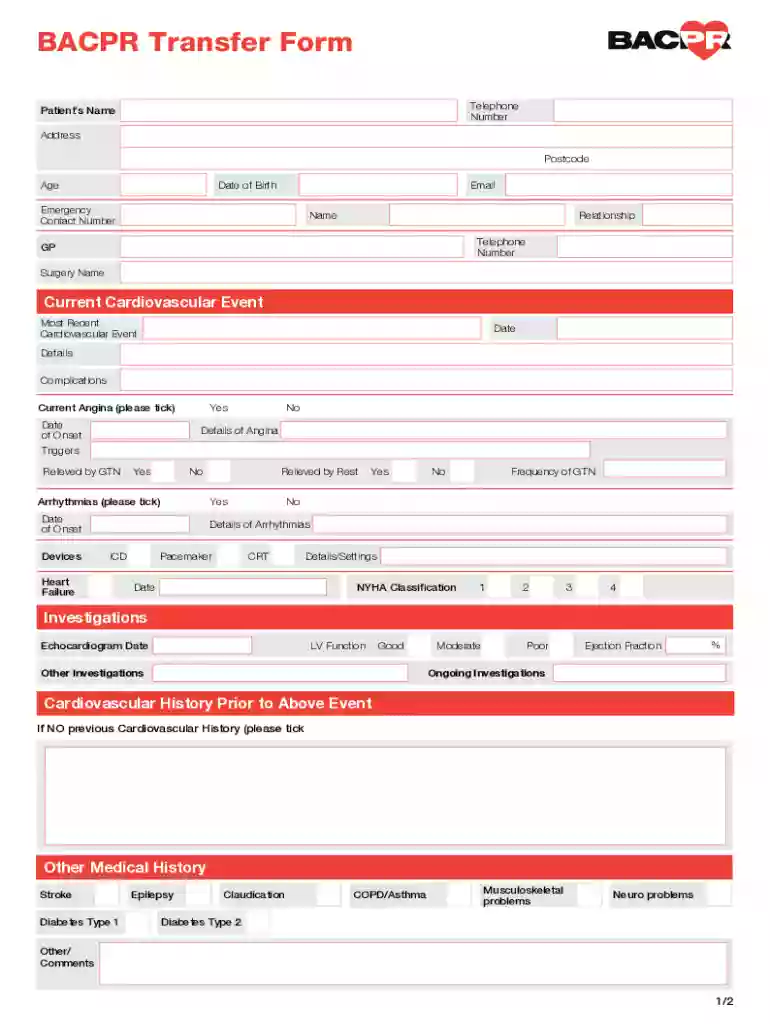
The 1432 BACPR Transfer Form(E) is an essential document designed to facilitate the collection and transfer of crucial patient information relating to cardiovascular health. This form is vital in ensuring that healthcare professionals can share critical data efficiently and accurately between different entities involved in a patient's care. The detailed sections of the form cover various components, such as personal details, medical history, current medication regimens, and more. This enables a comprehensive understanding of a patient's cardiovascular status and supports seamless communication among healthcare providers.
To effectively use the 1432 BACPR Transfer Form(E), it is important to follow a systematic approach. Users should begin by gathering all necessary patient information before starting to fill out the form. This ensures accuracy and completeness. The form is typically divided into several sections, each requiring specific data, such as medical history, current medications, and recent cardiovascular events. Filling out these sections systematically helps maintain coherence and ensures that no critical information is missed. Once the form is completed, it should be reviewed for accuracy before sharing it with involved parties, such as healthcare providers or exercise instructors.
Obtaining the 1432 BACPR Transfer Form(E) can be straightforward, as it is often available through various healthcare channels. Typically, the form can be accessed via healthcare providers or organizations that specialize in cardiovascular care. Additionally, digital versions may be available from reputable online healthcare platforms. For individuals seeking to acquire the form, checking with primary care physicians or cardiovascular specialists is a recommended first step. Many organizations also offer downloadable versions of the form on their official websites, facilitating easy access for healthcare professionals and patients alike.
Preparation: Start by organizing all relevant patient information, ensuring that personal details, medical history, and current medications are at hand.
Patient Details Section: Fill in the patient's personal information, including name, address, and identification details. This section sets the foundation for accurate data entry.
Medical History: Document the patient's cardiovascular medical history. Include previous treatments, surgeries, and ongoing health conditions that may impact cardiovascular health.
Medication and Treatment: List all current medications and doses. This information is crucial for providing a full picture of the patient's treatment plan.
Cardiovascular Events: Note any recent cardiovascular events or related incidents, ensuring that dates and outcomes are accurately recorded.
Review and Consent: The final step involves reviewing all entered information to check for accuracy. Ensure that the patient consent section is completed, granting permission to share the form with designated parties.
The 1432 BACPR Transfer Form(E) is predominantly utilized by healthcare professionals involved in cardiovascular patient care. This includes cardiologists, primary care physicians, and rehabilitation specialists who need a standardized method for transferring patient data. Exercise instructors and therapists may also use this form to tailor cardiovascular rehabilitation programs based on specific patient information. Additionally, administrative staff within healthcare settings may handle these forms to ensure proper documentation and filing.


Understanding the key terminology associated with the 1432 BACPR Transfer Form(E) is essential for accurate completion and use. Terms like "cardiovascular events," which refer to significant incidents affecting the heart and blood vessels, or "consent," which denotes patient permission to share information, are crucial. Familiarity with these terms ensures that the form is filled out correctly and comprehensively, reducing the chance of miscommunication between healthcare providers.
The legal use of the 1432 BACPR Transfer Form(E) involves ensuring compliance with patient confidentiality laws, such as HIPAA in the United States. Healthcare providers must secure informed consent from patients before sharing the form with other professionals. Proper handling and storage of the form, whether digital or paper, must adhere to legal standards to protect patient information. Violations of these legal requirements can result in penalties and undermine patient trust.
We've got more versions of the 1432 BACPR Transfer Form(E) form. Select the right 1432 BACPR Transfer Form(E) version from the list and start editing it straight away!
At DocHub, your data security is our priority. We follow HIPAA, SOC2, GDPR, and other standards, so you can work on your documents with confidence.


