






Definition and Meaning of the Spine Doctor Form
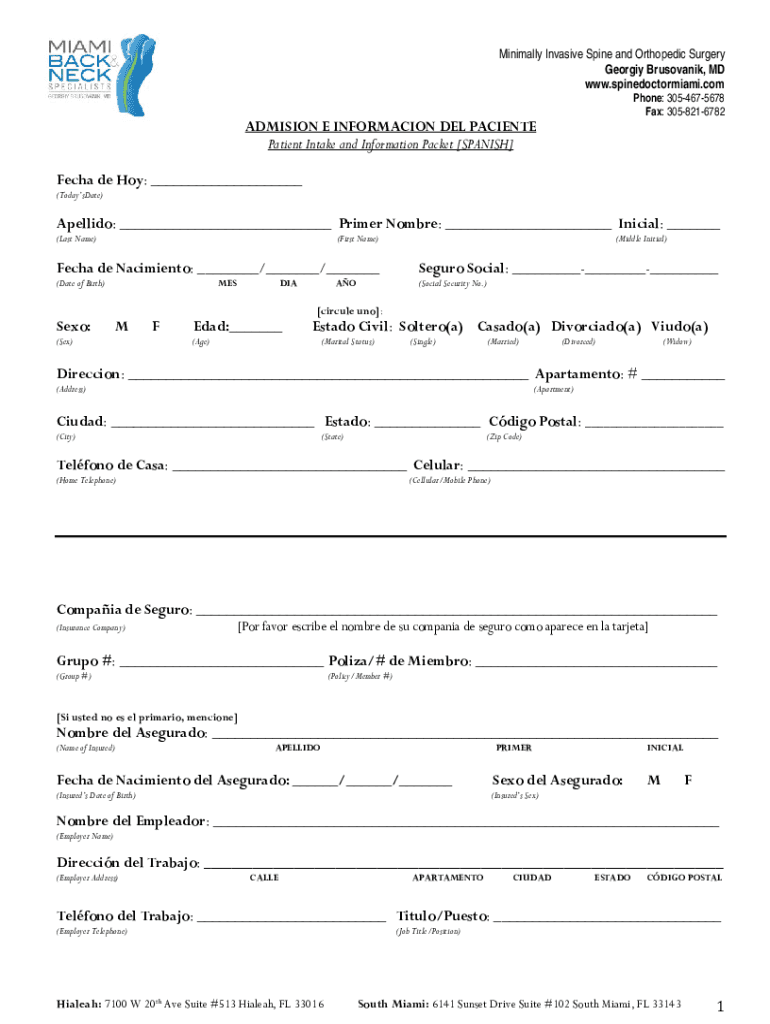
The "Spine Doctor Dominican Republic Miami Back and Neck" form serves as a patient intake and information form for individuals seeking minimally invasive spine and orthopedic surgery. It gathers comprehensive details about a patient's personal information, medical history, social history, and consent related to treatment and privacy practices. By filling out this form, patients provide crucial data necessary for personalized treatment planning and ensure compliance with regulations such as HIPAA. These forms ensure that healthcare providers can deliver tailored medical care efficiently and securely.
How to Use the Spine Doctor Form
Using the form involves carefully completing various sections relating to different aspects of patient information. Patients are required to:
- Provide personal information, including contact and identification details.
- Offer a detailed medical history, which covers past surgeries, current medications, and allergenic conditions.
- Include social history that might impact medical decisions, such as lifestyle habits and occupational conditions.
- Review and consent to treatment plans and privacy protocols related to health information protection under HIPAA.
Patients should review their responses carefully before submission to ensure all information is accurate.
How to Obtain the Spine Doctor Form
Obtaining the form typically involves downloading it from the healthcare provider's website or receiving it directly during a clinic visit. In some cases, the form may be emailed to the patient following appointment scheduling, with instructions for completion either before the visit or during patient check-in. Patients can also inquire directly with the healthcare provider to access the most recent version of the form, ensuring they are using the correct format and providing all necessary information.
Steps to Complete the Spine Doctor Form
Completing the form involves several sequential steps:
- Personal Information: Fill in your full name, address, contact details, and insurance information.
- Medical History: Provide detailed information regarding any previous surgeries, existing conditions, and treatment history.
- Social and Lifestyle Information: Note any lifestyle factors, such as smoking or alcohol use, which might influence medical treatment.
- Consent Section: Read through HIPAA privacy information and consent to treatment, signing these sections where required.
- Final Review: Double-check all entered data for accuracy and completeness before submission.
Why Use the Spine Doctor Form?
Using this form facilitates seamless communication between patients and healthcare providers. It ensures that medical professionals have access to critical health and personal information, allowing them to offer the highest level of care. The form also protects patient confidentiality and ensures compliance with privacy regulations like HIPAA, which are essential in the modern healthcare setting. Additionally, it expedites the admission process, reducing wait times during appointments.
Who Typically Uses the Spine Doctor Form?
The form is primarily used by patients seeking minimally invasive spine and orthopedic surgery services. It caters to individuals experiencing back and neck pain, those requiring surgical consultations, and patients needing a comprehensive assessment of their orthopedic health. Medical professionals and administrative staff within clinics specializing in these services also rely on the form to streamline patient intake processes and manage patient records efficiently.


Key Elements of the Spine Doctor Form
This form features several critical elements necessary for thorough patient assessment:
- Identification and Contact Information: For immediate communication and follow-up.
- Comprehensive Medical History: Ensures all care factors are considered, including allergies and medications.
- Social History and Lifestyle: Factors influencing treatment outcomes.
- Consent and Privacy Agreement: Legal acknowledgments ensuring patient rights and provider obligations under HIPAA.
Each section plays a significant role in developing an effective treatment plan tailored to the patient's individual needs.
Required Documents for Submission
When submitting the form, patients should also have ready copies of:
- Insurance cards and identification for verification.
- Any relevant medical records or previous imaging results.
- A list of current medications and dosages.
- Additional forms, such as referral letters, if applicable.
These documents ensure that the provider has all necessary information for appropriate diagnosis and care planning.
Digital vs. Paper Versions of the Form
The form is available in both digital and paper formats. Digital versions may be completed online through secure portals, allowing for electronic submissions that are efficient and environmentally friendly. However, paper forms remain widely used, providing accessibility for patients who may not be comfortable with digital platforms. Both formats are designed to capture the same essential information, ensuring no discrepancy in data collection regardless of submission method.