







Definition & Meaning
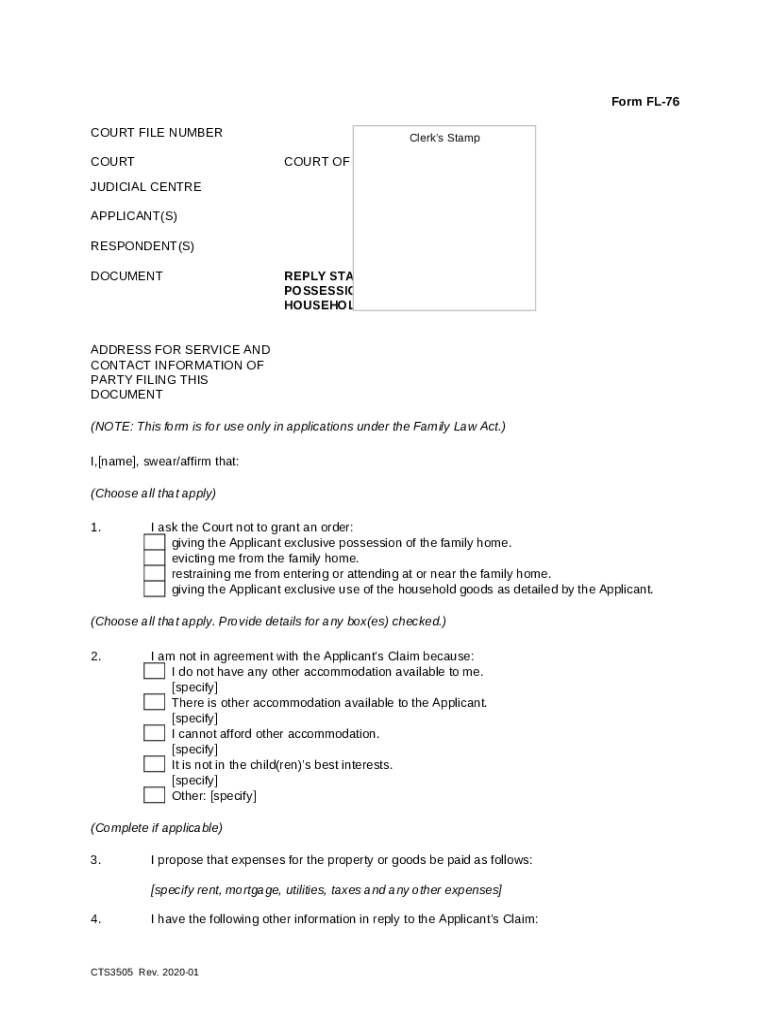
Family Law Forms - Alberta Courts are specialized legal documents used within the jurisdiction of Alberta's judicial system. These forms are fundamental in managing and navigating a variety of family law proceedings, including divorce, child custody, and the division of marital property. The forms serve as an essential tool for parties involved in family disputes to articulate their positions and requests formally.
Purpose and Importance
- Conflict Resolution: Enables structured presentation of disputes, aiding in resolving issues through formal legal channels.
- Legal Clarity: Provides a standardized method for presenting legal facts and requests to the court, ensuring clarity and consistency.
- Judicial Process: Integral to initiating legal procedures by filing the necessary documentation within the court system.
How to Use Family Law Forms - Alberta Courts
To effectively use Family Law Forms - Alberta Courts, individuals must follow a structured approach:
-
Identify the Correct Form: Determine the specific form related to your legal matter, such as FL-76 for replying to claims regarding family home possession.
-
Download or Obtain the Form: Access the forms through the Alberta Courts website or a physical courthouse.
-
Complete the Form Accurately: Provide detailed and accurate information specific to your case, adhering to all instructions provided within the form.
-
Seek Legal Advice: Consult a lawyer if you require assistance or clarification to ensure that the form is filled out in compliance with legal standards.
-
Submit the Form: File the completed form with the appropriate court division, either online, via mail, or in person, as applicable.
Practical Tips
- Use Clear Language: Ensure all responses are concise and legible.
- Double-Check Details: Verify all dates, names, and case numbers to prevent delays in processing.
Key Elements of the Family Law Forms - Alberta Courts
The Family Law Forms include several critical components that must be accurately completed:
- Party Information: Names, addresses, and contact information for all parties involved must be clearly and correctly listed.
- Legal Claims: The form should detail specific legal claims or defenses being presented.
- Supporting Information: Attach any supplemental documents or evidence that support the claims made.
- Signature Block: The signature of the individual completing the form and, if applicable, their legal representative.
Common Sections
- Applicant’s Claims: Articulation of claims being pursued or contested.
- Financial Declarations: Necessary in cases involving asset division or spousal support.
- Child Custody Details: Essential in forms addressing matters of child custody and visitation rights.
Steps to Complete the Family Law Forms - Alberta Courts
Completing the Family Law Forms requires attention to detail and a methodical approach:
-
Gather Necessary Information: Collect all personal data, case information, and any documentation relevant to your case.
-
Follow Form Instructions: Each form includes specific guidance on how to fill it correctly; adherence to this is crucial.
-
Input Information Carefully: Appropriately fill each field with the correct information, paying attention to required fields.
-
Review and Revise: Thoroughly review the form for completeness and accuracy. Make amendments where needed.
-
Consult with Legal Counsel: If unsure about any part of the form, seek legal advice to ensure compliance and completeness.
-
Final Submission: Submit the form as per court guidelines, ensuring it is filed with the correct court division.
Required Documents
When filing Family Law Forms - Alberta Courts, certain supporting documents may be required:
- Identification Records: Such as birth certificates or passports.
- Financial Statements: Needed for cases involving financial support or asset division.
- Marriage Certificates: Relevant in matters related to divorce or separation.
- Property Documentation: Required in claims involving property division.
Additional Documentation
- Witness Statements: For corroborating claims.
- Expert Reports: If expert testimony or evidence is required.
Legal Use of the Family Law Forms - Alberta Courts
The legal application of these forms is governed by specific rules and is primarily used to ensure compliance with Alberta's family law regulations:
- Filing Accurate Claims: Ensures that all parties’ claims and defenses are clearly on record.
- Facilitating Judicial Review: Provides judges with the necessary information to make informed decisions.
- Enforcing Legal Rights: Protects the legal rights of individuals by formalizing claims within the legal system.
Legal Considerations
- Confidentiality: Information contained within these forms is subject to confidentiality laws.
- Compliance: Adherence to court rules and procedures is critical to avoid dismissal or sanctions.




