Definition & Purpose of IMM 5853 E
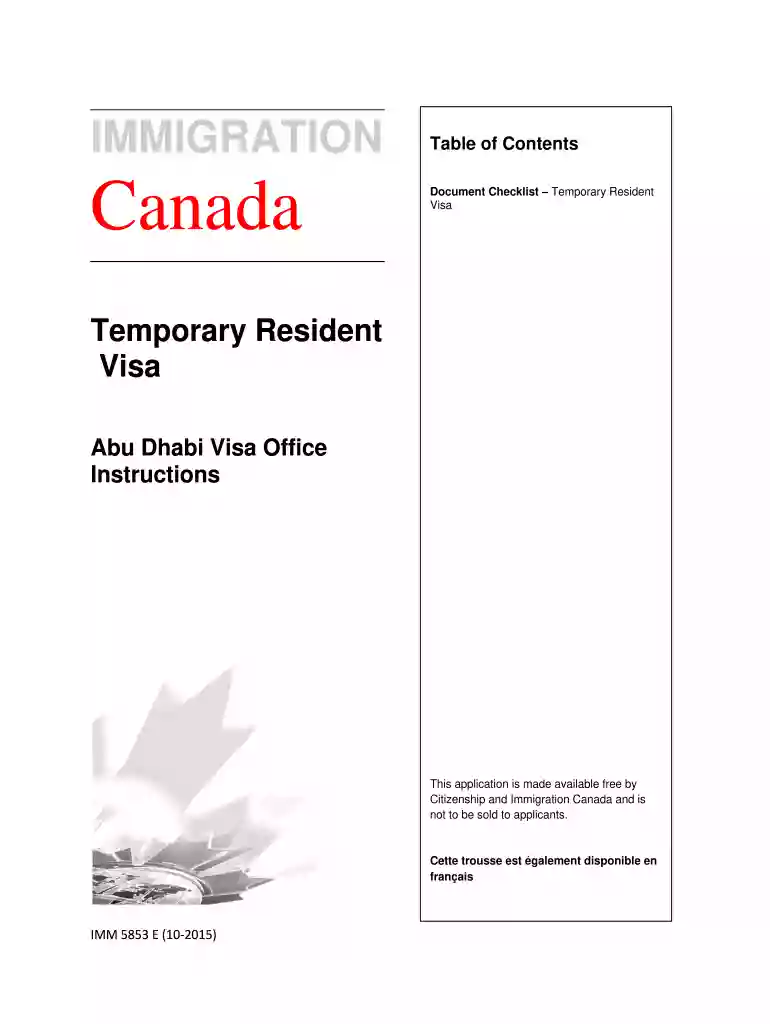
The IMM 5853 E form is specifically designed for use in applying for a Temporary Resident Visa through the Canadian government. This form is an integral part of the visa application process, guiding applicants through the required documentation and submission procedures. It ensures that individuals meet the necessary criteria to be considered for temporary residency in Canada, assessing various aspects such as identity verification and financial stability.
Examples in Practice
- Student Applications: A student looking to attend a Canadian university would use this form to apply for a visa, including documents like acceptance letters.
- Business Travelers: Individuals traveling for business purposes would detail their trip's nature, outlining intended business activities.
Acquiring the IMM 5853 E Form
Acquiring the IMM 5853 E form is a straightforward process, generally completed through online platforms or the official Canadian immigration website. Here's how you can obtain it:
- Visit the Official Website: Access the Government of Canada's immigration page, where downloadable forms, including IMM 5853 E, are available.
- Select the Form: Navigate to the section for temporary resident visas and find the IMM 5853 E.
- Download: Download the form to your device for printing or digital completion.
Alternative Methods
- In-Person: Some applicants prefer collecting forms from Canadian consulates, especially if they require immediate assistance or have queries.
- Mail Request: Request the form via mail if online access is not feasible.
Completing the IMM 5853 E Form
Filling out the IMM 5853 E form involves several crucial steps. Accuracy is essential to avoid application delays or rejections.
- Personal Details: Start with full name, date of birth, and nationality.
- Passport Information: Record passport number and its expiration date.
- Purpose of Visit: Clearly outline the reason for visiting Canada.
- Financial Information: Demonstrate proof of funds to support your stay.
Implementing the correct guidelines is critical. Double-check entries to ensure correctness.
Common Mistakes to Avoid
- Incomplete Fields: Ensure all form sections are filled to avoid processing delays.
- Inaccurate Data: Cross-verify passport numbers and expiration dates.
Primary Users of the IMM 5853 E
The form is primarily utilized by individuals seeking temporary residence in Canada. Common users include:
- Tourists: Those planning to explore Canada temporarily.
- Temporary Workers: Individuals with conditional job offers in Canada.
- Students: Prospective students admitted to Canadian educational institutions.
Contextual Usage Examples
- Family Visits: Applicants visiting family in Canada would leverage this form while planning short-term stays.
- Medical Purposes: The form is necessary for individuals seeking temporary residency for medical treatments.
Key Elements & Terminology
Understanding the terminology is fundamental in accurately completing the IMM 5853 E.
- Biometrics: Refers to the process of providing unique biological data like fingerprints and photographs.
- Temporary Resident Permit: Offers permission for individuals to enter and stay in Canada under specified conditions.
Terminology in Context
- Invitation Letter: Often required for family visits, verifying the intention and support from Canadian residents.
Legal Implications & Compliance
The IMM 5853 E form carries significant legal implications for both the applicant and the issuer. Non-compliance or falsification can lead to serious repercussions.
- False Declarations: Providing incorrect information can result in visa denial or future entry bans.
- Compliance with Entry Rules: Adhering to the rules ensures eligibility for re-entry and future visa applications.
Legal Examples
- Visa Overstay: Overstaying the designated period can complicate future applications.
- Conditional Entry: Some entries might require compliance with specific Canadian laws and guidelines.
Submission Methods
Submitting the IMM 5853 E can be done through several channels, each catering to different applicant preferences.
- Online Submission: Convenient and quick, enabling direct upload of documents.
- Mail: Physical submission through mail is an alternative for those preferring paper formats.
- In-Person: Submission at Canadian consulates or visa offices for personal assistance.
Advantages and Disadvantages
- Online: Offers faster processing times but may require technical proficiency.
- Mail: Suitable for individuals with limited internet access, but slower processing.
Potential Penalties for Non-Compliance
Understanding penalties associated with this form is vital. Violations range from minor delays to severe legal consequences.
- Misrepresentation: Can lead to application denial and long-term bans.
- Incomplete Documentation: May result in processing delays or outright rejection.
Real-World Implications
- Denied Re-entry: Failing to comply with visa conditions can result in re-entry bans, affecting future travels.
- Legal Proceedings: Severe violations could lead to legal actions under Canadian law.