






Definition & Meaning
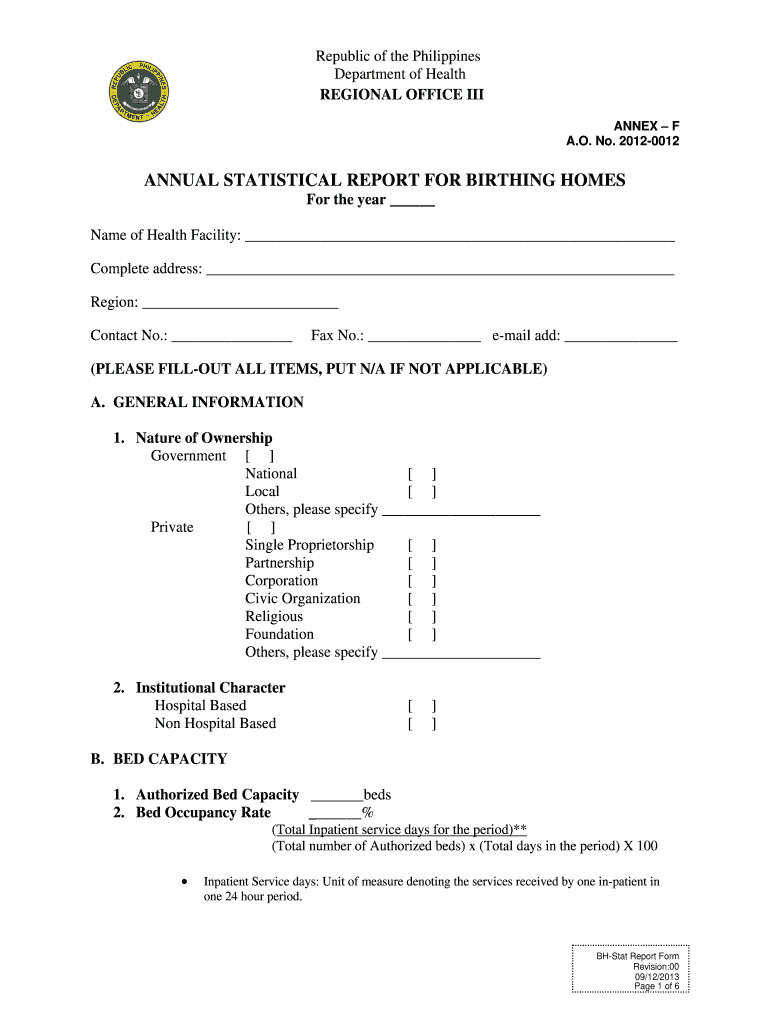
The "Annual Statistical Report for Birthing Homes - DOH Central Luzon" is a comprehensive data collection template issued by the Department of Health in the Philippines. It is designed to collate vital statistics and operational data from birthing homes in the Central Luzon region. This report is integral for tracking maternal and neonatal health services, allowing the DOH to monitor facility performance and identify areas for improvement. It captures a wide array of information, including facility ownership, bed capacity, staffing details, patient care statistics, and financial records.
How to Use the Annual Statistical Report for Birthing Homes
Using the annual statistical report involves detailed data entry and analysis. Facilities must gather data on several metrics, input the information accurately in the report template, and ensure that all sections are comprehensively filled. This process often requires coordination among administrative staff to compile staffing patterns, patient statistics, and financial records. It's crucial to verify data accuracy to provide a reliable source for health assessments and policy development by the Department of Health.
Steps to Complete the Report
- Collect Data: Gather necessary data from various departments within the facility.
- Fill Report Template: Enter information into the designated sections of the template.
- Review Entries: Double-check all entries for accuracy and completeness.
- Submit Report: Ensure the report is submitted before the deadline set by the DOH.
Steps to Complete the Annual Statistical Report
Completing the annual statistical report requires adherence to specific steps to ensure comprehensive and accurate submission:
-
Preliminary Collection:
- Accumulate data on ownership, bed capacity, and staffing patterns.
- Collect patient statistics, including inpatient and outpatient numbers, and delivery counts.
- Record any adverse events and mortality rates, both maternal and neonatal.
-
Data Compilation:
- Input gathered data into the template.
- Compile financial records, detailing expenses and revenues.
-
Verification:
- Cross-check entered data with source documents.
- Ensure all sections of the report are completed.
-
Submission:
- Submit the finalized report to the DOH by the mandated deadline through designated channels.
Why the Annual Statistical Report is Essential
The annual statistical report supports several critical functions in health service management. It provides insights necessary for:
- Monitoring Health Outcomes: Assessing maternal and neonatal health trends.
- Policy Development: Informing policy decisions to improve healthcare delivery.
- Resource Allocation: Guiding resource distribution based on documented needs and gaps.
Who Typically Uses the Report
The primary users of the report include:
- Health Facility Administrators: Utilize data for internal assessments and continuous improvement.
- Department of Health Officials: Leverage aggregated data for regional and national health planning.
- External Auditors and Analysts: Perform reviews and evaluations based on report data.


Key Elements of the Annual Statistical Report
The report encompasses several crucial elements, each providing valuable insights:
- Ownership Information: Details about the entity managing the birthing home.
- Capacity and Staffing: Data on the number of available beds and staff distribution.
- Patient Care Statistics: Numbers related to patient admissions, deliveries, and outpatient visits.
- Financial Records: Comprehensive revenue and expense reports related to facility operations.
Legal Use of the Annual Statistical Report
The legal use of the report involves compliance with regulations set by the Department of Health. Facilities must ensure that all data submissions are honest, complete, and submitted within the specified timelines. Accurate reporting supports legal audits and compliance checks by government authorities.
State-Specific Rules for the Report
While the report specifically applies to Central Luzon, facilities in other regions of the Philippines may have similar requirements, with minor variations in the data collection process due to regional health policies. It’s essential for facilities to consult local DOH guidelines to ensure adherence to applicable rules.
Penalties for Non-Compliance
Non-compliance with the submission requirements of the annual report can lead to several penalties, such as:
- Fines and Sanctions: Monetary penalties for late or incomplete submission.
- Operational Restrictions: Temporary restrictions on certain operations until compliance is achieved.
- Loss of Accreditation: Possible revocation of facility accreditation in severe non-compliance cases.
Software Compatibility
Facilities may use various software applications to streamline report preparation, such as:
- Spreadsheet Programs: Software like Microsoft Excel for data entry and organization.
- Data Management Systems: Specialized healthcare management software that facilitates data extraction and compilation for the report.
Each section of the report should be approached with the intent to provide a comprehensive and transparent account of the birthing home's operations, ensuring that the data serves its purpose in enhancing healthcare services in the region.