Definition & Meaning
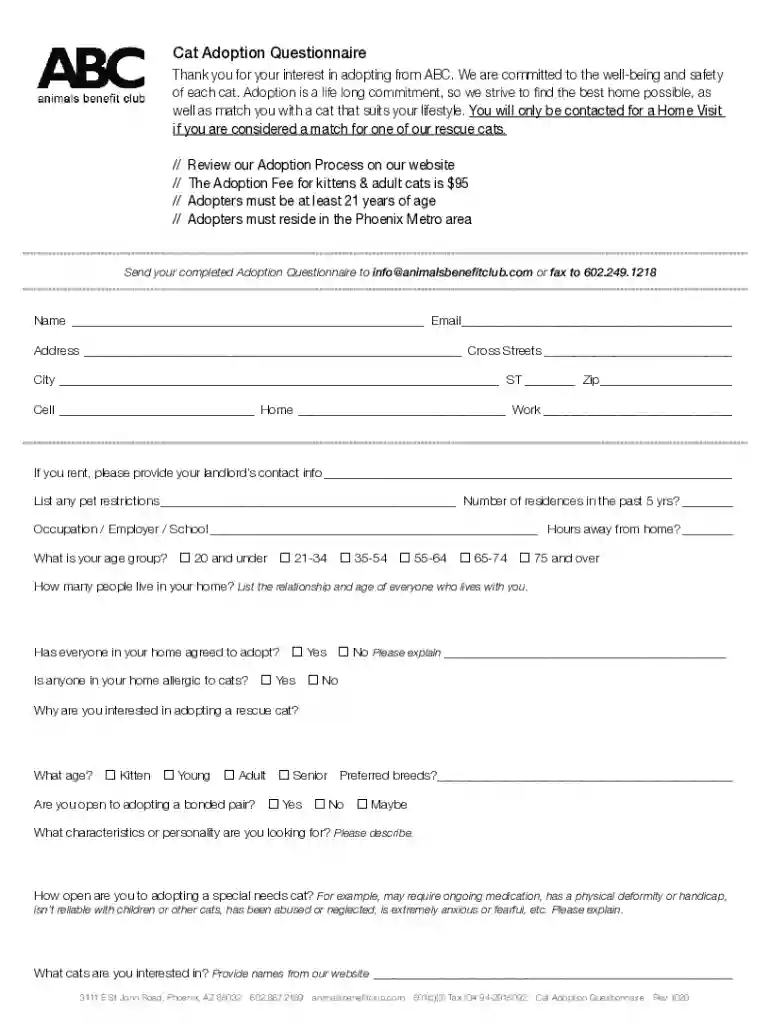
A Cat Adoption Questionnaire is a structured form used by animal shelters and adoption agencies to evaluate potential adopters. This form seeks to gather information about the applicant's lifestyle, home environment, and experience with pets to ensure that the adopted cat is placed in a suitable and loving home. It aims to match the needs and personality of the cat with the lifestyle of the adopter, ultimately promoting responsible and informed adoption decisions.
- The form often includes sections detailing the applicant's living situation, such as whether they own or rent their home and the presence of other pets.
- Details about the applicant’s daily routine and any potential travel or work commitments may be required to assess the time they can dedicate to the pet.
- Questions regarding previous experience with cats, knowledge of cat care, and readiness for the responsibilities of pet ownership are typical.
Steps to Complete the Cat Adoption Questionnaire
To complete the Cat Adoption Questionnaire effectively, follow these steps:
- Read the introductory instructions: Understand any specific guidelines or requirements provided by the adoption agency.
- Provide personal information: Fill in your name, contact information, and address. Clarify whether your residence is owned or rented; if rented, include landlord contact details.
- Describe your living environment: Indicate the presence of family members, roommates, or other pets in your household.
- Outline your daily schedule: Specify your work hours, frequency of travel, and who will care for the cat in your absence.
- Share your pet experience: Note past and current pets, any experience with cats, and knowledge about cat care, health, and nutrition.
- Consider personal preferences: Include any specific traits or characteristics you desire in a cat, such as breed, age, or temperament.
- Complete any additional agency questions: Answer any specific questions the agency may pose regarding lifestyle, pet training, and veterinary care.
Key Elements of the Cat Adoption Questionnaire
Critical elements of the Cat Adoption Questionnaire typically include:
- Personal Information: Name, age, and contact details.
- Living Situation: Type of residence, ownership status, and household members.
- Pet Experience: Past pets, knowledge of cat behavior, and care.
- Lifestyle Assessment: Work schedule, frequent absences from home, and recreational activities.
- Adopter Preferences: Traits or preferences for the type of cat, such as gender, age, or color.
- Commitment and Financial Preparedness: Acknowledgment of the costs and long-term commitments involved in cat ownership.
Legal Use of the Cat Adoption Questionnaire
The questionnaire serves several legal and ethical functions:
- Contractual Agreement: Upon successful match and subsequent adoption, the form often becomes part of a signed agreement outlining the adopter's responsibilities.
- Documentation and Records: Provides an official record of the adoption process, which may be reviewed if issues arise.
- Compliance with Animal Welfare Laws: Ensures that adoptions are conducted following state and federal animal welfare regulations.
- Privacy Considerations: Agencies must adhere to privacy policies regarding the handling and storage of personal information collected through the questionnaire.
Important Terms Related to Cat Adoption Questionnaire
Understanding specific terms can enhance the completion process:
- "Foster-to-Adopt": A temporary foster arrangement that may lead to formal adoption if all parties agree.
- "Adoption Fee": A payment required to help cover the costs of care provided by the shelter or organization prior to adoption.
- "Spay/Neuter": A mandatory procedure for adopted pets to prevent overpopulation, often subsidized or arranged by the adoption agency.
- "References": Contact information for personal references who can vouch for your suitability as a pet owner.
State-Specific Rules for the Cat Adoption Questionnaire
Different states may have unique requirements regarding pet adoption:
- Vaccination Records: Some states require proof of certain vaccinations before adoption.
- Regulation Compliance: Ensure that the adoption agency complies with local and state laws concerning pet adoption and welfare.
- Transportation and Transfer Laws: Understand any specific regulations about the transfer of pets across state lines for adoption purposes.
Understanding these variables ensures both the adopter and the agency comply with all relevant legal standards, promoting a successful adoption process.
Examples of Using the Cat Adoption Questionnaire
The application of a Cat Adoption Questionnaire can vary depending on its purpose and context:
- Standard Adoptions: A typical use case where an individual adopts directly from a shelter or rescue using the standard questionnaire.
- Special Needs Pets: Extended questionnaires may probe deeper into the prospective adopter's capacity to manage a pet with medical or behavioral issues.
- Senior Cat Adoptions: These forms might focus on adaptability and understanding of geriatric pet care when adopting older cats.
- Promotion Events: During adoption drives or promotions, the questionnaire helps in efficiently processing multiple applications at once, while still ensuring thorough evaluations.
Each scenario demonstrates different aspects of the adoption process, from evaluation to logistics, ensuring that cats find homes that meet their specific needs and characteristics.