
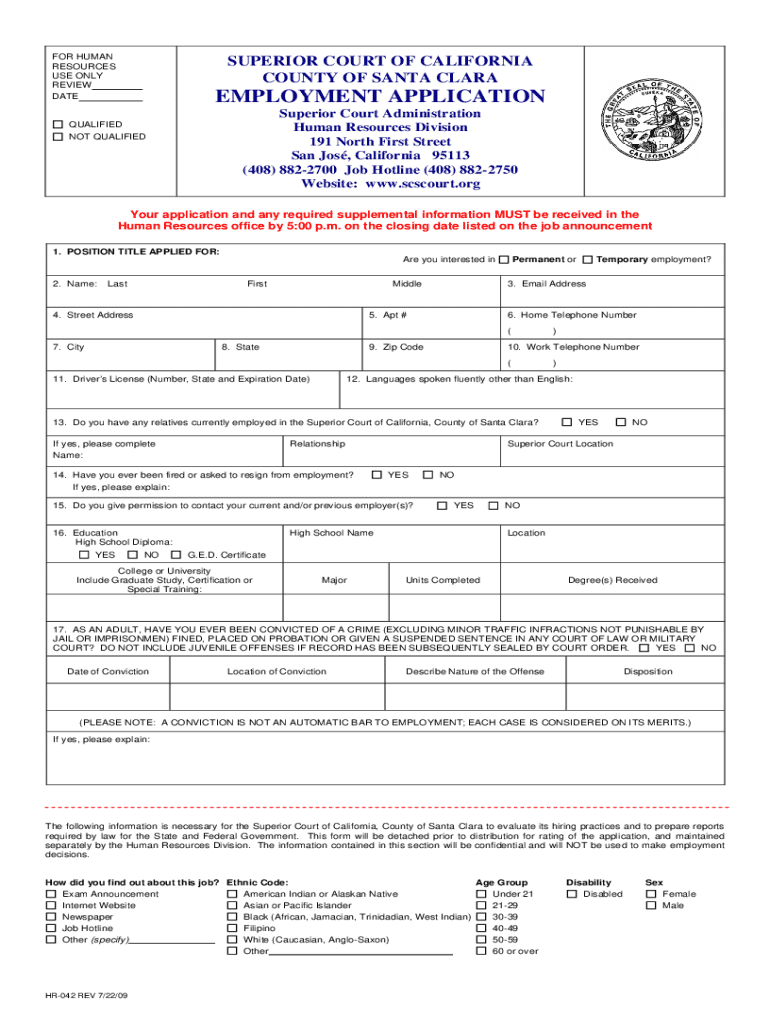







Overview of the Superior Court, County of Santa Clara
The Superior Court, County of Santa Clara, plays a pivotal role in administering justice by handling a wide range of legal matters. This jurisdiction includes civil, criminal, family, and probate cases. The Court serves as a judicial body where disputes are resolved, and justice is delivered according to the laws of California. Understanding the functions and responsibilities of the Superior Court in Santa Clara County is essential for anyone involved in legal proceedings within this area.
How to Use the Superior Court, County of Santa Clara
Engaging with the Superior Court in Santa Clara County involves navigating through various procedures, depending on the nature of the case. Individuals may need to file legal documents, attend hearings, or comply with court orders. Accessible online resources are available to assist with understanding court processes and the specific requirements for different types of cases. Persons involved in litigation should have a basic understanding of court protocols to effectively participate in their legal matters.
Steps to Complete a Filing in the Superior Court, County of Santa Clara
- Identify the Correct Filing Type: Determine the appropriate filing based on the nature of the legal issue (e.g., civil, criminal, family).
- Prepare Necessary Documents: Collect all required documents and forms necessary for your case type. Ensure accuracy and completeness to avoid delays.
- Submit Filings: Use the Court's online e-filing system, or submit in-person or via mail. Follow instructions specific to the chosen method of submission.
- Pay Filing Fees: Fees are required for most filings. Verify the amount due and make payment according to court guidelines.
- Receive Confirmation: After submission, obtain a confirmation receipt. This indicates successful filing and serves as proof for court records.
Key Elements of Court Filings
Filing with the Superior Court requires attention to detail and adherence to legal standards:
- Required Forms: Ensure all relevant forms are accurately completed.
- Documentation: Include pertinent evidence and identification documents.
- Filing Fees: Prepare for payment and understand applicable fee waivers if eligible.
- Deadlines: Be aware of statutory timelines to prevent dismissal of your case.
- Verification: Confirm details of filing with court clerks to avoid misunderstandings.
Important Terms Related to Court Proceedings
Familiarity with legal terminology is beneficial when dealing with the Superior Court:
- Plaintiff: The party initiating the lawsuit.
- Defendant: The individual or entity being sued.
- Summons: A notice to the defendant about the legal proceedings.
- Motion: A formal request made to the court for a specific action.
- Judgment: The Court's final decision on the case.
Legal Use of the Court's Services
The Superior Court provides a platform for legal redress and resolution:
- Civil Disputes: Handles issues like breach of contract or property disputes.
- Criminal Cases: Prosecutes offenses ranging from misdemeanors to felonies.
- Family Matters: Addresses divorce, custody, and support matters.
- Probate: Manages wills, estates, and guardianships.
Examples of Cases Handled
The Superior Court handles diverse cases, offering several insights:
- Divorce Proceedings: Managing legal separation, alimony, and asset division.
- Small Claims: Resolving financial disputes up to a specified monetary limit.
- Restraining Orders: Issuing protective orders in harassment or abuse situations.
- Traffic Violations: Processing infractions and penalties.
Required Documents for Court Filings
Preparation is crucial for timely and successful court interactions:
- Identification: Valid IDs for parties involved.
- Case-Specific Forms: Documents matching the nature of the legal action.
- Proof of Payment: Receipt of filing fees or fee waiver documentation.
- Supporting Evidence: Photographs, contracts, or correspondence relevant to the case.
Form Submission Methods: Online, Mail, and In-person
The Court provides multiple submission avenues to accommodate user needs:
- Online E-filing: Streamlines the process with digital submissions.
- Mail: Traditional method allowing document submission from any location.
- In-person: Direct interaction offers immediate clarification and feedback.
Who Issues the Court Forms?
Court forms are usually issued by the Court Clerk's office and are available:
- Online Portals: Accessible through the County's official website.
- Court Clerk's Office: Physical copies obtainable at the courthouse.
- Legal Aid Services: Often assist in form preparation and access.
Software Compatibility and Digital Options
For enhanced convenience, digital filing aligns with modern technology:
- Platforms: Compatible with software like TurboTax and QuickBooks for relevant cases.
- Digital Signatures: Legally binding options are available for online submissions.
- Data Security: Ensured through encryption and secure protocols.
By thoroughly understanding these facets, individuals and businesses can navigate the Superior Court system efficiently, ensuring that their legal matters are addressed with the requisite attention and precision.




