
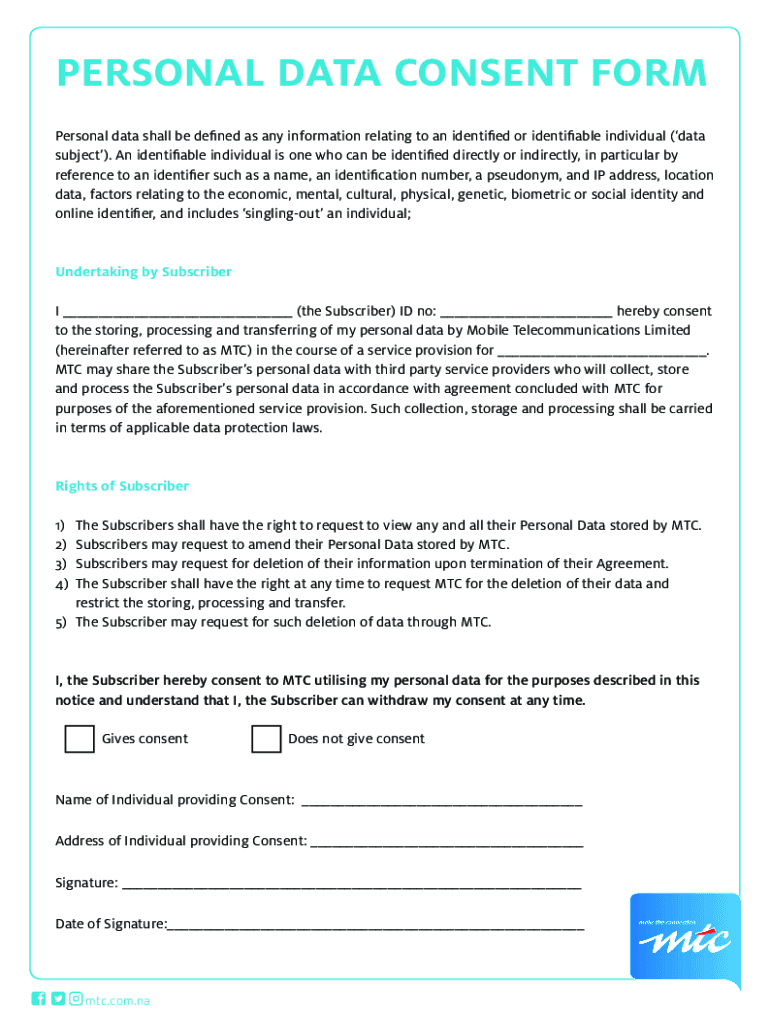







Definition and Meaning of a Personal Data Consent Form
A Personal Data Consent Form is a legal document that grants permission for organizations, such as Mobile Telecommunications Limited (MTC), to collect, store, process, and transfer an individual's personal data. It is essential in complying with privacy laws and ensuring that the individual's rights over their data are maintained. By signing this form, the subscriber acknowledges their understanding and agreement to the organization's data handling practices. This form often outlines the scope and purpose of data use, such as service provision, and highlights the subscriber's rights including accessing, amending, or requesting the deletion of their data. Additionally, it affirms that consent can be withdrawn at any point.
How to Use the Personal Data Consent Form
Using the Personal Data Consent Form involves several critical steps to ensure compliance with data protection laws and transparency with the individual providing their consent. Organizations typically implement these steps to incorporate the form into their data management practices:
- Presentation: Provide the form to the subscriber before collecting any personal data. It should be part of the initial onboarding process or when a new data handling policy is implemented.
- Explanation: Clearly explain the purpose of data collection and use. Offer practical examples of how the data will facilitate service provision. For instance, a telecommunications company might use personal data to manage accounts or tailor promotions.
- Clarification of Rights: Inform subscribers about their rights regarding their personal data. This includes options to access their data, request changes, or delete information if necessary.
- Obtain Consent: Securely capture the subscriber's consent through their signature. This can be done digitally with electronic signatures to streamline the process.
- Maintain Records: Keep a copy of the signed consent form in your records to ensure compliance and for future reference.
Steps to Complete the Personal Data Consent Form
Completing a Personal Data Consent Form accurately is crucial for both parties involved. Here’s a step-by-step guide:
- Review the Document: Begin by thoroughly reading the form to understand the terms and conditions regarding data usage.
- Personal Information Input: Fill in basic personal details as required, such as full name, contact information, and account number if applicable.
- Understand the Scope: Acknowledge the outlined purposes for data collection and usage. Make sure these purposes align with your expectations and needs.
- Confirm Understanding of Rights: Ensure clarity on your rights, such as accessing or amending data. If any part of the document is unclear, seek clarification before proceeding.
- Provide Consent: Sign the form to give your consent. In a digital format, this might involve an e-signature. Double-check for the correct placement of your signature.
- Submission: Submit the completed form to the requesting organization through the specified method, whether it’s digital or physical mail.
Key Elements of the Personal Data Consent Form
The personal data consent form typically includes several key elements:
- Definitions: Precise definitions of what constitutes personal data under the organization’s data handling policy.
- Data Purposes: A detailed explanation of why and how the data will be used, with practical examples to illustrate each point.
- Consent Mechanism: Information on how subscribers can provide, modify, or withdraw consent.
- Data Protection Measures: An overview of the security measures in place to safeguard subscriber data, including technological (e.g., encryption) and organizational safeguards.
- Rights and Responsibilities: A section detailing the subscriber’s rights to access, amend, or delete their data, along with the organization’s commitments to data protection.
Legal Use and Compliance
The legal use of a Personal Data Consent Form is governed by various privacy regulations, most prominently in the United States, the California Consumer Privacy Act (CCPA). This legislation mandates that organizations obtain explicit consent before collecting or utilizing personal data. Compliance requires that forms be transparent about data practices and that subscribers are informed of their rights. Additionally, the form needs to clarify how individuals can revoke consent and request the deletion of their data if they choose. Organizations must also ensure that any third parties involved in data processing adhere to these privacy standards.
Who Typically Uses the Personal Data Consent Form
The Personal Data Consent Form is widely used across various industries that handle sensitive personal information. Typical users include:
- Telecommunications Companies: To manage customer accounts and tailor communication services.
- Healthcare Providers: Safely handle patient data for treatment purposes.
- Financial Institutions: For processing banking, insurance, or investment information.
- E-commerce Platforms: To personalize shopping experiences and manage transactions.
Each industry adapts the form to meet specific regulatory requirements and operational needs, ensuring that all data-related interactions are conducted legally and transparently.


Software Compatibility and Integration
Tools like DocHub offer seamless integration capabilities with popular software suites, enhancing the management and execution of Personal Data Consent Forms. Users can benefit from:
- Importing Documents: Integration with Google Drive, Dropbox, and other platforms allows quick importation and export of forms.
- Editing and Signing: The platform's robust editing features make it easy to adjust form fields and collect electronic signatures, ensuring that data collection is both efficient and compliant with legal standards.
- Real-time Collaboration: The ability to collaborate in real-time with multiple stakeholders ensures that forms are completed accurately and promptly.
State-Specific Rules for Data Consent Forms
In the U.S., privacy laws can vary from state to state, making it essential to understand regional regulations when implementing Personal Data Consent Forms.
- California: Under the CCPA, businesses must inform consumers about the types of personal data collected and the purposes of collection.
- New York: Data protection laws require explicit consumer consent for data sharing with third parties.
- Texas: Privacy laws mandate disclosure of any use of personal data beyond the initial consent scope.
Adhering to these state-specific rules ensures that organizations remain compliant and avoid potential penalties.




