






Understanding the RENTAL AGREEMENT PORTABLE TOILET
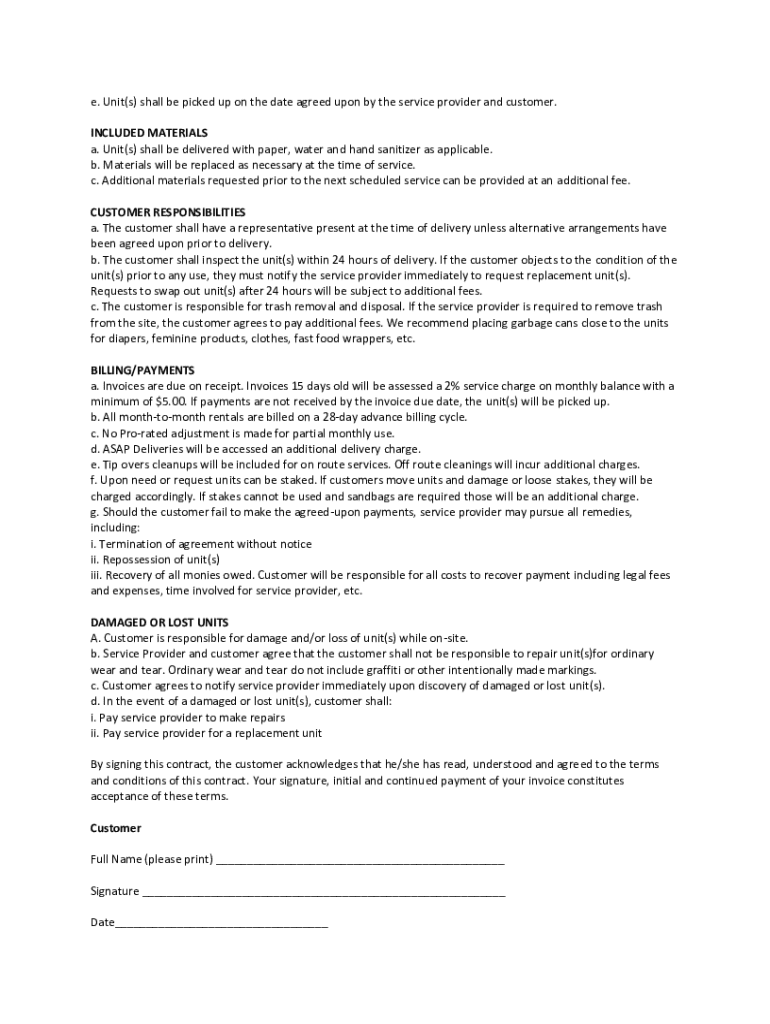
The "RENTAL AGREEMENT PORTABLE TOILET" is a legal document outlining the terms and conditions for renting portable toilet units. It serves as a contract between the service provider and the customer, defining the responsibilities, obligations, and expectations of both parties. This agreement is crucial for ensuring a smooth transaction and avoiding potential disputes. The document typically covers service details, billing information, and maintenance requirements for the portable toilet rental service.
Importance of the RENTAL AGREEMENT PORTABLE TOILET
Using a rental agreement for portable toilets is essential for several reasons. Primarily, it provides a clear framework for communication between the renter and the service provider. It sets forth the minimum rental duration, usually starting with a four-week period, and specifies weekly service arrangements. The agreement also describes additional charges that may occur for extra services or damage to the units, ensuring that both parties have a mutual understanding of potential costs. By clearly defining these terms, the agreement helps prevent misunderstandings and encourages transparency.
Key Components of the RENTAL AGREEMENT PORTABLE TOILET
Service Terms
- Rental Period: A minimum rental duration, typically four weeks, ensures that the provider has enough time to manage logistics efficiently.
- Servicing Frequency: Weekly maintenance is generally included to guarantee sanitary conditions.
- Additional Services: Charges for extra services, such as additional cleanings, are detailed to allow for transparent billing.
Customer Responsibilities
- Unit Maintenance: Customers must keep the portable toilets in good condition to prevent damage.
- Communication: Promptly reporting delivery issues or maintenance needs is crucial for efficient service.
Provider Obligations
- Delivery and Setup: Ensures the units are delivered and installed at the agreed location.
- Regular Maintenance: Providers must adhere to the servicing schedule to maintain unit hygiene.
Steps to Complete the RENTAL AGREEMENT PORTABLE TOILET
- Review Agreement Terms: Carefully read all sections to understand the full scope of the rental conditions.
- Specify Details: Include information such as the rental duration, servicing schedule, and any additional service requirements.
- Document Signatures: Both the customer and provider must sign the agreement to make it legally binding.
- Retain a Copy: Keep a copy of the signed agreement for future reference and to resolve potential disputes.
Legal Compliance and Usage
Portable toilet rental agreements must comply with local regulations and legal standards, especially concerning waste disposal and sanitation requirements. It's crucial to consult with a legal advisor to ensure the agreement adheres to applicable laws in the relevant jurisdiction. Additionally, many agreements include clauses regarding liability and indemnification, protecting both parties from unforeseen issues or accidents.
Scenarios for Using the RENTAL AGREEMENT PORTABLE TOILET
These agreements are commonly used in various settings such as construction sites, outdoor events, and disaster relief areas. In a construction context, steady availability of sanitation facilities is vital for worker health, while at events, portable toilets help manage crowd needs efficiently. In all scenarios, the clarity provided by a detailed rental agreement supports a successful operation.
Differences Across States for RENTAL AGREEMENT PORTABLE TOILET
State-specific regulations can affect the terms of a rental agreement for portable toilets. Factors such as environmental laws, sanitation requirements, and local ordinances can vary significantly. Therefore, it's crucial to adapt the agreement according to local laws to ensure full compliance. Consulting a legal expert familiar with state-specific rules can help navigate these differences effectively.
Business Benefits from RENTAL AGREEMENT PORTABLE TOILET
Certain businesses, especially those in the construction and event planning industries, benefit considerably from structured rental agreements for portable toilets. For construction businesses, a defined agreement ensures that sites remain compliant with health regulations, while event planners can manage guest needs with predictable, hygienic service. Both sectors gain from reduced disputes and clear expectations, thanks to comprehensive rental agreements.