







Definition and Meaning
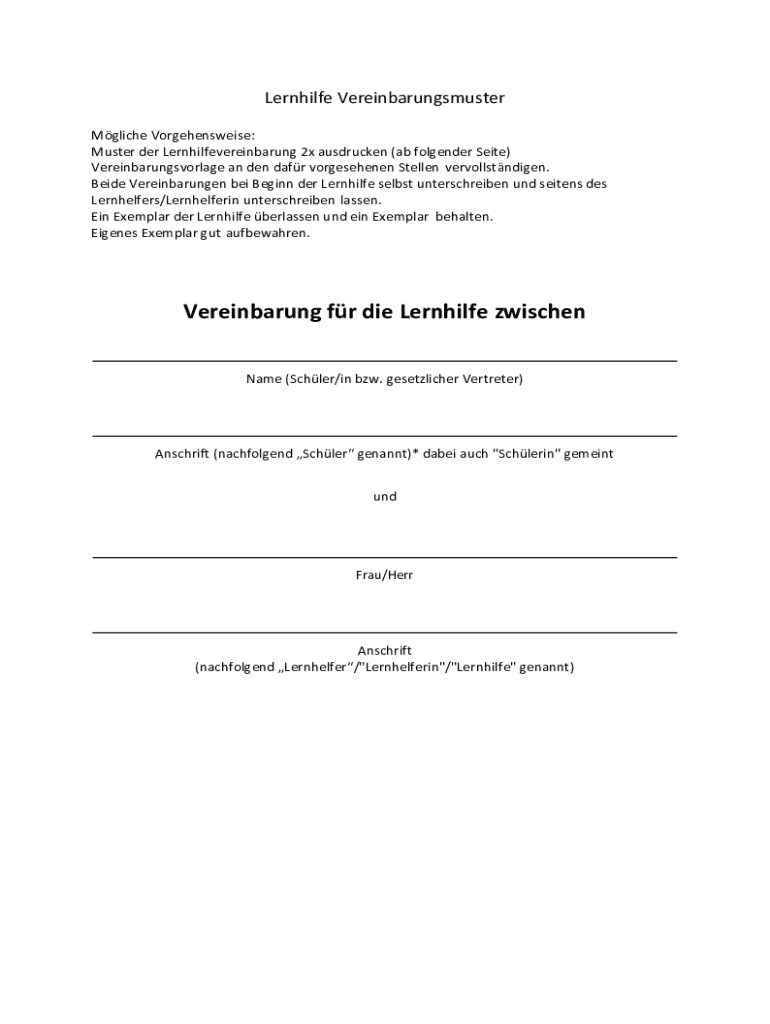
The "Nachhilfe Vertragsmuster Mustervertrag für den privaten Nachhilfeunterricht" is a template for creating a tutoring agreement between a tutor and a student (or the student's legal representative). This document serves to formalize the relationship, outlining the scope and terms of private tutoring sessions. Its primary purpose is to ensure both parties have a clear understanding of their roles and responsibilities, promoting a transparent and legally-binding arrangement.
Key Elements of the Agreement
A comprehensive tutoring contract includes several critical sections:
-
Parties Involved: Identifies the tutor, the student, and any legal representatives.
-
Scope of Tutoring: Describes the subjects and educational goals that will be covered.
-
Schedule and Location: Specifies when and where tutoring sessions will occur.
-
Payment Terms: Details the fees, payment schedule, and accepted payment methods.
-
Confidentiality Obligations: Ensures that the tutor and student maintain privacy regarding shared information.
-
Termination Conditions: Defines the process and conditions for ending the contract prematurely.
-
Signatures: Legally binds both parties to the contract through their signatures.
These elements establish a structured framework that minimizes misunderstandings and potential conflicts.
Steps to Complete the Agreement
Drafting a "Nachhilfe Vertragsmuster" involves several steps:
-
Gather Information: Collect details about the tutor and student, including contact information and the subjects to be covered.
-
Define Terms: Establish the tutoring schedule, location, fees, and any cancellation policies.
-
Draft the Document: Use the gathered information to fill in the sections of the template, ensuring clarity and completeness.
-
Review and Revise: Both parties should review the document to confirm all details are accurate and agreeable.
-
Sign the Agreement: Once both parties are satisfied, sign the document, each keeping a copy for reference.
Legal Use of the Agreement
The tutoring agreement is a legally binding document, provided it includes the essential elements of a contract—offer, acceptance, consideration, and mutual assent. It is not just an informal arrangement but a commitment, enforceable in court if necessary. Therefore, both parties should approach the creation and signing of this agreement with seriousness and precision.
Common Users of the Agreement
This type of tutoring agreement is typically used by:
-
Private Tutors: Professionals offering services to students outside a traditional classroom setting.
-
Parents or Legal Guardians: Those seeking to formalize tutoring services for their children.
-
Students: Especially those in higher education who require supplementary learning support.
This ensures all parties have documented protection and clarity regarding the tutoring sessions.

Important Terms Related to the Agreement
Several legal and technical terms are essential in understanding this contract:
-
Consideration: The payment or benefit exchanged as part of the contract.
-
Mutual Assent: The agreement of both parties to the contract terms.
-
Confidentiality: Legal protection to prevent the disclosure of sensitive information shared during tutoring.
Familiarity with these terms helps in comprehending and negotiating the contract.
Variations and Alternatives
While the "Nachhilfe Vertragsmuster Mustervertrag für den privaten Nachhilfeunterricht" is designed for private tutoring, there are variations that cater to different contexts:
-
Group Tutoring Contracts: For situations where one tutor provides services to multiple students simultaneously.
-
Online Tutoring Agreements: Specifically tailored to remote teaching contexts, addressing digital communication and technical requirements.
Each variant maintains the core principles but adapts to the specific dynamics of different tutoring scenarios.
Real-World Examples
Consider a scenario where a high school student requires additional mathematics tutoring to prepare for college entrance exams. The student's parents engage with a private tutor, drafting a "Nachhilfe Vertragsmuster" to clarify expectations, such as frequency of sessions, fees, and the curriculum focus.
Another example is a college student seeking to improve their German language skills. An agreement ensures that both the tutor and student understand the weekly goals and assessment methods to track progress.
Versions or Alternatives
The tutoring agreement may have different versions or be adopted from similar templates from different educational contexts. Alternatives might include contracts for music lessons, language courses, or sports coaching—all requiring similar structuring to ensure clarity and adherence to legal standards.
This adaptability makes the "Nachhilfe Vertragsmuster" a versatile tool for formalizing learning engagements across various teaching and learning scenarios.




