



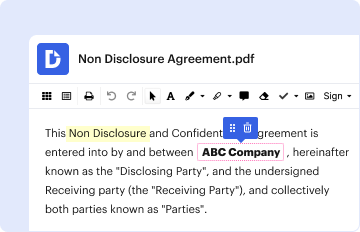
01. Edit your how to fill ieee copyright form online
Type text, add images, blackout confidential details, add comments, highlights and more.

Type text, add images, blackout confidential details, add comments, highlights and more.
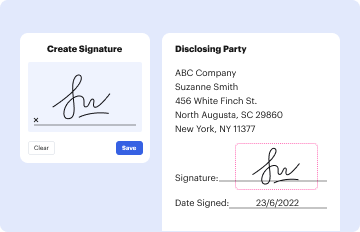
Draw your signature, type it, upload its image, or use your mobile device as a signature pad.
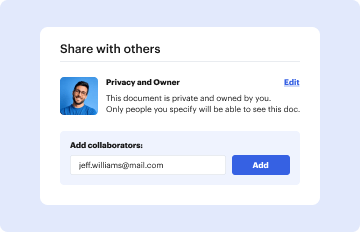
Send copyright form via email, link, or fax. You can also download it, export it or print it out.
The IEEE Copyright Form is an essential document for authors who wish to publish their original, previously unpublished work in IEEE periodicals or conference publications. This form formalizes the transfer of copyright from the author(s) to IEEE, allowing IEEE to publish, distribute, and archive the work. It ensures that the intellectual property rights are managed consistently and legally, aligning with the author's and publisher's interests.
The form is mainly used by researchers, academicians, and professionals who submit papers to IEEE conferences and journals. These individuals seek to disseminate their findings effectively while retaining recognition as the original authors.


Authors completing this form must understand that it is legally binding. It grants IEEE the right to publish and distribute the work while allowing authors to use the content for personal or educational purposes, as specified in the agreement. Any misuse or misrepresentation can result in legal consequences for both the author and the publication.
With technological advancements, the IEEE Copyright Form can be completed digitally, providing ease of access and submission. This also helps in reducing paper usage, with digital signatures offering a secure method of author verification.
Understanding and accurately completing the IEEE Copyright Form is crucial for authors planning to publish with IEEE, ensuring that their work is legally protected and disseminated effectively.
We've got more versions of the how to fill ieee copyright form form. Select the right how to fill ieee copyright form version from the list and start editing it straight away!
| Versions | Form popularity | Fillable & printable |
|---|---|---|
| 2017 | 4.8 Satisfied (22 Votes) |
At DocHub, your data security is our priority. We follow HIPAA, SOC2, GDPR, and other standards, so you can work on your documents with confidence.


Jun 13, 2011 This document is copyrighted by the IEEE. It is made available for a wide variety of both public and 21 private uses. These include both use,
In order to start the process for submitting your IEEE electronic copyright, please fill out the following form and press the Go to the IEEE Copyright Server


