Type text, add images, blackout confidential details, add comments, highlights and more.
02. Sign it in a few clicks
Draw your signature, type it, upload its image, or use your mobile device as a signature pad.
03. Share your form with others
Send it via email, link, or fax. You can also download it, export it or print it out.
How to use or fill out APPLICATION FOR LIQUID INDUSTRIAL WASTE TRANSPORTATION - Michigan
Ease of Setup
DocHub User Ratings on G2
Ease of Use
DocHub User Ratings on G2
Click ‘Get Form’ to open it in the editor.
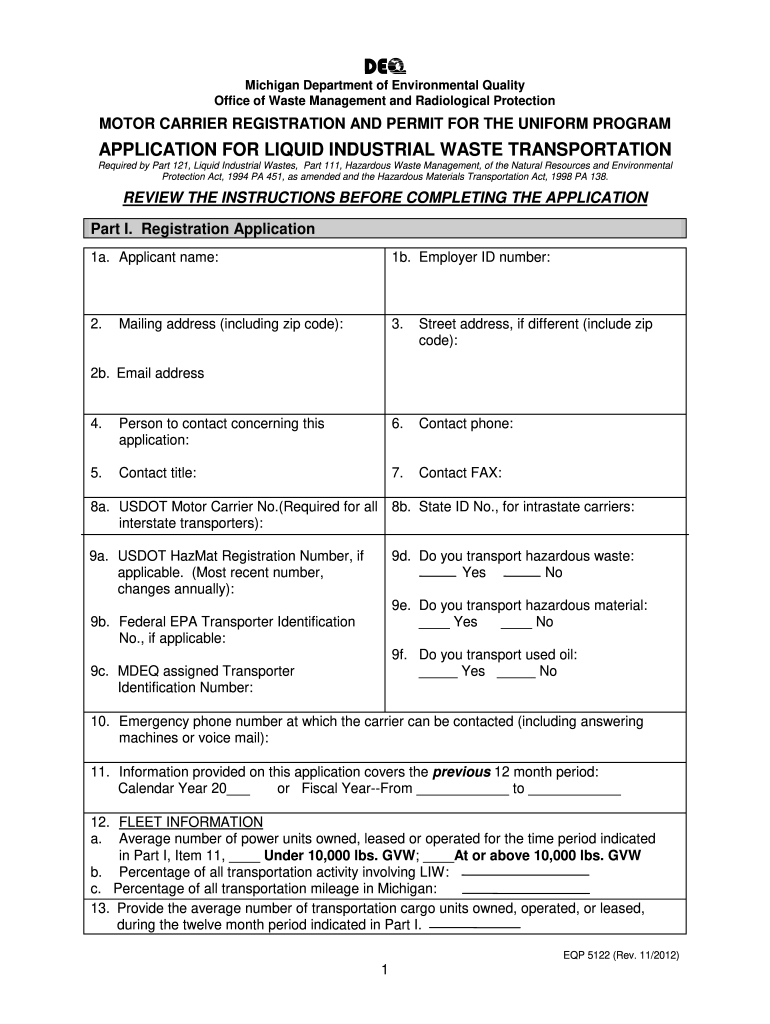
Begin with Part I: Registration Application. Fill in your name and Employer ID number in fields 1a and 1b. Ensure that your street and mailing addresses are accurate.
Provide your contact information, including email address, phone number, and title in fields 2b to 7.
Complete the required fields regarding USDOT numbers and hazardous waste transportation status in sections 8a to 9f.
In Part II: Permit Application, specify your corporate structure and type of business. Indicate years of experience transporting liquid industrial waste.
Address any past permit issues in Section B, providing necessary attachments if applicable.
Fill out Sections C through F regarding safety ratings, violations, incidents, and terminal addresses as required.
Finally, review all certifications in Part III before signing and submitting the application along with any required attachments.
Start using our platform today for free to streamline your application process!
Fill out APPLICATION FOR LIQUID INDUSTRIAL WASTE TRANSPORTATION - michigan online It's free
See more APPLICATION FOR LIQUID INDUSTRIAL WASTE TRANSPORTATION - michigan versions
We've got more versions of the APPLICATION FOR LIQUID INDUSTRIAL WASTE TRANSPORTATION - michigan form. Select the right APPLICATION FOR LIQUID INDUSTRIAL WASTE TRANSPORTATION - michigan version from the list and start editing it straight away!
Applying Biosolids to Land in Michigan - MSU Extension
Management options available for biosolids/sewage sludge in Michigan fall into three categories landfilled, incineration, and land application or otherRead more
Cookie consent notice
This site uses cookies to enhance site navigation and personalize your experience.
By using this site you agree to our use of cookies as described in our Privacy Notice.
You can modify your selections by visiting our Cookie and Advertising Notice.