Client Rights Grievance Process and ANE Reporting Form 2026

Get Form
Client Rights Grievance Process and ANE Reporting Form Preview on Page 1

Here's how it works

01. Edit your form online
Type text, add images, blackout confidential details, add comments, highlights and more.

02. Sign it in a few clicks
Draw your signature, type it, upload its image, or use your mobile device as a signature pad.

03. Share your form with others
Send it via email, link, or fax. You can also download it, export it or print it out.

Definition & Meaning

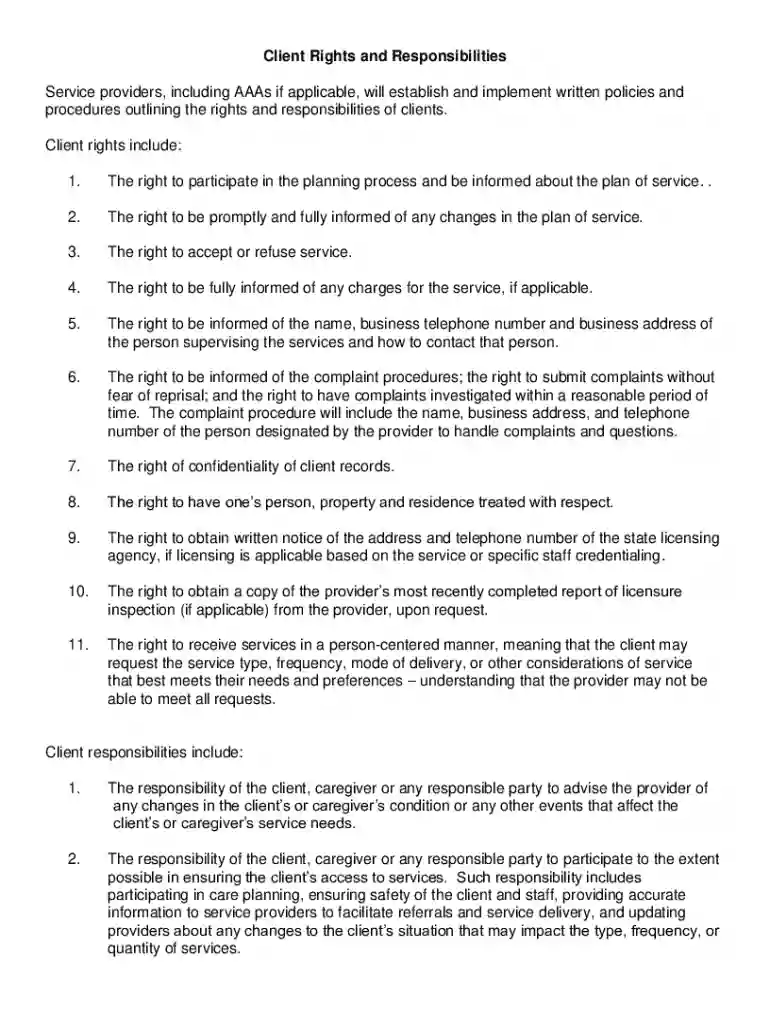
The Client Rights Grievance Process and ANE Reporting Form serves as a crucial document within various service environments, including healthcare and social services. It allows clients to formally express grievances regarding their rights or report instances of abuse, neglect, and exploitation (ANE). Clients utilize this form to ensure their voices are heard and that appropriate measures are taken to address their concerns. This document plays a vital role in maintaining the integrity and ethical standards of service providers by offering a structured mechanism for client feedback.

Significance in Client-Provider Relationships

  • Empowerment: By providing a standardized method to document grievances, the form empowers clients to take control of their interactions with service providers.
  • Accountability: It holds providers accountable, as filed grievances necessitate a formal response and potential corrective action.
  • Transparency: Utilizing the form promotes transparency within organizations, encouraging open communication and problem-solving.

Steps to Complete the Client Rights Grievance Process and ANE Reporting Form

Completing the form accurately is essential for addressing client issues efficiently. Below is a step-by-step guide to ensure comprehensive and correct completion:

  1. Identify the Grievance or ANE Incident: Clearly define the nature of your grievance or the specifics of the ANE incident. Include pertinent details such as dates, times, and individuals involved.
  2. Gather Supporting Information: Collect any relevant documents or evidence such as correspondence, medical records, or witness statements that can support your claim.
  3. Fill Out Personal Information: Provide your full name, contact information, and any relationship details relevant to the service provider.
  4. Detail the Incident/Grievance: Use the designated sections of the form to describe the incident or grievance in detail. Be factual and objective in your account.
  5. Submit the Form: Send the completed form through the specified submission method, which may vary depending on the organization. Confirm receipt to ensure your concern is being addressed.

Additional Tips for Accurate Completion

  • Be Specific: Avoid vague statements; be as detailed as possible.
  • Proofread: Check for any errors or omissions before submission.
  • Consult When Necessary: If uncertain about how to proceed, consider seeking guidance from a trusted advisor or legal professional.

Who Typically Uses the Client Rights Grievance Process and ANE Reporting Form

This form is predominantly utilized by clients who engage with service providers in healthcare, social services, or any setting where client rights could potentially be compromised. Typical users include:


  • Patients in Medical Facilities: Patients or their representatives who experience or witness potential rights violations or cases of ANE.
  • Residents of Care Homes: Individuals in long-term care facilities may use this form to report unsatisfactory care or treatment.
  • Beneficiaries of Social Services: Those receiving state or federal assistance or services can file grievances related to unfair treatment or service inadequacies.
decoration image ratings of Dochub

Role of Advocates and Legal Representatives

  • Assisting Clients: Advocates may help individuals understand their rights and the grievance process.
  • Filing on Behalf: Legal representatives can file grievances or ANE reports on behalf of their clients when necessary.

Key Elements of the Client Rights Grievance Process and ANE Reporting Form

The form is structured to capture comprehensive data, essential for the grievance process:

  • Personal and Contact Information: Accurate identification details to facilitate communication.
  • Description of Grievance or ANE: Sections to detail the nature of the complaint or incident.
  • Supporting Evidence Section: Space for listing attached documentation or evidence that corroborates the claim.
  • Declaration and Signature: A declaration that the information provided is true and complete to the best of the client's knowledge, followed by a signature line.

Importance of Each Element

  • Personal Details: Ensures the form is processed correctly and responses are directed to the right individual.
  • Grievance Information: Facilitates a thorough review and understanding of the situation by responsible parties.
  • Supporting Evidence: Strengthens the client’s case and supports resolution efforts.
  • Declaration: Affirms the client's commitment to honesty and accuracy.

Legal Use of the Client Rights Grievance Process and ANE Reporting Form

This form has legal implications and is designed in compliance with established rights and regulations. Its legal utility includes:

  • Formalized Complaint Process: Establishes a formal procedure for clients to air grievances, ensuring legal processes are followed.
  • Documentation for Legal Proceedings: Forms serve as official records that may be used in legal or administrative hearings.
  • Compliance with State and Federal Laws: Reflects adherence to regulations governing client rights and protection against ANE.

Examples of Legal Use

  • Evidence in Disputes: May be presented in court as evidence of a formal complaint process.
  • Regulatory Reporting: Some grievances may trigger mandatory reporting to regulatory bodies.

How to Obtain the Client Rights Grievance Process and ANE Reporting Form

The form can typically be accessed through several channels:

  • Service Provider Websites: Many organizations provide the form on their official websites, often within sections dedicated to client rights or feedback.
  • Physical Locations: Paper copies may be available at service provider locations, such as reception desks or customer service centers.
  • Request by Mail/Email: Clients can contact service providers to request the form be sent electronically or via postal mail.

Considerations for Access

  • Digital Accessibility: Ensure the digital version is accessible for individuals with disabilities.
  • Available Languages: Forms are often available in multiple languages to cater to diverse clientele.

State-Specific Rules for the Client Rights Grievance Process and ANE Reporting Form

Different states may have specific regulations or provisions that guide how these forms should be used and processed. Key distinctions may include:

  • Submission Deadlines: States might impose deadlines for form submission after an incident.
  • Specific Reporting Requirements: Some states require additional information or have unique mandatory reporting rules.
  • Form Variations: States could have slight modifications to the form to better address regional laws and needs.

Examples of State Variations

  • Strict Guidelines for ANE Reporting: Some states have stringent guidelines on how abuse and neglect must be reported to authorities.
  • Statutory Response Times: Legal mandates may specify how quickly a grievance must be addressed by the provider.

Required Documents

When submitting the Client Rights Grievance Process and ANE Reporting Form, attaching the correct documentation can be critical for validating a claim:

  • Proof of Services Rendered: Bills, service agreements, or appointment confirmations.
  • Photographic Evidence: Pictures that support claims of abuse or neglect.
  • Correspondence Copies: Any communication between the client and the service provider relevant to the grievance.

Tips for Document Collection

  • Organize Chronologically: Arrange documents in the order of events to provide a clear timeline.
  • Highlight Key Information: Use annotations to draw attention to particularly important data within documents.

By following these structured guidelines, users can better comprehend, utilize, and benefit from the Client Rights Grievance Process and ANE Reporting Form, ensuring their rights and concerns are adequately addressed.

be ready to get more

Complete this form in 5 minutes or less

Get form

Got questions?

We have answers to the most popular questions from our customers. If you can't find an answer to your question, please contact us.
Contact us
Grievance procedure form example and template A grievance form gives employees a structured way to document workplace concerns. It ensures consistency, helps HR conduct a fair investigation, and provides a record of the complaint. Grievance procedure: Steps, process, and free form - Rippling Rippling blog grievance-procedure Rippling blog grievance-procedure
A grievance/complaint is defined as an expression of verbal or written dissatisfaction that can include, but is not limited to, services, manner of treatment, outcomes or experiences. Clients (or a clients parent or legal guardian), applicants, and other stakeholders have the right to file a grievance. CLIENT GRIEVANCE POLICY/PROCEDURE Lutheran Social Services of South Dakota filedownload Lutheran Social Services of South Dakota filedownload
A grievance procedure can take time. Employees must submit a formal complaint, HR must conduct an investigation, and leadership must decide how to resolve the issue. If multiple departments get involved, the process can slow down even more.
Step 2: Raising a grievance Formal grievance procedure Step 1: Understanding the options. Step 2: Raising a grievance. Step 3: Responding to a grievance. Step 4: The grievance meeting. Step 5: Deciding the outcome. Step 6: After the grievance.
Step 2 raise the issue formally with a grievance letter. Step 3 grievance investigation should take place. Step 4 a grievance hearing may be required to review the evidence and for a decision to be made. Step 5 the employee has the right to appeal the grievance outcome.

Security and compliance

At DocHub, your data security is our priority. We follow HIPAA, SOC2, GDPR, and other standards, so you can work on your documents with confidence.

Learn more
ccpa2
pci-dss
gdpr-compliance
hipaa
soc-compliance

People also ask

A grievance procedure is a formal way for an employee to raise a problem or complaint to their employer. The employee can raise a grievance if: they feel raising it informally has not worked. they do not want it dealt with informally. its a very serious issue, for example sexual harassment or whistleblowing.
Section C: Grievance Procedure Steps to Follow Raise the Issue Informally. Submit a Grievance Letter. Employer Investigates the Grievance. Grievance Hearing. Decision and Action. Employee Makes an Appeal (if necessary) Appeal Hearing. Appeal Decision. Grievance Procedure: Steps for Employers - DavidsonMorris DavidsonMorris grievance-procedure DavidsonMorris grievance-procedure

Related links