






Definition & Meaning
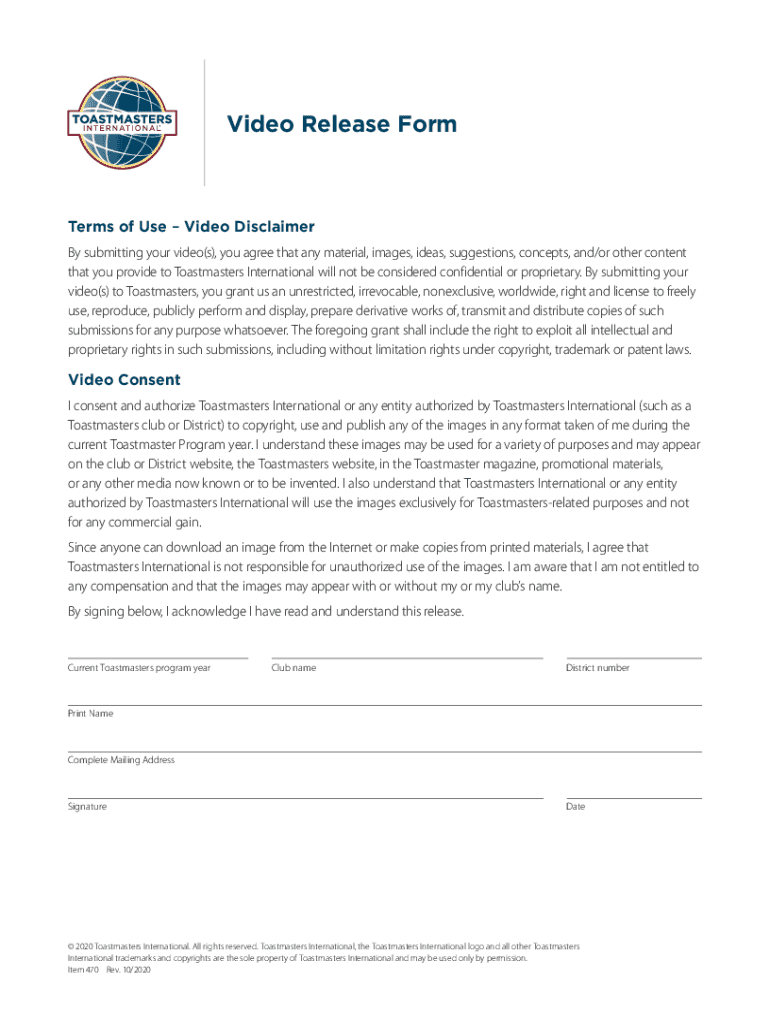
A Video Release Form (Free Sample) - SignWell is a legal document used to obtain permission from individuals allowing the use of their likeness and voice in video recordings. It ensures that the content owner or producer can publish and distribute videos without legal constraints from subjects featured in them. Often, such forms are utilized in various fields, including media production, corporate communications, and educational institutions, to legally protect companies and individuals from potential disputes over privacy rights and image use.
Key Components of the Form
- Consent Clause: This section clearly states that the individual gives permission for their image and voice to be recorded and used.
- Scope of Use: Defines how and where the video may be used, such as for educational, promotional, or commercial purposes.
- Waiver of Rights: The individual agrees to relinquish any future claims against the use of the video.
- Compensation Details: Specifies whether any payment or compensation is provided for the use of the video footage.
- Duration and Terms: Outlines how long their consent is valid and any conditions that apply.
How to Use the Video Release Form
Preparing the Form
- Download and Review: Obtain the Video Release Form (Free Sample) - SignWell from trusted sources like DocHub.
- Understand Requirements: Read through each section to understand the requirements and implications fully.
- Customize the Form: Edit any specific details, such as the name of the production or the nature of the content.
Filling Out the Form
- Enter Personal Information: Include the names and contact details of both the subject and the producer.
- Specify Usage Intentions: Clearly outline how the video will be used, aligning with the subjects’ expectations.
- Discuss Terms: Ensure both parties understand the terms thoroughly to avoid any future misunderstandings.
Steps to Complete the Video Release Form
- Introduction and Purpose Overview: Address the form to the participant, explaining the content and intention of the video.
- Consent Acknowledgment: Have the participant sign the form agreeing to the stated terms.
- Ensure Clarity and Transparency: Go over each clause verbally with the participant to ensure they fully grasp their rights and the scope of content use.
- Signatures: Have both the participant and a representative of the organization sign and date the document. Maintain a copy for your records.
- Storage and Accessibility: Securely store the signed document, ensuring it is easily retrievable for reference if needed.
Legal Use of the Video Release Form
Ensuring Compliance
- Adherence to Laws: Align the form with relevant laws, including federal and state regulations about individual rights and privacy.
- Validity Check: Regularly review the form for legal validity, especially with changing laws about digital content and rights management.
Advantages of Legal Protection
- Avoidance of Legal Conflicts: A well-executed form protects against potential lawsuits concerning image and voice rights.
- Professional Integrity: Demonstrates a commitment to legal and ethical standards in content production and distribution.
Key Elements of the Video Release Form
Essential Sections
- Participant Identification: Details about the individual granting rights.
- Usage Purpose: Descriptive language about how the content will be utilized.
- Terms and Conditions: Clear outline of the rights, limitations, and expectations for all involved parties.
- Liability Waiver: Legal language to release the publisher from claims by the subject.
Who Typically Uses the Video Release Form


Common Users
- Media Companies: For television shows, films, and promotional content.
- Corporations: When creating training, marketing, or internal communications videos.
- Educational Institutions: Documenting student projects, courses, or promotional material.

Industry Applications
- Nonprofits: Using videos for fundraising and awareness campaigns.
- Event Organizers: For recording conferences, workshops, or public events.
Examples of Using the Video Release Form
Practical Scenarios
- Corporate Training Videos: Ensuring employees featured in training modules have provided consent.
- Social Media Campaigns: Acquiring permissions for featuring customer reviews or testimonials in video format.
- Documentaries: Use in capturing interviews and personal stories, requiring formal consent for public dissemination.
Case Studies
- Educational Course Development: A university incorporated video elements into their curriculum, obtaining forms to ensure all students were briefed and consenting participants.
- Community Projects: Filming local events, the organizers acquired video release forms to ethically capture and distribute the content.
Important Terms Related to the Video Release Form
Legal Definitions
- Likeness: Includes any identifiable features, such as the image or voice of an individual.
- Waiver: A document where an individual voluntarily relinquishes certain rights.
- Copyright: Protects original works and requires permission for the use of specific media content.
Additional References
- Privacy Rights: Laws protecting an individual's personal information and image.
- Intellectual Property: Pertains to rights and ownership entrenched in created visual or media content.
By gaining insight into these crucial aspects of the Video Release Form (Free Sample) - SignWell, individuals and organizations can ensure legally sound practices when utilizing video content that features living subjects.