Definition and Purpose of the South Carolina Highway Patrol Wrecker Service Log
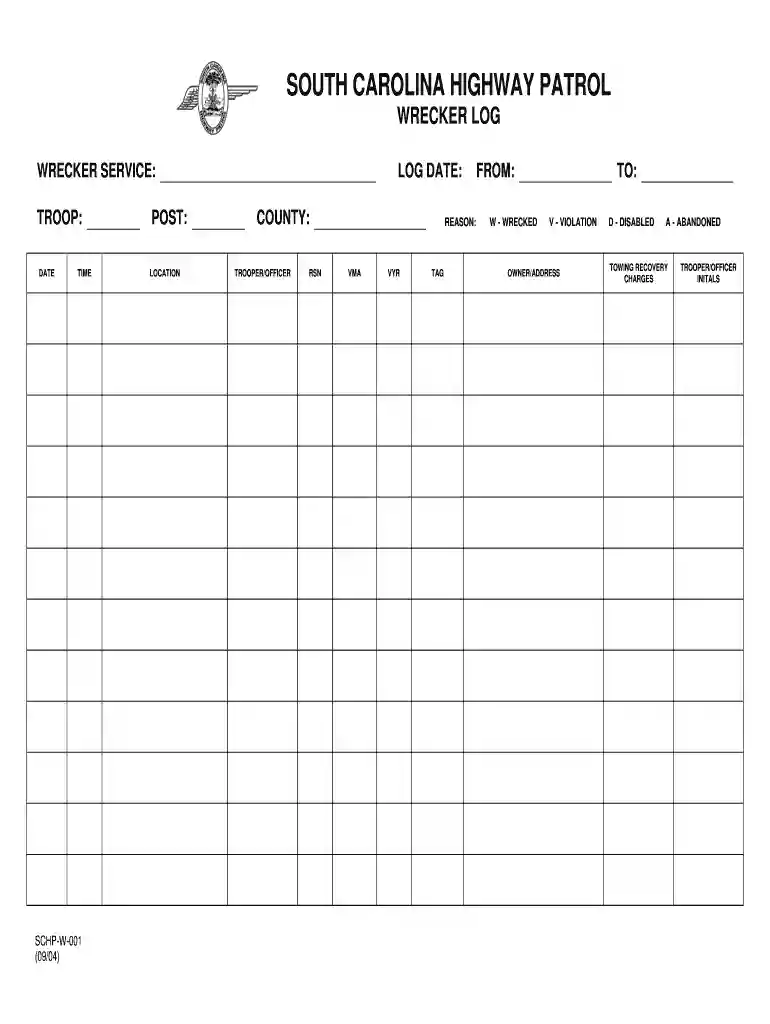
The South Carolina Highway Patrol Wrecker Service Log is a formal document used to systematically record details related to wrecker or towing services. This log serves as an official record for law enforcement, wrecker operators, and vehicle owners to track incidents involving vehicle towing or recovery. The log documents vital information including the date and time of the towing service, the location, the reason for towing, vehicle information, and any charges incurred. This standardized format helps ensure accountability and transparency in towing operations, providing essential details for invoicing, auditing, and dispute resolution.
Key Elements of the South Carolina Highway Patrol Wrecker Service Log
Understanding the critical components of the wrecker service log is essential for accurate documentation. The key elements include:
- Date and Time of Service: Records when the towing service occurred.
- Location: Specifies the exact location from where the vehicle was towed.
- Reason for Towing: Provides the rationale for the service, such as illegal parking or vehicle breakdown.
- Vehicle Information: Details of the vehicle involved, including make, model, color, and registration number.
- Charges: Includes any fees associated with the towing or storage of the vehicle.
- Operator Details: Information about the wrecker service provider and personnel involved.
Each of these elements is critical to maintaining a thorough and accurate record that can be referenced in future transactions or inquiries.
Steps to Complete the South Carolina Highway Patrol Wrecker Service Log
Filling out the Wrecker Service Log requires attentiveness to ensure all relevant details are correctly captured. Here are step-by-step instructions:
- Begin with Identification: Fill in the officer's or operator's identification number if applicable.
- Log the Date and Time: Clearly note the exact date and time the towing service was initiated.
- Specify the Location: Detail the precise physical address or landmarks where the towing took place.
- Describe the Reason: Briefly explain the circumstances necessitating the towing service.
- Document Vehicle Details: Include all available information about the vehicle, ensuring accuracy in each field.
- Indicate Charges: Clearly outline any applicable charges for the service, including towing fees and storage costs.
- Provide Signature: Ensure the log is signed by the responsible officer or towing operator for verification and accountability.
Who Typically Uses the South Carolina Highway Patrol Wrecker Service Log
Various stakeholders utilize this log for different purposes:
- Law Enforcement Officers: To maintain a record of towing operations conducted under their jurisdiction.
- Wrecker Operators: To document services provided and ensure compliance with regulations.
- Vehicle Owners: Who need detailed records in cases of disputes or insurance claims.
- Insurance Companies: For verification purposes when processing claims related to towed vehicles.
Understanding the varied users ensures that the log meets the needs of all parties involved and maintains the integrity of the towing operation.

Legal Use and Compliance with the South Carolina Highway Patrol Wrecker Service Log
The legal framework surrounding the Wrecker Service Log assures proper conduct in towing operations. Compliance typically involves:
- Adherence to State Regulations: Ensuring all information is recorded as per South Carolina laws.
- Data Accuracy: Avoiding errors or misrepresentations in the log to prevent legal repercussions.
- Access and Disclosure: Restricted access to authorized personnel only to maintain confidentiality and data protection standards.
Ensuring compliance with these guidelines reinforces the log's role as a trusted and authoritative source of information.
How to Obtain the South Carolina Highway Patrol Wrecker Service Log
Obtaining a copy of the Wrecker Service Log typically involves the following steps:
- Contacting Law Enforcement Agencies: The South Carolina Highway Patrol or local police departments usually issue these logs.
- Wrecker Service Provider: Many towing companies maintain a set of logs for operational purposes.
- Online Resources: Digital versions may be accessible through authorized state websites or registries.
Access to the log may vary based on specific legal and operational requirements, ensuring that parties retrieve logs in a manner compliant with regulatory standards.
Examples of Using the South Carolina Highway Patrol Wrecker Service Log
Practical applications of the Wrecker Service Log include:
- Dispute Resolution: Vehicle owners disputing a charge can reference the log for accurate details.
- Insurance Claims: Insurance adjusters use logs to validate claims related to towing services.
- Operational Audits: Transportation departments conduct audits using logs to evaluate compliance and efficiency in towing operations.
- Legal Proceedings: When involved in legal disputes, parties may use the log as evidence to support their cases.
These examples illustrate the log's utility in various scenarios, showcasing its importance beyond simple record-keeping.
Variations and Alternatives to the South Carolina Highway Patrol Wrecker Service Log
While the standard log serves a broad range of needs, certain variations or alternatives may include:
- Digital Logs: Electronic versions enhance accessibility and ease of use, offering features like digital signatures and online submission.
- Customized Templates: For specific agencies or larger operations, tailored logs with additional fields may be developed.
- Alternative Forms: Where jurisdictions have unique requirements, different log formats may be adopted.
These alternatives are designed to accommodate varying needs and preferences, ensuring the log's effectiveness across different contexts.
Required Documents and Supporting Materials
Completing and maintaining the Wrecker Service Log may involve additional documents, such as:
- Authorization Forms: Permissions where applicable for towing vehicles.
- Receipts: For charges listed, providing transparency and accountability.
- Photos or Videos: Media evidence of the towing operation, often accompanying the log for insurance or legal purposes.
Including these supporting materials enhances the reliability and completeness of the records maintained within the log.