






Definition & Meaning
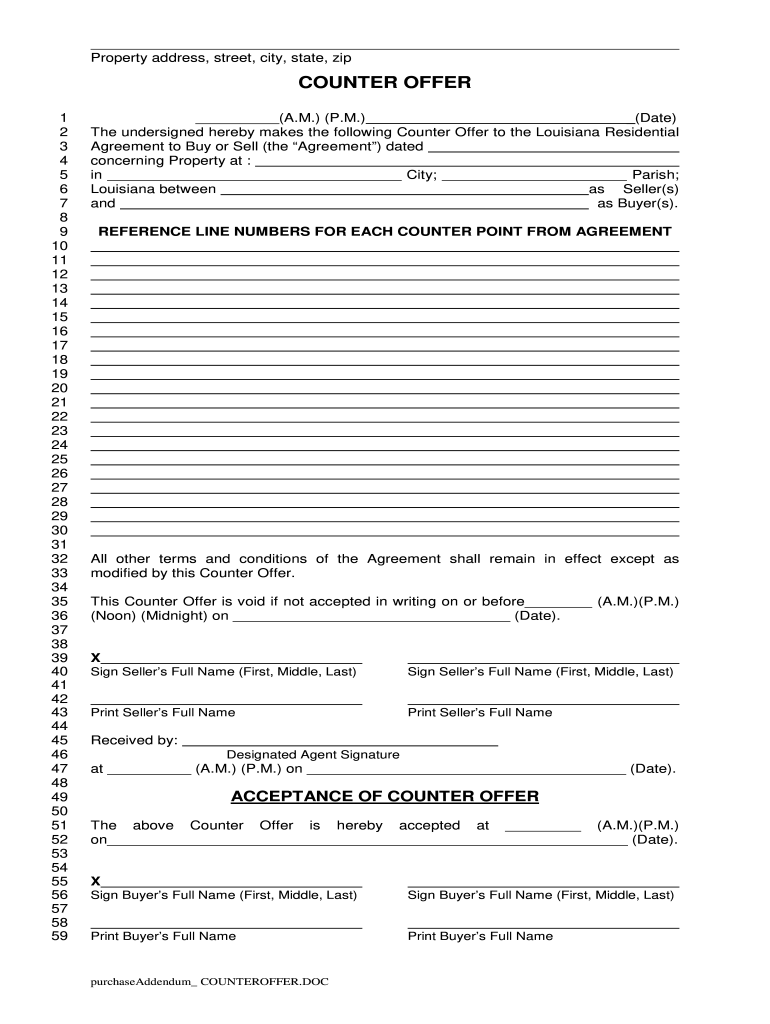
The "Louisiana Counter Offer" form, often referred to as the "Louisiana Counter Noon," is used in real estate transactions within the state of Louisiana. It serves as a formal document allowing either the buyer or the seller to propose changes to the original terms specified in a Residential Agreement to Buy or Sell. This counteroffer includes modifications and aims to reach a mutual agreement between the involved parties during the negotiation process. It is crucial to understand that all unchanged terms from the original contract remain valid unless explicitly altered in the counter offer.
How to Use the Louisiana Counter Noon
To utilize the Louisiana Counter Offer form effectively, individuals should first review the original purchase agreement thoroughly. Understanding the terms one wishes to modify is essential. Once identified, clearly state these changes within the counter offer document, referencing specific line numbers from the original agreement to avoid confusion. After drafting, ensure both parties review and sign the form to express consent to the new terms. This form should then be circulated among all stakeholders to maintain transparency.
Steps to Complete the Louisiana Counter Noon
-
Review the Original Agreement:
- Examine all sections and identify terms you want to modify.
- Note the original line numbers associated with these terms.
-
Draft the Counter Offer:
- Clearly write out the proposed changes, maintaining clarity and specificity.
- Use the reference line numbers for accurate adjustments.
-
Add Signature Blocks:
- Include sections for signatures from both the buyer and the seller.
- Specify acceptance timelines to ensure prompt responses.
-
Finalize and Distribute:
- Ensure all parties sign the document to validate the changes.
- Distribute copies to all relevant parties, including real estate agents.
Key Elements of the Louisiana Counter Noon
- Reference to Original Agreement: The counter offer must refer back to the line numbers of the original agreement to ensure clarity.
- Modification Clauses: Clearly state any change in terms, including price adjustments, closing dates, or specific contingencies.
- Signatures and Date: All parties involved must sign and date the counter offer, indicating their agreement to the new terms.
Legal Use of the Louisiana Counter Noon
The legality of the Louisiana Counter Offer hinges on mutual consent between the involved parties. Both the buyer and the seller must sign the document for it to hold any legal weight. This form is a part of real estate negotiations and is governed by Louisiana real estate law. Parties are encouraged to consult legal counsel to ensure compliance with state regulations and to understand the legal implications of proposed changes within the counter offer.
State-Specific Rules for the Louisiana Counter Noon
In Louisiana, the counter offer must comply with specific state real estate laws, which may include regulations about disclosures, such as property condition or legal liens. It is important that the modifications don’t contravene local real estate standards or obligations. Louisiana law also requires that any changes in the offer are documented thoroughly, maintaining transparency and legal integrity.
Important Terms Related to Louisiana Counter Noon
- Buyer and Seller: The parties involved in the real estate transaction.
- Offer and Counter Offer: The initial agreement and the subsequent modifications proposed.
- Acceptance: The consent by all parties shown through their signatures.
Examples of Using the Louisiana Counter Noon
Real estate transactions often involve negotiations. Consider a scenario where a buyer finds the proposed closing date unsuitable. They can use the counter offer to propose a new closing date. If a seller wishes to alter the purchase price based on a recent evaluation, they would also employ this document. In each scenario, all changes must be mutually agreed upon and clearly outlined in the counter offer.
Who Issues the Form
The Louisiana Counter Offer form is typically provided by real estate agents who represent either party in the transaction. These professionals ensure that the form adheres to state requirements and that it is appropriately filled out. In some cases, legal counsel may also issue or review the form to safeguard against potential disputes and to ensure the counter offer aligns with state laws.