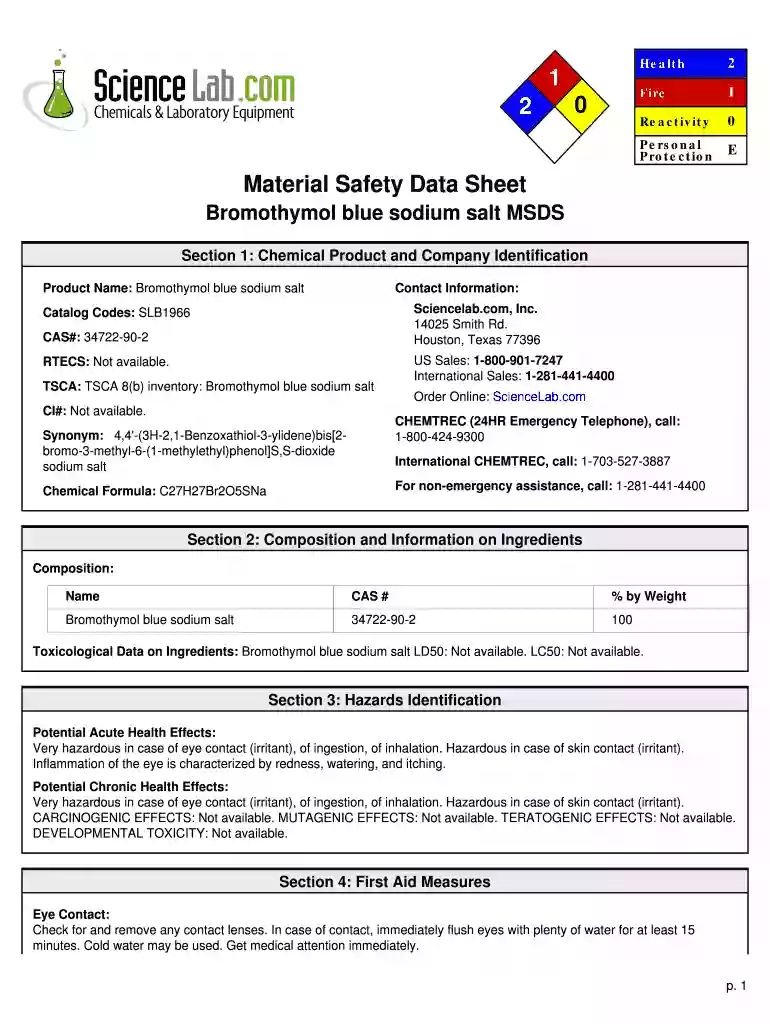
Definition and Importance of Bromothymol Blue Sodium Salt MSDS
The Material Safety Data Sheet (MSDS) for Bromothymol blue sodium salt serves as a critical document that outlines safety information related to this chemical substance. It is designed to provide guidance on handling, storing, and responding to emergencies involving Bromothymol blue sodium salt. The MSDS contains detailed information on the chemical's properties, potential hazards, and protective measures, ensuring that users can safely work with this substance in laboratories, industrial settings, or any environment where it is employed.
- Chemical Identification: Bromothymol blue sodium salt is a pH indicator and its MSDS provides essential identification details, including chemical names, synonyms, and appropriate labeling information.
- Safety and Compliance: Adhering to the MSDS is crucial for regulatory compliance and maintaining a safe work environment. It helps prevent accidents, injuries, and potential legal issues.
How to Use the Bromothymol Blue Sodium Salt MSDS
The Bromothymol blue sodium salt MSDS is an instrumental tool for ensuring safety and compliance in various settings. Proper use of the MSDS involves understanding its information and applying it correctly in the workplace.
- Familiarize with Hazards: Study the hazard identification section to understand potential risks like flammability, toxicity, or environmental harm.
- Implement Controls: Utilize the exposure controls and personal protective equipment (PPE) recommendations to safeguard against identified hazards.
- Emergency Procedures: Be aware of first aid and emergency response instructions outlined in the MSDS to handle incidents effectively.
How to Obtain the Bromothymol Blue Sodium Salt MSDS
Accessing the MSDS for Bromothymol blue sodium salt is straightforward, as it is a required document under occupational safety regulations.
- Suppliers and Manufacturers: Request the MSDS directly from the supplier or manufacturer, who is legally obligated to provide it with the product.
- Online Resources: Many companies offer digital MSDS libraries where documents can be downloaded for reference.
Key Elements of the Bromothymol Blue Sodium Salt MSDS
A comprehensive understanding of the Bromothymol blue sodium salt MSDS involves being aware of its key components.
Composition and Information on Ingredients
- Chemical Composition: Detailed information about chemical ingredients, including their concentrations and potential impurities.
- Safety Limits: Occupational exposure limits such as PELs (Permissible Exposure Limits) set by OSHA are outlined to prevent hazardous exposure levels.
First-Aid Measures
- Immediate Actions: Step-by-step instructions for administering first aid in cases of skin contact, ingestion, or inhalation.
- Medical Attention: Guidance on when to seek professional medical treatment.
Firefighting Measures
- Suitable Extinguishing Media: Recommendations for fire extinguishers and methods appropriate for chemical fires involving Bromothymol blue sodium salt.
- Protective Gear: Information on PPE requirements for firefighting personnel to ensure safety during a fire.
Protective Equipment Recommendations
The MSDS provides clear guidance on the selection and use of personal protective equipment (PPE) to mitigate risks associated with Bromothymol blue sodium salt.
- Gloves and Clothing: Specific materials recommended for gloves and protective clothing to prevent skin contact.
- Respiratory Protection: Circumstances under which respirators are necessary, and types of respirators appropriate for different exposure levels.
Legal Considerations in the Use of Bromothymol Blue Sodium Salt MSDS
Understanding the legal implications of MSDS usage is critical, especially in compliance with U.S. safety regulations.
- OSHA Compliance: Businesses must adhere to OSHA's Hazard Communication Standard (HCS) which mandates providing access to MSDSs for workers.
- EPA Regulations: Environmental considerations as discussed in the MSDS must align with the Environmental Protection Agency (EPA) standards to prevent environmental damage.
State-Specific Rules and Differences
While the MSDS serves as a universal safety document, certain state-specific regulations might impose additional requirements.
- California Proposition 65: Ensure that chemicals listed under Proposition 65 are identified, and necessary warnings are provided.
- State-Specific Variations: Some states may have unique substance control laws necessitating additional documentation or precautions.
Examples of Using the Bromothymol Blue Sodium Salt MSDS in Various Settings
Real-world applications of the Bromothymol blue sodium salt MSDS illustrate its use across diverse environments.
- Laboratories: Researchers use the MSDS to set up safe experimental procedures and emergency plans.
- Industries: Industrial facilities integrate MSDS guidelines into their standard operating procedures to ensure worker safety and regulatory compliance.
Required Documentation and Recordkeeping
Maintaining accurate records of MSDS documents is a crucial aspect of chemical safety management.
- Digital and Physical Copies: Companies must ensure that both digital and paper copies of the MSDS are easily accessible to all employees.
- Training Records: Document employee training sessions that cover MSDS content and safety protocols to ensure ongoing compliance.
Eligibility Criteria for Obtaining MSDS Documents
While the MSDS is aimed primarily at professionals handling Bromothymol blue sodium salt, understanding who should have access is critical for safety and compliance.

- Workplace Accessibility: MSDSs should be accessible to all employees who may come into contact with the substance.
- Training Programs: Implement training initiatives for workers to understand and navigate MSDS documents effectively.