







Understanding NEW PERMIT0RENEWAL PERMIT0
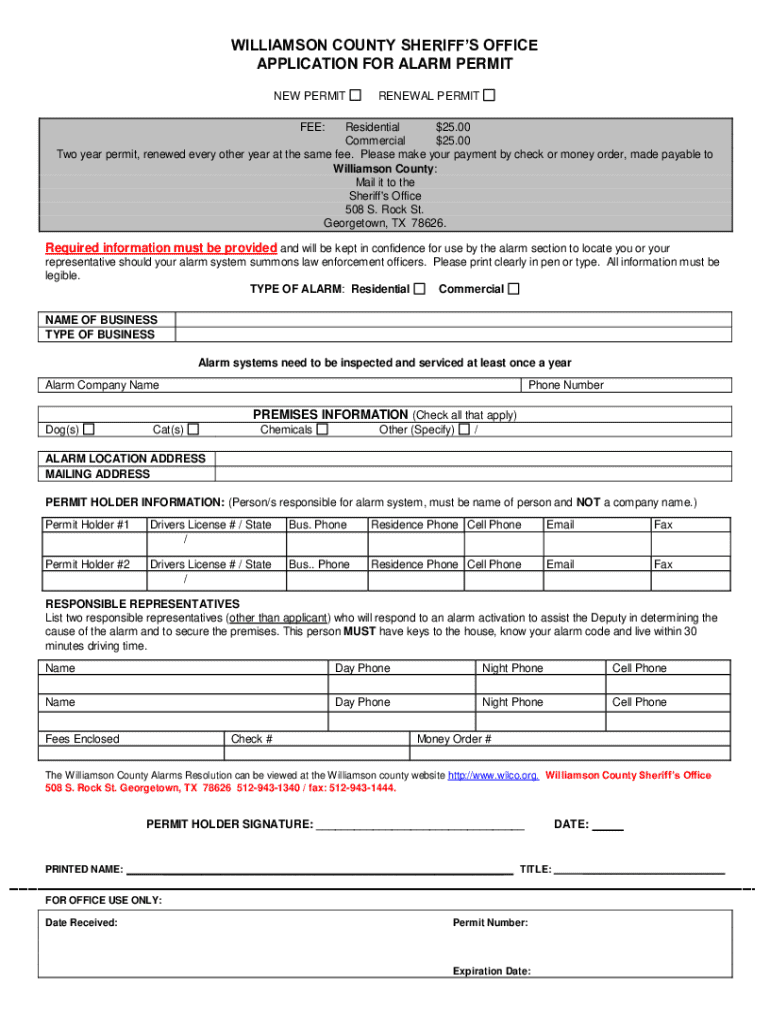
The "NEW PERMIT0RENEWAL PERMIT0" form is utilized primarily for the purpose of obtaining or renewing an alarm permit typically required by certain county or municipal authorities. This specific permit is often linked to managing security systems within residential or commercial properties. The form outlines detailed requirements for acquiring either a new permit or renewing an existing one, often involving specific legal and procedural steps.
How to Use the NEW PERMIT0RENEWAL PERMIT0
- Purpose Identification: The first step involves understanding whether you need a new permit or are renewing an existing one. The form instructions will guide you on the specific sections to fill out based on this need.
- Gather Information: Collect all required details, such as the property's address, contact information of the property owner, and details about the alarm system installed.
- Form Completion: Ensure all the necessary fields are filled out correctly. This form may require detailed entries such as the type of alarm system and its location within the property.
Steps to Complete the NEW PERMIT0RENEWAL PERMIT0
- Review Instructions: Begin by thoroughly reading the form instructions, which clarify the fields that require your input.
- Enter Personal and Property Details: Fill in basic information, including your full name, contact information, and the address where the alarm system is located.
- Provide Alarm System Information: Detail the type of alarm system, installation date, and any previous permit numbers if renewing.
- Check for Additional Requirements: Some jurisdictions may require proof of compliance or a fee payment at this stage.
- Sign and Submit: Ensure the form is signed, and decide on the method of submission—online, mail, or in-person as per the issuing authority's guidelines.
Who Typically Uses the NEW PERMIT0RENEWAL PERMIT0
This form is commonly used by:
- Homeowners and Tenants: Individuals who install security systems in their residences for safety.
- Business Owners: Commercial establishments needing to comply with local laws regarding security and alarm systems.
- Security System Installers: Professionals or companies may also be involved in facilitating the permit process for their clients.


Legal Use of the NEW PERMIT0RENEWAL PERMIT0
Adhering to the correct use of this form is crucial to avoid legal complications. Proper completion and submission of the form ensure compliance with local laws and regulations that mandate alarm system registration. Failure to adhere may result in penalties or fines.
Key Elements of the NEW PERMIT0RENEWAL PERMIT0
- Identification of Permit Type: Clearly indicate whether it is a new permit or renewal.
- Fee Details: Provide any applicable fees or proof of payment as required by the issuing authority.
- Declaration and Signature: Affirm the accuracy of the information provided and acknowledge compliance with local regulations.
State-Specific Rules for the NEW PERMIT0RENEWAL PERMIT0
Different states and counties may have specific rules:
- Requirements: While some jurisdictions may mandate an annual renewal, others may offer multi-year permits.
- Fee Variations: The cost structure for new versus renewal permits can vary widely.
- Additional Documentation: Some regions may require more comprehensive documentation or inspections.
Examples of Using the NEW PERMIT0RENEWAL PERMIT0
A homeowner in Williamson County may apply for a new alarm permit after installing a home security system. Meanwhile, a local business seeking to renew its existing permit would use the same form, updating any changes in system details or ownership that occurred during the previous period.
Form Submission Methods
- Online: Many local authorities now offer digital submission options for convenience.
- Mail: Traditional mail continues to be a reliable method for submitting forms.
- In-Person: Particularly useful if immediate feedback or assistance is needed during submission.
Compliance with local rules ensures uninterrupted security and legal operation of alarm systems, protecting both residential and commercial properties.




