






Definition & Meaning
Virginia tax refers to the state-imposed taxes on residents and businesses operating within Virginia. These taxes consist of various forms such as income tax, sales tax, property tax, and excise tax. The primary function is to generate revenue for the state, which is used for public services including education, transportation, and infrastructure. The Virginia Department of Taxation is responsible for administering tax laws and ensuring compliance through audits and enforcements. For individuals and corporations, understanding the nuances of Virginia tax laws is essential to remain compliant and optimize tax obligations legally.
How to Obtain the Virginia Tax Form
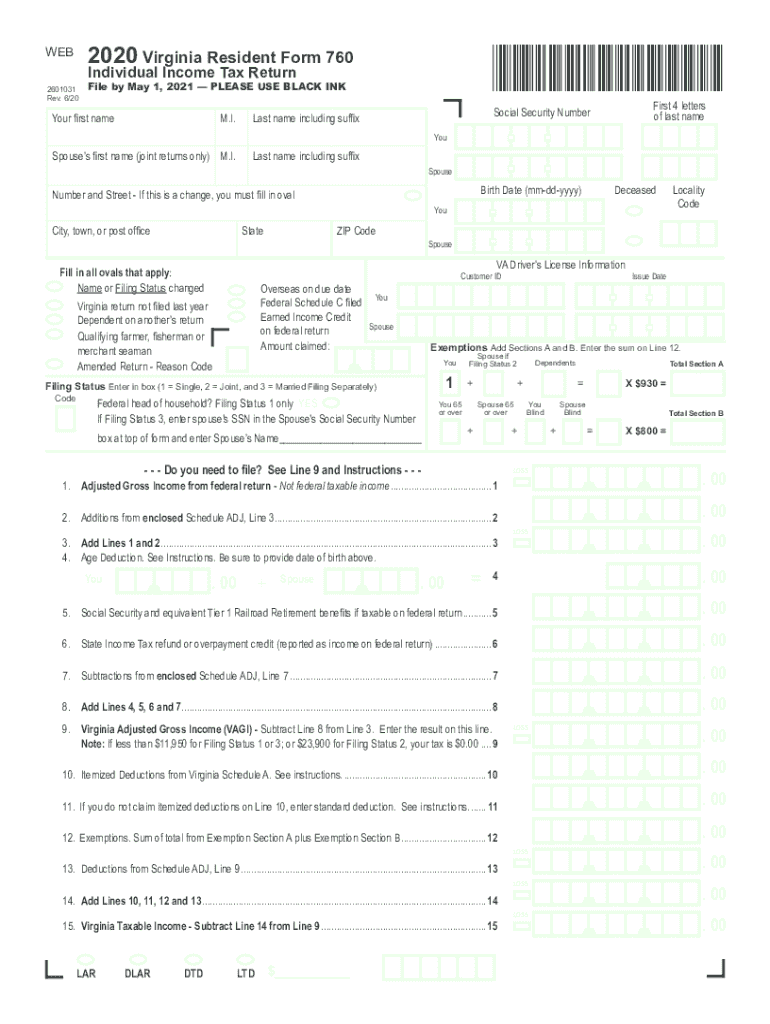
Obtaining the Virginia Resident Form 760, which is the individual income tax return form, can be done in several ways. Taxpayers can download it directly from the Virginia Department of Taxation’s website. Alternatively, printed forms are available at local libraries and post offices, ensuring that individuals without internet access still receive the necessary documents. For businesses, forms can also be issued by tax professionals and preparation services. It is crucial to acquire the correct form version for each tax year to ensure the information aligns accurately with current tax regulations.
Steps to Complete the Virginia Tax Form
Completing the Virginia Resident Form 760 involves the following steps:
-
Gather Required Documents: Before filling out the form, collect important documents like W-2s, 1099s, previous tax returns, and records of any deductible expenses.
-
Fill Out Personal Information: Include your name, Social Security Number, and current address to correctly identify your tax account.
-
Report Income: Summarize all income sources, including salaries, business income, and investment gains. Calculate your adjusted gross income (AGI) accurately.
-
Determine Filings Status and Exemptions: Choose your filing status—single, married filing jointly, etc., and list any dependents or exemptions you qualify for.
-
Calculate Deductions and Credits: Detail any eligible deductions like mortgage interest or student loan interest, and tax credits, such as education credits.
-
Compute Tax Liability or Refunds: Once deductions and credits are applied, calculate the total tax owed or the refund due.
-
Sign and Date the Form: Conclude by signing and dating the form within the specified area to ensure it is legally binding.
Filing Deadlines / Important Dates
The standard deadline for filing the Virginia Resident Form 760 is May 1st following the tax year, aligning with the due date for federal income tax returns in April. If the deadline falls on a weekend or holiday, it is extended to the next business day. Taxpayers must file by this date to avoid penalties for late submission. Extensions can be requested, allowing additional time to file, although any taxes owed must still be paid by the original deadline to avoid interest charges.
Required Documents
To file the Virginia tax return, individuals should prepare and include:
- Copies of federal tax return forms, as they are referenced in the Virginia return.
- W-2 forms for all salaried income.
- 1099 forms for miscellaneous sources of income like contract work or dividends.
- Documentation of any deductions and credits claimed, such as student loan interest payment records or receipts for charitable contributions.
- Previous year’s state return, for reference or amendment if necessary.
- Relevant identification, such as a Social Security card, for resident verification.
State-Specific Rules for the Virginia Tax
Virginia has particular rules that distinguish it from other states:
- Filing Thresholds: Taxpayers must file if they meet specific income thresholds, which vary based on filing status.
- Local Taxes: Certain counties may have additional taxes applicable to specific services or products.
- Special Exemptions: Virginia offers unique exemptions, such as those for certain government employees and military personnel.
Understanding these rules is crucial to ensure compliance and to take full advantage of possible exemptions and deductions.
Penalties for Non-Compliance
Virginia imposes penalties for failing to file or pay taxes on time. Late filing attracts a 6% monthly penalty, capping at 30% of the tax due. There is also a late payment penalty, which is 2% per month of unpaid taxes, up to 20%. Interest accrues on late payments at a rate established by the state; this can add significantly to the taxpayer's bill if not resolved promptly. Compliance with tax deadlines and requirements is critical to avoid these financial penalizations.
Software Compatibility
Preparation and filing can be facilitated using tax software such as TurboTax or QuickBooks, both of which support Virginia state tax forms. These programs provide step-by-step guidance to ensure all information is correctly entered and deductions or credits are maximized. They also offer electronic filing options, which reduce human error and expedite the submission and refund process. Software compatibility ensures a streamlined and user-friendly process for taxpayers preparing Virginia Forms 760 from their personal computers or mobile devices.