






Definition and Purpose of the 2012 Virginia Resident Form 760
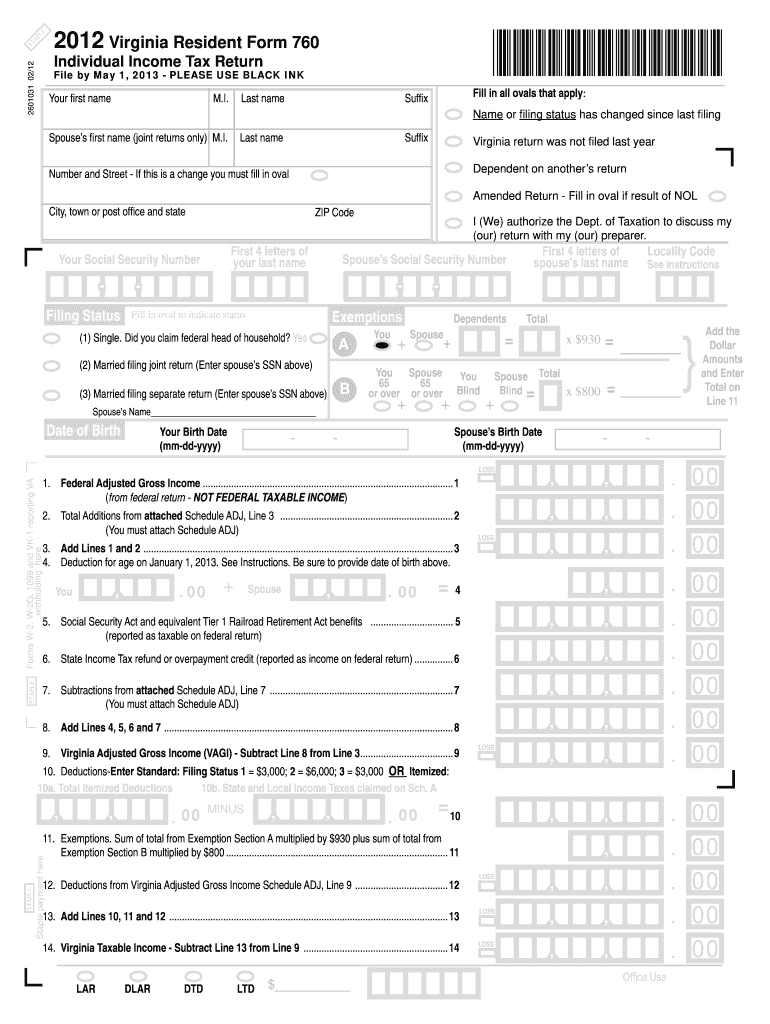
The 2012 Virginia Resident Form 760 is an Individual Income Tax Return form required for residents of Virginia. It serves the purpose of reporting individual income and calculating state tax liabilities for the 2012 tax year. Taxpayers must report their federal adjusted gross income alongside Virginia-specific deductions, exemptions, and credits to determine the state taxable income. Understanding the form's definition and purpose is crucial for ensuring compliance with state tax obligations.
How to Use the 2012 Virginia Resident Form 760
- Gather Necessary Information: Collect details regarding personal information, income, and any supporting documents.
- Enter Personal Information: This includes your name, address, social security number, and filing status.
- Report Income: Provide accurate data on all sources of income as required.
- Calculate Deductions and Exemptions: Enter eligible deductions and exemptions, and ensure they align with Virginia's state-specific rules.
- Determine Taxable Income: Use the form to assess your Virginia taxable income by deducting applicable amounts from your total income.
- Compute Tax Due or Refund: Utilize the form's guidance to determine the final tax due or refund amount.
Steps to Complete the 2012 Virginia Resident Form 760
- Download the Form: Obtain a copy of the 2012 Virginia Resident Form 760 from the Virginia Department of Taxation's website.
- Fill Out Personal Information: Begin by entering your personal and filing status details accurately.
- Income Reporting:
- Enter income from wages, salaries, and other forms of compensation.
- Report any business income, interest, dividends, or other taxable income.
- Deductions and Exemptions:
- Calculate and include any standard or itemized deductions.
- List exemptions based on dependents and personal status.
- Tax Calculation: Follow the instructions to compute your tax liability or refund.
- Final Review: Double-check all entries for accuracy before submission.
- Submit the Form: File electronically or mail the completed form by the due date.
Filing Deadlines and Important Dates
- Due Date: The 2012 Virginia Resident Form 760 must be filed by May 1, 2013, to avoid penalties.
- Estimated Tax Payments: Those required to make estimated payments should ensure timely submissions throughout the tax year.
- Extensions: If needing an extension, apply before the due date to avoid late-filing penalties. However, note that any taxes owed should still be paid by May 1.
Required Documents for the 2012 Virginia Resident Form 760
- Form W-2: Wage and tax statement from employers.
- Form 1099: For any additional income received, such as self-employment, dividends, or interest.
- Previous Year Tax Returns: Copies of prior returns for reference and comparison.
- Documentation of Deductions: Receipts and records supporting any claimed deductions or credits.
- Social Security Numbers: Required for all filers and listed dependents.
Legal Use and Compliance Requirements
The 2012 Virginia Resident Form 760 must be completed with honest and accurate information to comply with state taxation laws. Misrepresentation or omission of required data may lead to penalties, fines, or further audits by tax authorities. Understanding the legal implications of filing is vital to ensuring compliance and avoiding legal issues.
Who Typically Uses the 2012 Virginia Resident Form 760
- Virginia Residents: Any individual residing in Virginia with taxable income.
- Part-Year Residents: Those who lived in Virginia for a part of the year but still need to report state income.
- Dependents: Often used by parents or guardians reporting dependent income when applicable.


Key Elements of the 2012 Virginia Resident Form 760
- Personal Information Section: Captures essential personal details and filing status.
- Income Section: Includes a comprehensive list of income types and reporting requirements.
- Deductions and Credits: Sections allowing for both standard and itemized deductions as well as applicable state credits.
- Tax Computation: A structured calculation method for determining tax due or refund.
- Verification and Signature: Final confirmation section requiring taxpayer signature and date to certify accuracy.
State-Specific Rules for the 2012 Virginia Resident Form 760
Virginia residents must adhere to specific tax rules and regulations that differ from federal guidelines. Examples include certain state-specific deductions or credits not available at the federal level. Keeping abreast of changes in state tax law ensures the correct completion of the 2012 Form 760 and helps avoid unnecessary errors.
Examples and Scenarios Using the 2012 Virginia Resident Form 760
- Full-Year Resident: An individual who worked all year in Virginia would use this form to report all income, deductions, and ultimately determine the tax due.
- Self-Employed Resident: This scenario involves reporting business income and deductions unique to sole proprietors.
- Retired Individual: A retiree with pension income may need to consider different exemptions and credits applicable in Virginia.
These examples provide a practical understanding of how different individuals utilize the form to satisfy Virginia tax obligations.