






Definition & Meaning
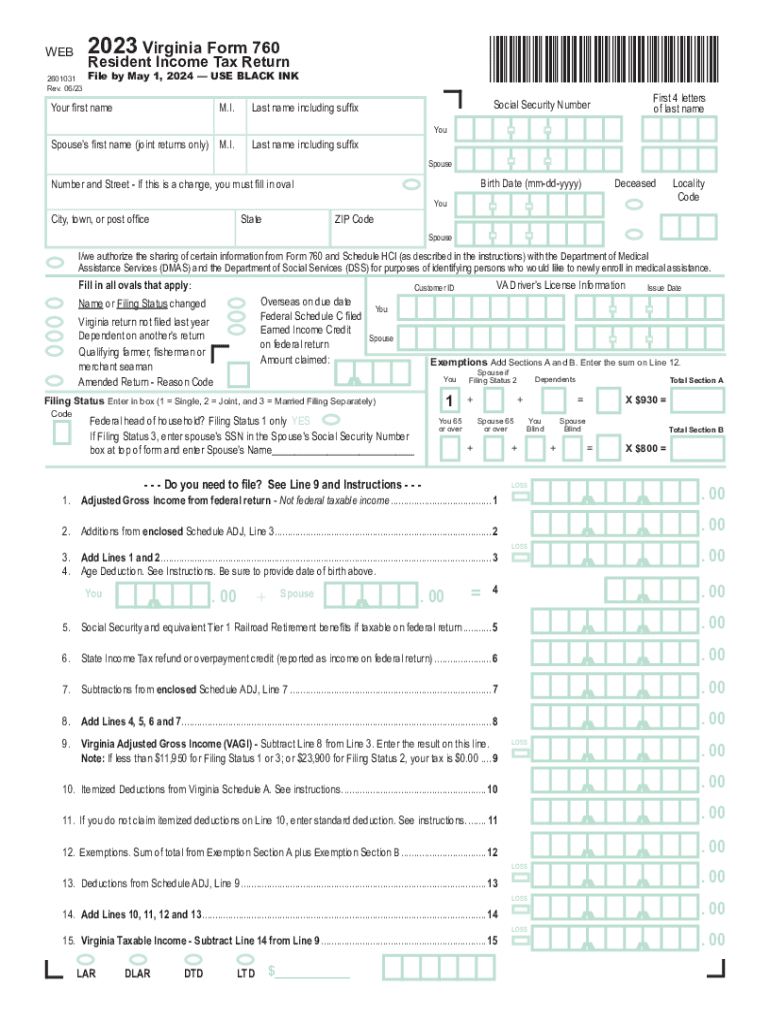
The 2023 Virginia Resident Form 760 is a crucial document for residents of Virginia who need to report their individual income tax for the year 2023. It is designed to capture a comprehensive overview of an individual's financial situation, including income, deductions, and credits, to calculate the state income tax owed. The form serves as a legal declaration of one's income details and is essential for maintaining compliance with state tax laws.
Virginia residents must accurately disclose all sources of their income, leverage applicable deductions and exemptions, and calculate their final tax liability using Form 760. Completing this form correctly ensures that taxpayers fulfill their state taxation obligations, avoid penalties, and potentially secure refunds for overpayments.
How to Obtain the Form
Virginia residents can obtain the 2023 Form 760 from multiple sources, ensuring accessibility for all taxpayers:
- Virginia Department of Taxation Website: The form is available for download as a PDF from the official Virginia Taxation site. This is the most direct and frequently updated source.
- Local Tax Offices: Physical copies can be collected from local tax offices, providing accessibility for residents who may not prefer online downloads.
- Mail Requests: Taxpayers can request a mail delivery of the form by contacting the Virginia Department of Taxation.
- Tax Preparation Software: Many tax preparation software, such as TurboTax or QuickBooks, include Virginia Form 760 within their platforms for ease of use.
Access through Libraries and Community Centers
Local libraries and community centers often stock tax forms or provide printing services for public use. This can be a convenient option for those without direct internet access or printing capabilities.
Steps to Complete the Form
Completing the 2023 Virginia Resident Form 760 requires attention to detail. Here's a step-by-step guide to help you navigate the process:
-
Personal Information: Begin by filling out your personal information, including name, address, and social security number.
-
Income Reporting: Enter the total income, including wages, interest, dividends, and any other sources as specified on your federal tax return.
-
Deductions and Exemptions: Identify and declare any eligible deductions and exemptions. This may include personal exemptions or credits specific to Virginia residents.
-
Tax Credits: Apply any allowable credits, such as the credit for taxes paid to another state or the Low-Income Individuals Credit, which can significantly reduce your tax liability.
-
Calculate Tax Due: Compute the total tax due after applying deductions and credits. Consult the Virginia tax rate schedules or use tax preparation software to ensure accuracy.
-
Final Review and Submission: Double-check all entries for correctness before signing the form. Submission can be done electronically through approved e-file systems, or the form can be mailed to the designated address.
Special Considerations
- Direct Deposit Information: For refunds, provide bank account details to opt for direct deposit, ensuring a quicker return.
- Attachments: Include any necessary supporting documents, such as schedules or worksheets referenced in your return.
Why Use the Form
Filing the 2023 Virginia Resident Form 760 is imperative for legal compliance with state tax laws. Beyond adherence to legal obligations, utilizing this form allows taxpayers to:
- Claim Refunds: Secure refunds for any overpaid taxes during the year.
- Access Credits and Exemptions: Take advantage of state-specific tax credits and exemptions which can reduce tax liability.
- Avoid Penalties: Timely and accurate submission of the form prevents late filing penalties and interest on unpaid taxes.
Filing accurately also ensures that your tax records are maintained up-to-date, which can be beneficial for future financial planning and loan applications.
Important Terms Related to the Form
Understanding key terms associated with the 2023 Form 760 can aid in accurate completion:
- Adjusted Gross Income (AGI): The individual's total gross income after adjustments, crucial for determining tax liability.
- Taxable Income: The portion of income subject to state tax after deductions and exemptions.
- Exemption: A deduction allowing the reduction of taxable income based on personal and dependent information.
- Tax Credit: A direct reduction of the tax liability, which may be nonrefundable or refundable.
Additional Terms
- Filing Status: Classification based on marital and dependency status, impacting both tax rates and standard deduction amounts.
- Withholding: Tax already paid through paycheck deductions, impacting final tax due or refunds.
Filing Deadlines / Important Dates
For residents using the 2023 Virginia Form 760, adhere to these critical deadlines:
- Tax Filing Deadline: May 1, 2024, is the last day to file the Virginia state return.
- Extension Requests: Last day to file for an automatic extension to November 1, 2024.
- Estimated Tax Payments: Quarterly payments are due for self-employed individuals or those with insufficient withholding.
Meeting these deadlines avoids penalties and interest charges, ensuring compliance with state tax requirements.
IRS Guidelines
While the 2023 Virginia Resident Form 760 is a state form, adherence to IRS guidelines influences its completion:
- Consistency with Federal Returns: Ensure income and deduction details match those declared on federal returns.
- Recordkeeping: Maintain records of all reported income, credits, and deductions for a minimum of three years as required by the IRS.
State-Specific Rules for the Form
Virginia imposes unique rules that influence the completion of Form 760:
- Conformity with Federal Law: Virginia typically aligns its tax code with federal law, but deviations may exist annually.
- Specific Deductions: Virginia offers particular deductions like the Age Deduction for those 65 or older.
Understanding these state-specific aspects and incorporating them accurately ensures compliance and can result in tax savings.
Penalties for Non-Compliance
Failure to properly file the 2023 Virginia Form 760 can lead to significant penalties:
- Late Filing Penalty: A penalty of 6% per month up to 30% of the tax due.
- Late Payment Penalty: Interest accrues on unpaid taxes from the original due date.
- Filing Misstatements: Substantial misstatements can incur additional penalties or legal reviews.
Avoiding these penalties is critical to maintaining good standing with the Virginia Department of Taxation.