






Definition and Purpose of the 760 Virginia Tax Form 2014
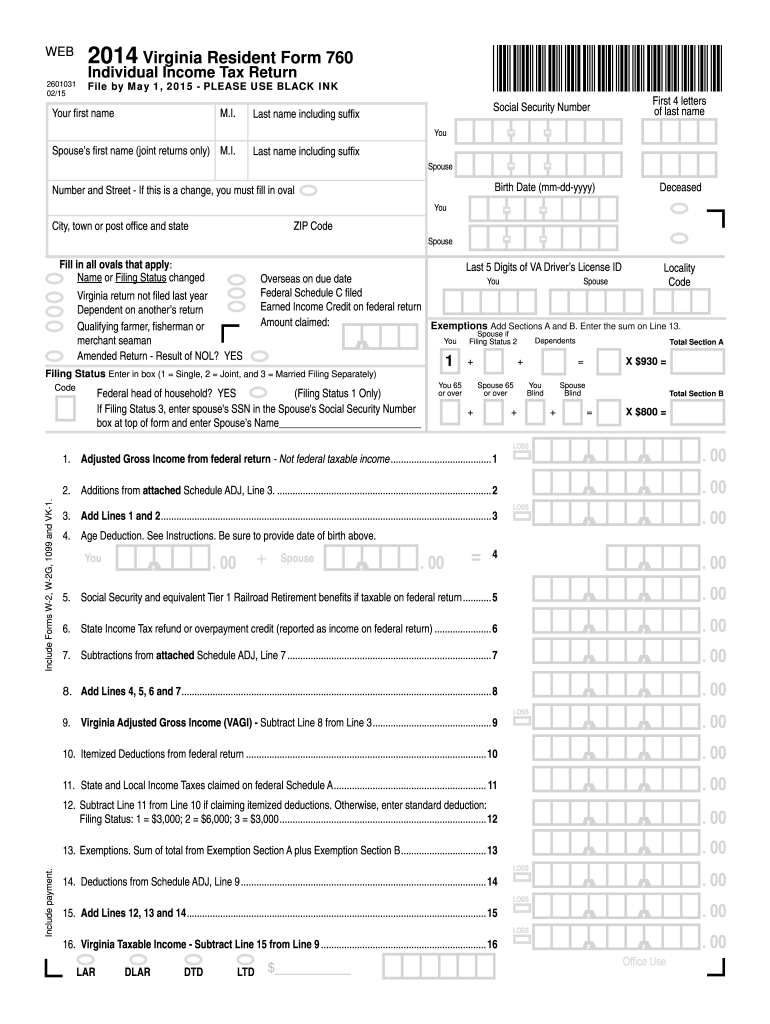
The 760 Virginia Tax Form 2014, also known as the Virginia Resident Form 760, is an individual income tax return form. This form is utilized by residents of Virginia to report their annual income, deductions, exemptions, and tax liabilities for the year 2014. It includes several sections that cover personal information, filing status, income calculations, and available tax credits. The primary purpose of the form is to ensure that taxpayers accurately report their financial activities to comply with Virginia state tax regulations.
Steps to Complete the 760 Virginia Tax Form 2014
-
Gather Personal Information: Begin by collecting personal details like your full name, Social Security Number, and current address. This information is required for the initial section of the form.
-
Determine Filing Status: Identify your filing status, which could be single, married filing jointly, married filing separately, or head of household. The specific status affects the standard deductions and tax rates applicable to you.
-
Report Income: List all sources of income for 2014, including wages, salaries, tips, dividends, and interest income. Total these amounts to calculate your gross income.
-
Apply Deductions and Exemptions: Review applicable deductions and exemptions. This could include standard or itemized deductions and personal exemptions, which reduce your taxable income.
-
Calculate Tax Liability: Use the provided tax tables in the form instructions to determine your total tax liability after considering income and deductions.
-
Apply Tax Credits: Identify and apply any tax credits for which you qualify. These might include credits for child care expenses, education, or energy-efficient home improvements, which directly reduce your tax owed.
-
Determine Refund or Amount Owed: Subtract any tax credits from your initial tax liability. Cross-check amounts already paid through withholdings or estimated payments to find out if you are eligible for a refund or owe additional taxes.
-
Sign and Date the Form: Ensure you complete all fields, sign, and date the form before submission. A signature indicates accuracy and compliance with the information reported.
How to Obtain the 760 Virginia Tax Form 2014
The 760 Virginia Tax Form 2014 can be obtained through multiple channels. Taxpayers may visit the official Virginia Department of Taxation website, where forms and instructions are available for download in PDF format. Alternatively, physical copies might be requested via mail by contacting the department directly. Tax preparation software options, like TurboTax and QuickBooks, often include downloadable forms for convenience.
Important Terms Related to the 760 Virginia Tax Form 2014
-
Adjusted Gross Income (AGI): The total income after adjustments, serving as the basis for calculating taxable income.
-
Tax Credit: A direct reduction of tax liability, which can be refundable or non-refundable.
-
Withholding: Taxes that have been withheld from wages or pension distributions by an employer, prepaying part of an individual’s income tax liability.
Understanding these terms can significantly aid in accurately completing the form.
Filing Deadlines and Important Dates
For the 2014 tax year, the deadline to submit the 760 Virginia Tax Form was May 1, 2015. Filing by this date ensures compliance and avoids penalties. For those unable to meet the deadline, extensions may be requested, potentially allowing additional time without late penalties, though interest on any unpaid tax may still apply.
Required Documents for Completing the Form
- W-2 Forms: Detailing income and withholdings from employment.
- 1099 Forms: For other income sources such as interest, dividends, or freelance work.
- Financial Statements: Relevant bank or investment account statements reflecting taxable transactions.
These documents are crucial for accurately reporting income and ensuring all applicable deductions and credits are applied.
Filing Methods: Online, Mail, and In-Person
Taxpayers have several methods to file the 760 form:
-
Online: E-filing through the Virginia Department of Taxation website or using approved tax software.
-
Mail: Submitting a paper form through standard postal services to the Virginia Department of Taxation.
-
In-Person: Dropping off completed forms at designated local tax offices.
Each method offers different benefits regarding convenience, processing speed, and confirmation of receipt.
Legal Use of the 760 Virginia Tax Form 2014
Filing the 760 Tax Form in Virginia is a legal requirement that validates compliance with state tax laws. Accurate reporting prevents legal consequences, such as fines or penalties, associated with underreporting income or omitting financial information. It’s vital to ensure all reported information is truthful and complete to avoid any discrepancies which may prompt audits.
Examples of Using the 760 Virginia Tax Form 2014
Consider a Virginia resident with two sources of income: employment wages and freelance income. This taxpayer would report W-2 wages and attach a Schedule C or 1099 form to include freelance earnings. After listing personal exemptions and deductibles, they calculate total credits applicable, e.g., education or child care, to finalize their submission. This example highlights the need for comprehensive documentation and meticulous calculations for accurate filing.