






Definition and Purpose of the 2014 Form 760
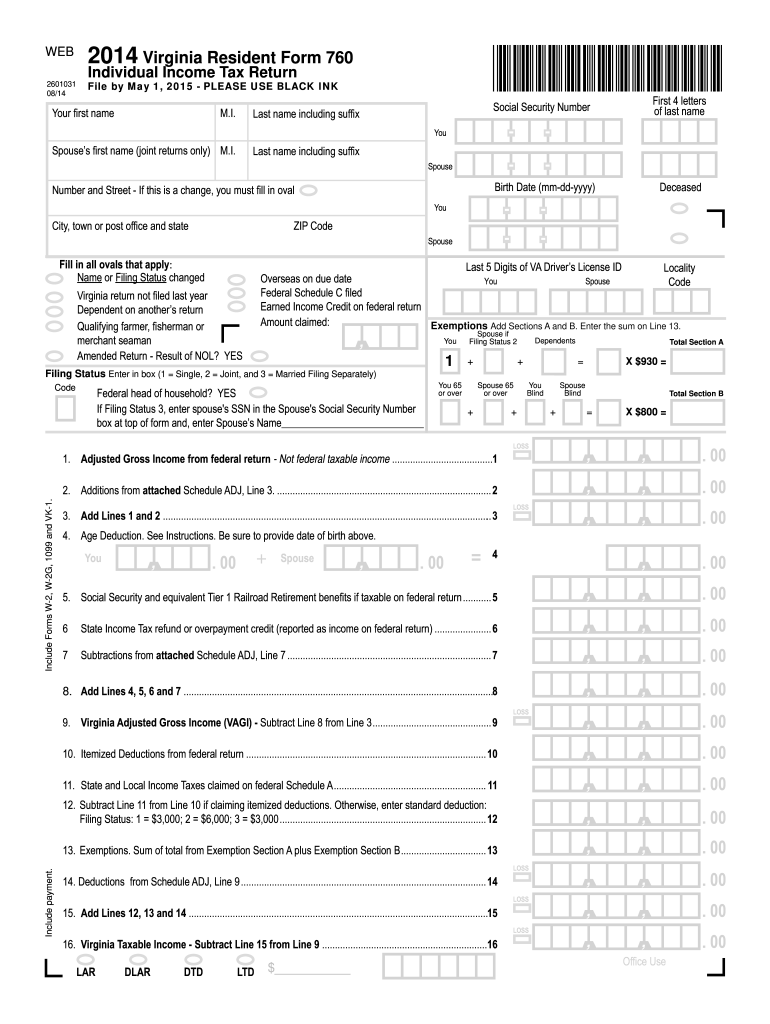
The 2014 Form 760 is the Virginia Resident Individual Income Tax Return, a critical document used by residents of Virginia to report their income and claim deductions and credits for the tax year 2014. This form ensures that taxpayers comply with state tax obligations by calculating their tax liabilities based on their income levels. It encompasses various fields that gather essential information like personal data, income, and tax provisions, which contribute to determining the amount owed or the refund due from the state.
Examples of use include reporting wages, salaries, interest income, and dividends, as well as claiming personal exemptions and itemized deductions. The form also supports joint filings, allowing married couples to combine their financial information into a single submission.
Steps to Complete the 2014 Form 760
Completing the Form 760 involves several key steps that ensure accuracy and compliance. Here is a breakdown of the process:
-
Gather Personal Information:
- Full legal name and address
- Social Security number
- Filing status
-
Report Income:
- Total wages and salaries
- Interest and dividend income
- Any other taxable income
-
Claim Deductions and Credits:
- Itemize deductions if applicable
- Claim any credits eligible for state residents
-
Calculate Tax Liability:
- Use the provided tax tables to determine the amount owed
- Adjust for any prepayments or withholdings
-
Submit the Form:
- Review all entries for accuracy
- Ensure all required attachments are included
- File by mail or use available electronic methods
Each step demands close attention to detail to avoid errors that could result in audits or penalties.
How to Obtain the 2014 Form 760
There are several methods by which taxpayers can obtain the 2014 Form 760:
-
Virginia Department of Taxation Website:
- Download the form and accompanying instructions directly.
-
Local Tax Offices:
- Obtain physical copies from tax offices or public libraries.
-
Tax Preparation Software:
- Utilize software like TurboTax or QuickBooks to access and fill out the form electronically.
Required Documents for the 2014 Form 760
To accurately complete the 2014 Form 760, taxpayers need several documents on hand:
-
W-2s and 1099s:
- For documenting wages and miscellaneous income.
-
Bank Statements:
- For reporting interest income.
-
Receipts for Deductions:
- For itemized deductions like mortgage interest or charitable contributions.
-
Prior Year Tax Returns:
- To reconcile any carryover credits or deductions.
Ensuring these documents are accurate and up-to-date is crucial for a smooth filing process.
Key Elements of the 2014 Form 760
Several critical sections make up the 2014 Form 760, each designed to capture specific financial data:
-
Personal Information Section:
- Gathers basic taxpayer details such as name, address, and Social Security numbers.
-
Income Section:
- Captures all forms of income, requiring precise entries to avoid discrepancies.
-
Adjustments and Deductions:
- Allows for adjustments to income and claiming of various state allowances.
-
Tax Calculation:
- Details the computation process for determining tax liability or refund potential.
Understanding these elements is vital to ensure every required field is accurately completed.
Filing Deadlines and Important Dates
Taxpayers must be aware of the following critical deadlines connected to the Form 760:
-
Filing Deadline:
- The form must be filed by May 1, 2015, to avoid penalties.
-
Payment Due Date:
- Taxes owed are due on the same day as the filing deadline.
-
Extension Requests:
- Can be filed through Form 760IP to receive an automatic six-month extension.
Failure to adhere to these deadlines may result in late fees or additional interest charges.
Penalties for Non-Compliance with Form 760 Requirements
The Virginia Department of Taxation imposes several penalties for non-compliance, such as:
-
Late Filing Penalty:
- 5% of the tax due for each month or part of a month the return is late, up to a maximum of 25%.
-
Interest Charges:
- Accrued daily on any unpaid balance after the original due date.
-
Fraud Penalty:
- Up to 50% of the underreported tax for fraudulent entries or omissions.
Navigating compliance proactively can save taxpayers significant expense and stress.
Software Compatibility and Filing Methods
The 2014 Form 760 is compatible with several software platforms for ease of filing:
-
TurboTax and QuickBooks:
- These allow users to electronically complete and submit their returns, reducing the chance of manual errors.
-
Department of Taxation e-File:
- Enables direct government e-filing if the taxpayer prefers not to use third-party software.
-
Paper Filing:
- Still an option for those who prefer traditional methods, though electronic filing is recommended for efficiency and speed.
Exploring these tools can facilitate a smoother, more efficient filing experience, reducing the likelihood of errors and increasing compliance accuracy.