






Definition and Purpose of the 2011 VA Form 760
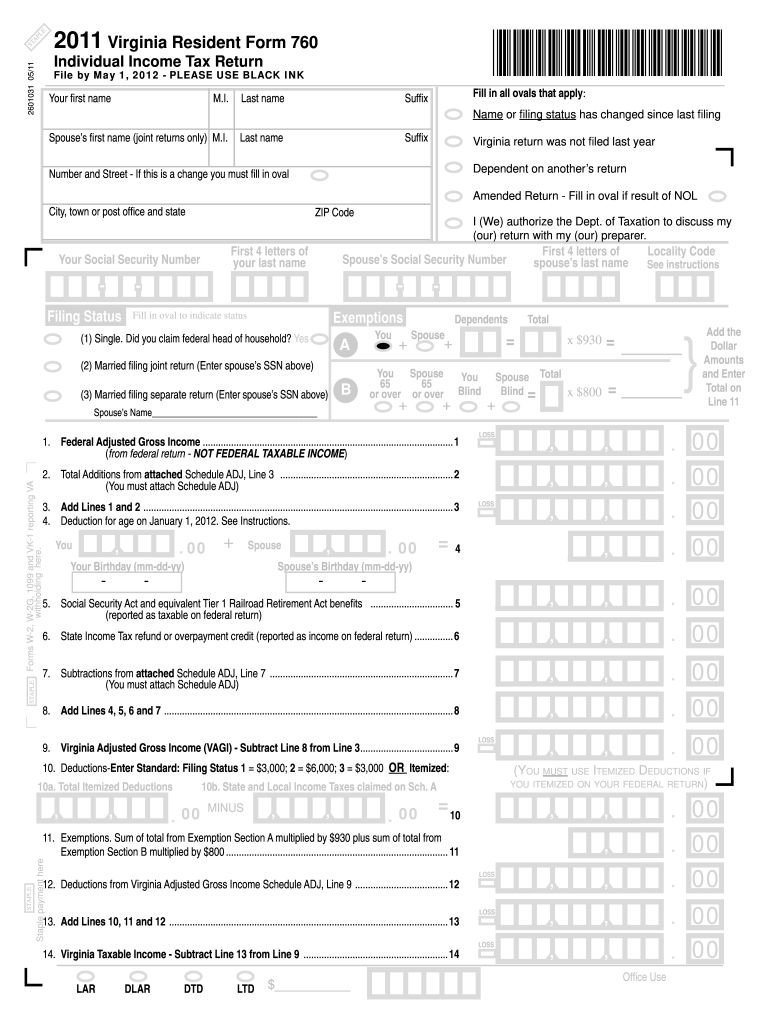
The 2011 Virginia Resident Form 760 serves as the Individual Income Tax Return for residents of Virginia. This document is required to be filed by May 1, 2012, for the tax year 2011. Its primary purpose is to facilitate the reporting of federal adjusted gross income and the subsequent calculation of Virginia taxable income. The form includes various sections that help taxpayers provide necessary personal and financial information to determine their state tax liabilities accurately.
Obtaining the 2011 VA Form 760
The 2011 VA Form 760 is available through multiple channels for Virginia residents. Taxpayers can obtain this form through the Virginia Department of Taxation’s website, where a downloadable PDF version is typically provided. Libraries, post offices, and some government buildings may also provide physical copies. Additionally, tax software programs often include this form within their document libraries, facilitating easy access for electronic filing.
Steps to Complete the 2011 VA Form 760
Gathering Required Documents
To accurately fill out the 2011 VA Form 760, gather essential documents:
- W-2 forms to report wage and salary income
- 1099 forms for additional income like freelance work or investment earnings
- Federal income tax returns to ensure consistency
- Any relevant documentation for deductions or credits
Completing Personal Information
Begin by filling in personal details, including name, address, and Social Security number. Ensure all spelled correctly to prevent processing delays.
Income and Adjustments
Report the federal adjusted gross income as outlined in your federal tax return. Include any state-specific adjustments to income, such as interests or state-specific tax credits, to calculate the correct taxable income.
Computing Deductions and Credits
Deductions and tax credits particular to Virginia residents should be reviewed thoroughly. Ensure all eligible deductions and credits are reported to lower your taxable income effectively and potentially increase your refund.
Finalizing and Reviewing
Before submission, review the entire form for accuracy. Check all calculations and ensure no sections are left incomplete.
Key Elements of the 2011 VA Form 760
Personal Information and Filing Status
Include sections for personal information and determine the applicable filing status. Options such as single, married filing jointly, or head of household influence how the form should be completed and affect tax calculations.
Income Calculations
Details surrounding income must be meticulously reported. This includes any wages, salaries, self-employment income, interest, dividends, and capital gains.
Deductions and Tax Credits
Claiming available tax credits and deductions is vital for lowering tax liabilities. In addition to standard deductions, eligible Virginia-specific credits can significantly impact tax calculations.
Who Typically Uses the 2011 VA Form 760
Designed for Virginia residents, the 2011 VA Form 760 is primarily utilized by:
- Individuals who are permanent residents of Virginia
- Those with taxable income originating within the state
- Residents who filed a federal tax return and need to report state taxes


Filing Deadlines and Important Dates
The filing deadline for the 2011 VA Form 760 is May 1, 2012. Residents needing extensions should ensure they file for one before the deadline to avoid penalties. It is crucial to remain aware of these deadlines to prevent incurring late fees and interest charges.
Penalties for Non-Compliance
Failure to file the 2011 VA Form 760 by the deadline may result in penalties. These include fines and interest on unpaid taxes. To avoid these consequences, timely submission and accurate completion of the form are essential.
Submission Methods: Online, Mail, and In-Person
Virginia residents can submit their completed Form 760 via:
- Online: Using the Virginia Department of Taxation's online portal for convenience and quick processing.
- Mail: Sending physical copies to the tax authority's provided address for traditional processing.
- In-Person: Delivering forms to a local tax office for personal assistance with filing.
Examples and Scenarios for Using the 2011 VA Form 760
Employment Income
Consider a full-time employee residing and working in Virginia. They must use the 2011 VA Form 760 to report their salary and any bonuses received during the tax year.
Self-Employed Individuals
A freelance writer based in Virginia should calculate their income, accounting for business expenses, and report it accurately using this form, especially if employing someone who works in multiple states.
Retirees
Retired residents receiving pensions or retirement account distributions need to use the Form 760 to report such income, taking into account any state-specific deductions for retirement income.
Each scenario demonstrates the essential nature of completing the 2011 VA Form 760 with accuracy to ensure compliance with state tax requirements.