




01. Edit your form 8582 online
Type text, add images, blackout confidential details, add comments, highlights and more.

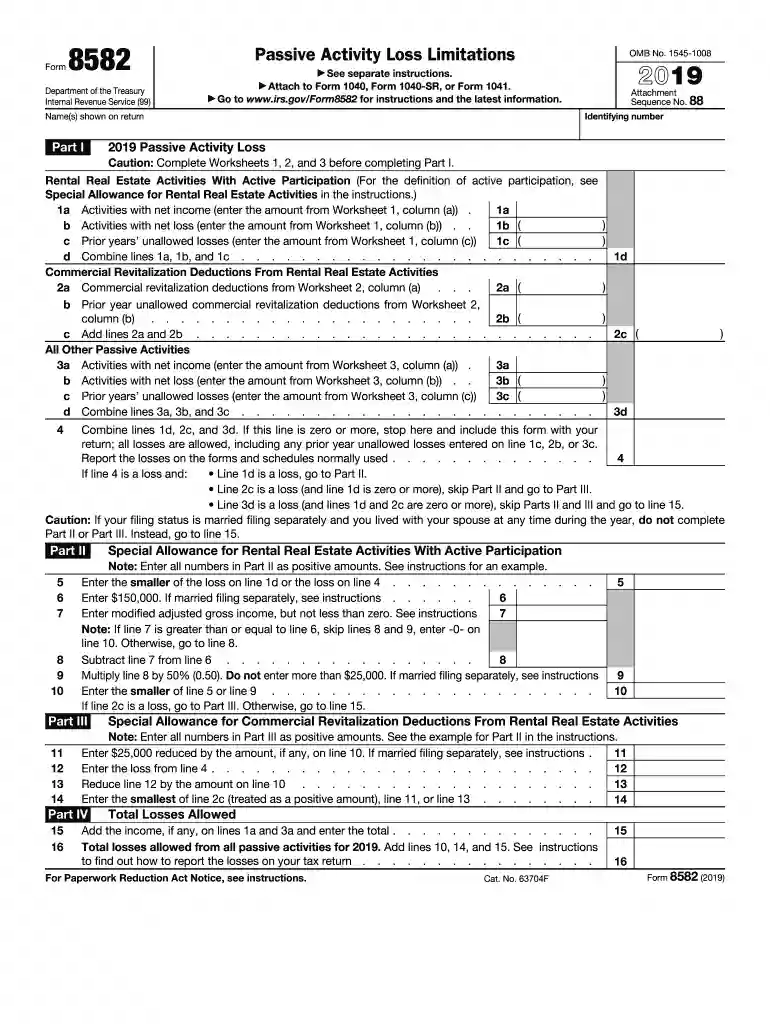
Type text, add images, blackout confidential details, add comments, highlights and more.

Draw your signature, type it, upload its image, or use your mobile device as a signature pad.

Send it via email, link, or fax. You can also download it, export it or print it out.
Form 8582, used by the Internal Revenue Service (IRS), is aimed at reporting passive activity loss limitations. For the year 2018, this tax form helps taxpayers calculate and report losses arising from passive activities, including rental real estate and other similar activities where the taxpayer does not materially participate.
The form is crucial for ensuring compliance with IRS regulations about passive activity loss limitations. These limitations were established to differentiate between passive and non-passive income, preventing taxpayers from using losses from passive income to offset active income.
To use Form 8582 effectively, taxpayers must understand the distinction between passive and active income activities. The form subdivides activities based on their nature and the taxpayer’s level of involvement.
Identify Passive Activities:
Detail Income and Losses:
Apply Loss Limitations:
Using detailed worksheets within the key sections of Form 8582 is essential for accuracy and compliance.
Completing Form 8582 correctly requires understanding each section and its requirements. The process involves several steps:
Gather Necessary Documents:
Complete Worksheets:
Fill the Main Sections:
Review for Accuracy:
Form 8582 plays a critical role in tax compliance, particularly for those with substantial passive income sources. Its importance lies in:
Ensuring Legal Compliance:
Accurate Deductions:
IRS Transparency:
The legal use of Form 8582 involves adhering to guidelines established under the Tax Reform Act. The act delineates when and how losses from passive activities can be claimed:
Material Participation Rules:
Special Allowable Losses:
Non-compliance with these guidelines can lead to penalties or increased scrutiny from tax authorities.
The critical components of Form 8582 include:
Passive Activity Information:
Loss Limitation Calculations:
Carryover Provisions:
Understanding these elements ensures a comprehensive and accurate filing.
IRS guidelines for Form 8582 articulate the need for transparency and precision in reporting passive income activities. Guidelines are provided in IRS publications that detail:
Instructions for Completion:
Restrictions on Passive Loss Utilization:
Disregarding these guidelines could result in rejected filings or penalties.
The deadline for submitting Form 8582 typically aligns with annual federal tax filings, usually due by April 15 following the tax year. Key dates to remember include:
Annual Filing Deadline:
Extension Periods:
Meeting these deadlines is crucial in avoiding late fees and ensuring all tax obligations are met timely.
We've got more versions of the form 8582 form. Select the right form 8582 version from the list and start editing it straight away!
| Versions | Form popularity | Fillable & printable |
|---|---|---|
| 2025 | 4.3 Satisfied (23 Votes) | |
| 2024 | 4.4 Satisfied (55 Votes) | |
| 2023 | 3.8 Satisfied (31 Votes) | |
| 2022 | 4.9 Satisfied (27 Votes) | |
| 2021 | 4.8 Satisfied (135 Votes) | |
| 2020 | 4.4 Satisfied (190 Votes) | |
| 2019 | 4.3 Satisfied (203 Votes) | |
| 2018 | 4.2 Satisfied (72 Votes) | |
| 2017 | 4.2 Satisfied (115 Votes) | |
| 2016 | 4.4 Satisfied (185 Votes) | |
| 2015 | 4.3 Satisfied (53 Votes) | |
| 2014 | 4 Satisfied (32 Votes) | |
| 2013 | 4.2 Satisfied (52 Votes) | |
| 2012 | 4.3 Satisfied (49 Votes) | |
| 2011 | 4.2 Satisfied (35 Votes) |
At DocHub, your data security is our priority. We follow HIPAA, SOC2, GDPR, and other standards, so you can work on your documents with confidence.
8582. DF. BHSC426DFA Classics Soc/Beh Sciences. F. 08:30 am - 11:20 am. A. CLA. 3. 2254. DF. BHSC426DFB Classics Soc/Beh Sciences. TR. 08:30 am - 09:50 am. A.Read more
Worksheet 1For Form 8582, Lines 1a, 1b, and 1c (See instructions.) Name of activity. Current year. Prior years. Overall gain or loss. (a) Net income.Read more


