




01. Edit your mbo template online
Type text, add images, blackout confidential details, add comments, highlights and more.

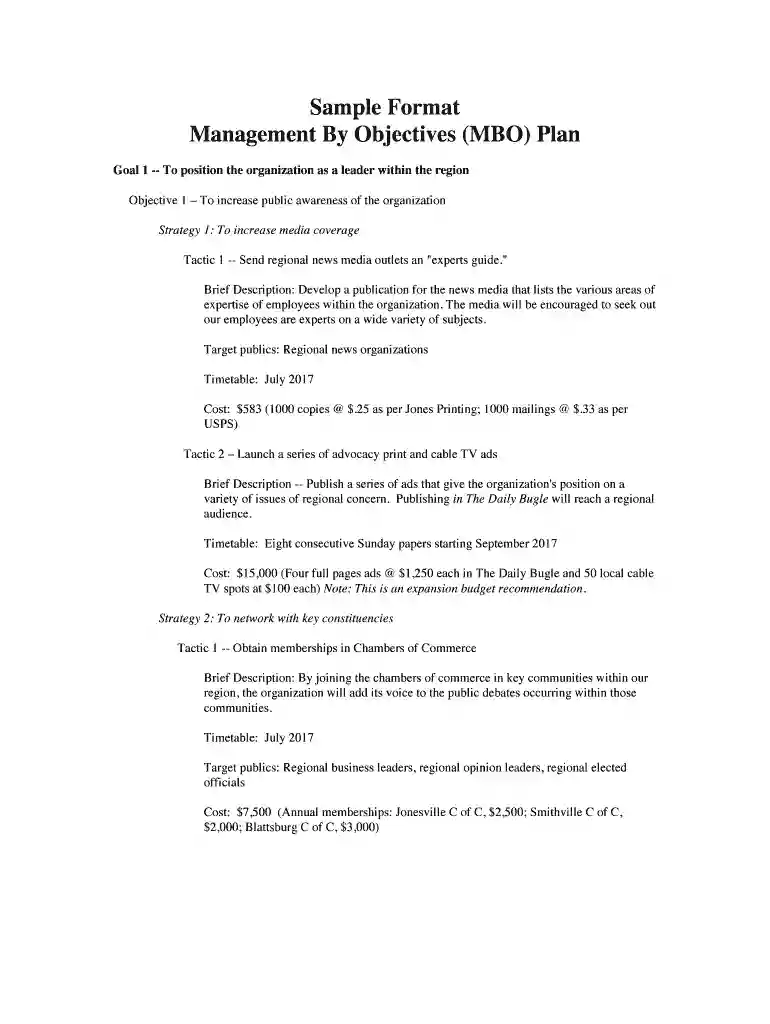
Type text, add images, blackout confidential details, add comments, highlights and more.

Draw your signature, type it, upload its image, or use your mobile device as a signature pad.

Send mbo format via email, link, or fax. You can also download it, export it or print it out.
The Management by Objectives (MBO) template in Excel is a strategic tool used by organizations to set and track progress towards specific goals. MBO is a management model that aims to improve organizational performance by clearly defining objectives agreed upon by both management and employees. The use of an Excel template for MBO provides a structured way to record, evaluate, and modify these objectives, facilitating a transparent process for performance measurement.
Excel’s capabilities for data manipulation and visualization make it a popular choice for MBO. The template typically includes sections for setting objectives, assigning metrics, outlining timelines, and tracking progress. By adopting this model, organizations can ensure that each department’s objectives line up with the company's overall goals, providing clarity and focus across all levels of the organization.
Using the MBO template in Excel involves several key steps that ensure effective goal setting and tracking. Start by gathering a comprehensive understanding of the organization’s mission and how departmental goals align with it. Import this information into the template, ensuring that each objective has specific, measurable, achievable, relevant, and timed-based (SMART) criteria.
Setting Objectives: Begin by clearly defining the objectives. These should be strategic, specific, and aligned with the business’s vision.
Identifying Metrics: Assign quantifiable measures to assess progress. These metrics should capture the essence of each objective effectively.
Assigning Timelines: Set realistic deadlines for each objective. This keeps the team focused and motivated.
Tracking Progress: Regularly update the template with progress reports. Make adjustments where necessary to ensure objectives remain achievable.
Review and Feedback: Periodically review the objectives with stakeholders, garnering feedback to improve ongoing and future processes.
An MBO Excel template should include several key elements to function effectively. These elements ensure the template serves as a holistic tool for both management and team members.
Completing the MBO template in Excel requires a structured approach. The process is iterative and benefits from collaborative input.
Employing an MBO template in Excel provides a multitude of benefits for organizations aiming to effectively manage their goals. The template offers a tangible, systematic approach that enhances transparency and accountability. By using such a template:
Several real-world scenarios can highlight the effectiveness of using an MBO template in Excel:
The MBO template in Excel is widely used across various industries and roles within an organization. Typical users include:


While the core concept of MBO is consistent across the board, state-specific employment and labor laws might affect how objectives are set and tracked. Companies operating in multiple jurisdictions should be aware of:
Understanding and implementing these nuances ensures that the MBO process remains compliant while effectively driving performance and growth.
We've got more versions of the mbo template form. Select the right mbo template version from the list and start editing it straight away!
| Versions | Form popularity | Fillable & printable |
|---|---|---|
| 2017 | 4.6 Satisfied (21 Votes) |
At DocHub, your data security is our priority. We follow HIPAA, SOC2, GDPR, and other standards, so you can work on your documents with confidence.
This template can be emailed or shared electronically with departmental administrators to assist in the annual process of administering compensation and fundingRead more
After summarizing all of our plans so far, we decided to create our information and informed consent sheet. We used the template provided by iGEM Groningen 2021Read more
This tab can be used as a template for your banks strategic planning session to set SMART Goals aligned with the specific strategic priorities you have


