01. Edit your ohsaa physical form online
Type text, add images, blackout confidential details, add comments, highlights and more.

Type text, add images, blackout confidential details, add comments, highlights and more.

Draw your signature, type it, upload its image, or use your mobile device as a signature pad.

Send it via email, link, or fax. You can also download it, export it or print it out.
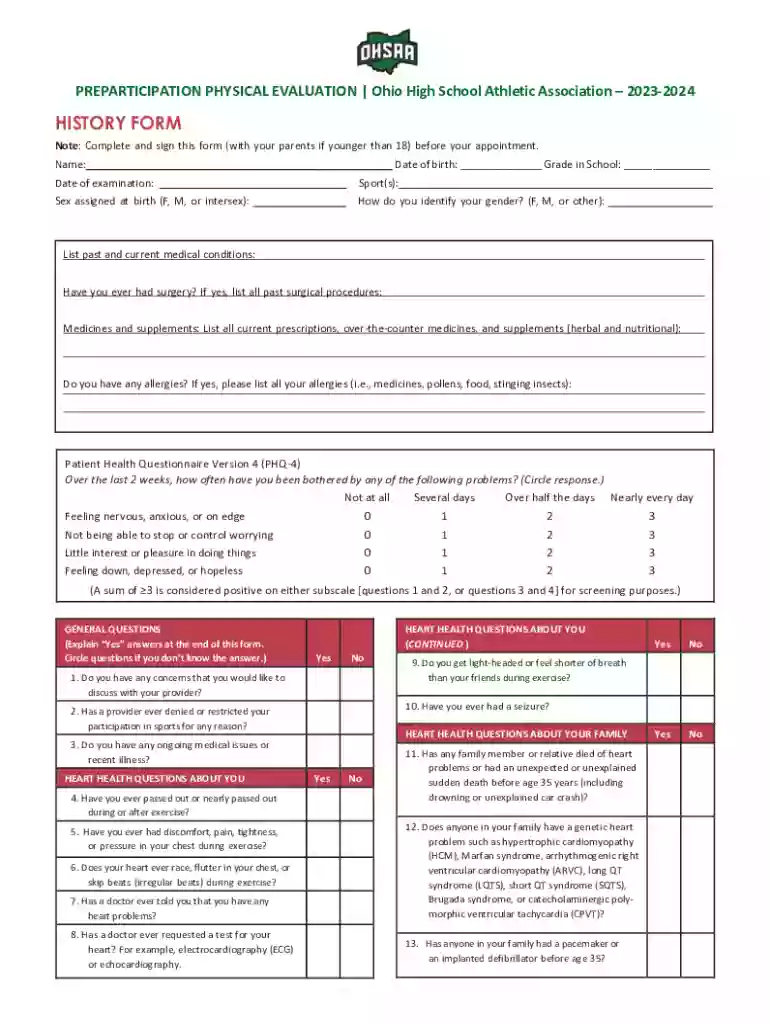
"If yes, list all past surgical procedures:" is a prompt commonly found in medical forms where individuals are required to disclose any previous surgical interventions. Typically part of a broader medical history questionnaire, this section aims to provide healthcare professionals with essential background information that can impact current or future treatment plans. Understanding previous surgeries is crucial for healthcare providers, as it helps in assessing potential risks, understanding past complications, and tailoring treatment protocols to the patient’s specific medical history.
When encountering this prompt on a medical form, it is important to provide a comprehensive list of all surgical procedures you have undergone. This should include:
For instance, if you have had an appendectomy in 2015 at the Cleveland Clinic, ensure that this information is noted accurately. Providing complete details ensures that medical professionals have a full understanding of your surgical history, which can be pivotal in diagnosing current issues or managing ongoing treatment plans.
Gather Medical Records: Start by collecting any medical records or discharge summaries you may have. These documents often have precise details about past surgeries, which are essential for accuracy.
Create a Chronological List: Organize your past surgeries in chronological order, starting from the most recent. This makes it easier for healthcare providers to quickly assess your surgical history.
Include Relevant Details: For each surgery, ensure you include details such as the type of surgery, the hospital or facility where it was performed, the name of the surgeon, and any complications experienced.
Review and Double-Check: Go over your list carefully to ensure there are no omissions or errors. Accurate information is crucial for effective healthcare management.
Consult Family Members: If your memory is foggy on certain details, consider reaching out to family members who might have been involved or informed about your past medical procedures.
Update Regularly: Keep this list updated annually or after any new surgical procedure to ensure it remains a reliable resource for your healthcare team.
Providing a detailed list of past surgical procedures is critical for several reasons:
Safety and Risk Management: By understanding your surgical history, healthcare providers can better prevent complications from future procedures or treatments.
Accurate Diagnosis: Previous surgeries can have long-lasting effects on your body, impacting current symptoms or illnesses. A comprehensive history aids in accurate diagnosis.
Tailored Treatment Plans: Knowledge of past procedures allows doctors to customize medical and surgical plans according to your unique health background.
For example, a patient with a history of heart surgery might require special precautions during dental procedures to prevent bacterial endocarditis.
This section is typically completed by patients during pre-admission processes or when visiting a new healthcare provider. It is widely used in:
General Practitioner Offices: Helps in creating a comprehensive health history for new patients.
Specialized Clinics: Especially before procedures that could be influenced by past surgeries, such as orthopedic consultations or cardiac evaluations.
Hospitals: Particularly in pre-operative assessments to prepare for any necessary precautions or modifications in surgical approach.
This form section aids not just in individualized patient care but also in research or statistical analysis within medical institutions.


Within the U.S., the information provided in this form section is protected under the Health Insurance Portability and Accountability Act (HIPAA). This law ensures that your medical information remains confidential and is used solely for legitimate healthcare or administrative purposes.
Understanding the legal aspects can reassure patients about the confidentiality and legitimate use of their personal health information.
Several elements should be present in any response to the "If yes, list all past surgical procedures:" section:
Procedure Name: Clearly identify each surgery for clear communication and documentation.
Date or Period: Indicate the month and year, or at least the year, to help establish a timeline.
Location: Specify the hospital or facility to assist in record retrieval if needed.
Complications: Note any postoperative issues or hospital readmissions related to each surgery.
Ensuring that each of these elements is recorded accurately is crucial for maintaining a useful and reliable medical history.
To illustrate, consider the following examples:
Example One: "Rotator cuff repair, March 2019, Mayo Clinic, Dr. Smith; required additional physical therapy for recovery."
Example Two: "Coronary artery bypass grafting, July 2015, Cleveland Medical Center, uneventful recovery."
By listing surgeries in this structured manner, you're providing clear and helpful information to the healthcare providers who rely on these details for optimal care decisions.
We've got more versions of the ohsaa physical form form. Select the right ohsaa physical form version from the list and start editing it straight away!
At DocHub, your data security is our priority. We follow HIPAA, SOC2, GDPR, and other standards, so you can work on your documents with confidence.