




01. Edit your form online
Type text, add images, blackout confidential details, add comments, highlights and more.

Type text, add images, blackout confidential details, add comments, highlights and more.

Draw your signature, type it, upload its image, or use your mobile device as a signature pad.

Send it via email, link, or fax. You can also download it, export it or print it out.
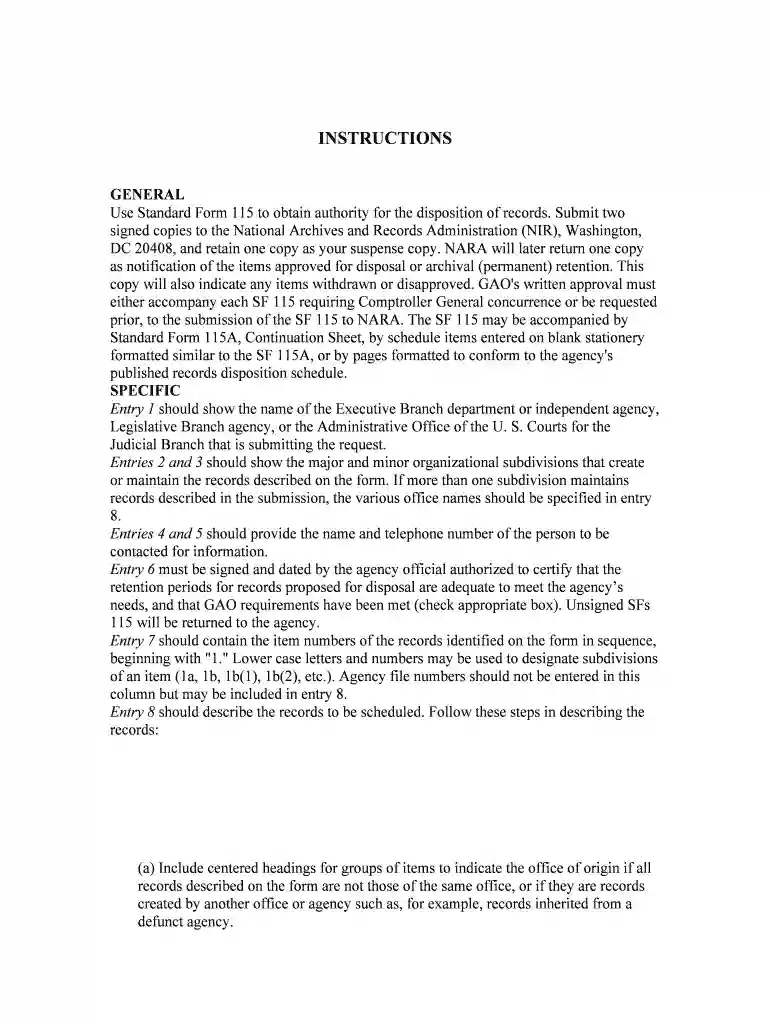
The "instructions - GSA" refer to guidelines issued by the General Services Administration (GSA) for particular forms or procedural requirements. These instructions ensure compliance with federal regulations and facilitate the correct completion of forms used within various governmental processes. The GSA serves as the central management agency for the federal government, and its instructions are designed to standardize processes and maintain consistency across different departments and activities.
To utilize the instructions provided by the GSA effectively, begin by thoroughly reading the document to understand its scope and purpose. Pay attention to any specific requirements or guidelines that must be followed. The instructions may include sections detailing eligibility, the type of information required, and proper formatting. Users typically rely on these documents to accurately complete forms, whether they are for procurement, contracting, or compliance purposes.
Understanding the key terms and phrases within the GSA instructions is crucial for accurate interpretation and application. Common terms may include:
These terms are foundational to navigating the GSA instructions efficiently and ensuring that all necessary criteria are met.
Completing a GSA instruction document involves several critical steps:
Following these steps ensures that the forms are submitted correctly, minimizing the risk of rejection or requests for additional information.
Several elements are integral to understanding and applying the GSA instructions:
The presence of these elements assists users in navigating the complexities of federal procedures defined by the GSA.
Legal compliance is a paramount concern when dealing with GSA instructions. The document ensures adherence to federal laws and regulations, protecting users and their organizations from potential legal repercussions. Users must ensure that all provided information is truthful and that the instructions are followed precisely to uphold legal standards.
Practical examples can demonstrate how these instructions are applied in real-world scenarios:
These examples highlight the diverse applications of GSA instructions across different aspects of governmental processes.
GSA instructions typically outline various submission methods, allowing for flexibility depending on user preference and resource availability:
Each method has its considerations, with online submissions generally offering the fastest processing times.
Failing to adhere to GSA instructions can result in significant penalties, ranging from rejected forms to more severe legal consequences. It's critical for users to understand the implications of non-compliance:
Ensuring strict adherence to instructions is essential to avoid these adverse outcomes.
This content provides a comprehensive overview of the "instructions - GSA," detailing their meaning, usage, key elements, and the implications of non-compliance, alongside practical examples, legal considerations, and submission methods.
We've got more versions of the instructions - GSA form. Select the right instructions - GSA version from the list and start editing it straight away!
| Versions | Form popularity | Fillable & printable |
|---|---|---|
| 1991 | 4.8 Satisfied (272 Votes) |
At DocHub, your data security is our priority. We follow HIPAA, SOC2, GDPR, and other standards, so you can work on your documents with confidence.
May 27, 2026 Provided below are links to web pages containing guidance for GSA regulations and programs. technical and procedural guides, and administrative
GSA Form 2891: Instructions to Users of Federal Supply Schedules. | Electronic Code of Federal Regulations is filed as part of the original document


