Definition & Meaning
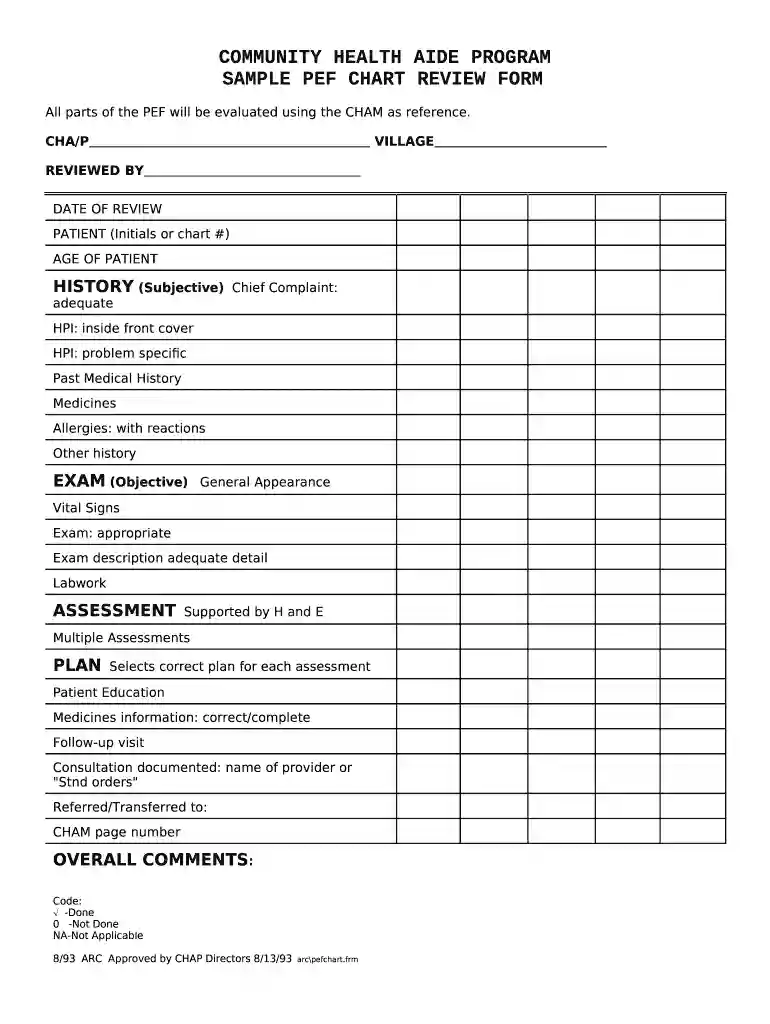
The chart review template is a structured tool used to systematically evaluate patient charts, typically within healthcare settings. This form is fundamental in assessing various aspects of patient care such as medical history, treatment outcomes, and compliance with healthcare protocols. By leveraging a standard format, healthcare professionals can ensure consistency and thoroughness in medical documentation, enabling more accurate patient assessments and planning.
Benefits of Standardized Chart Reviews
- Consistent Documentation: Ensures that all patient charts are evaluated with the same criteria, reducing errors or omissions.
- Enhanced Accuracy: Helps in capturing comprehensive medical details, creating a reliable database for future reference.
- Quality Assurance: Facilitates the identification of trends in patient care, which could be used to improve treatment protocols.
How to Use the Chart Review Template
Utilizing the chart review template effectively involves understanding the structure and purpose of each section. Users should be familiar with medical terminologies and documentation requirements in order to accurately fill out each part of the template.
Step-by-Step Usage Instructions
- Patient Information: Start by completing basic demographics such as name, age, and identification number.
- Medical History: Enter previous medical conditions, surgeries, and allergies.
- Current Medications: Document all ongoing prescriptions and supplements.
- Clinical Findings: Include vital signs and results from recent examinations.
- Diagnosis and Plan: Record the patient's diagnosis along with the treatment strategy and follow-up actions.
Tips for Efficient Use
- Regularly update the template to reflect any changes in patient care.
- End each review session by noting down any action items or follow-up requirements.
Key Elements of the Chart Review Template
An effective chart review template comprises several key sections designed to capture crucial information efficiently.
Fundamental Components
- Patient History Section: Collects past and present medical records, providing a background for the current condition.
- Examination Details: Captures the observations and findings from physical and diagnostic tests.
- Assessment and Planning: Includes the healthcare provider's evaluation and planned course of action.
Additional Features
- Commentary and Annotations: Allows for including notes and clarifications to provide context to data entries.
- Checklists and Dropdowns: Facilitates quick data entry, ensuring mandatory fields are not left incomplete.
Steps to Complete the Chart Review Template
Completing the template involves several stages, each integral to ensuring comprehensive documentation.
Detailed Completion Process
- Preparation: Before starting, gather all relevant patient records and ensure access to necessary medical databases.
- Data Entry: Fill out the demographics, followed by clinical and treatment details in the designated sections.
- Review Process: Go through each entry to verify accuracy and completeness.
- Finalization: Once all sections are completed, save the document and update the patient’s file.
Checklist for Completion
- Ensure all sections are filled out.
- Double-check for potential discrepancies or omissions.
- Confirm that the documentation is legible and organized.
Primary Users
- Doctors and Physicians: Use the template to maintain an updated record of patient history and treatment plans.
- Nurses and Medical Assistants: Assist in gathering information and completing preliminary sections of the template.
- Quality Assurance Teams: Conduct reviews to monitor compliance with healthcare standards.
Scenarios of Use
- During routine check-ups to record updates in patient condition.
- As part of quality control checks to ensure continued adherence to healthcare guidelines.
Important Terms Related to Chart Review Template
Understanding the key terms associated with the chart review template is crucial for accurate and efficient use.
Glossary of Terms
- CHAM (Community Health Aide Manual): A guide that serves as a reference for evaluating patient charts.
- Demographics: Pertains to the patient's basic identifying information such as age and gender.
- Clinical Diagnosis: The identification of a disease or condition based on its signs, symptoms, and test results.
Contextual Understanding
- Terms like "vital signs" indicate key metrics to be recorded during patient exams, such as blood pressure and heart rate.
- "SOAP notes" refer to a method of documentation used by healthcare providers to write out notes in a patient's chart.
Why Should You Use the Chart Review Template
Using a chart review template offers numerous benefits that help improve patient outcomes and healthcare workflow.
Advantages of Using the Template
- Improved Efficiency: Streamlines the process of data entry and retrieval through structured forms.
- Enhanced Record Keeping: Provides a thorough record for legal and medical reviews, ensuring all details are documented accurately.
Impact on Patient Care
- Ensures that treatment plans are well-documented and easily accessible for future healthcare providers.
- Facilitates clear communication among healthcare teams, contributing to better-coordinated patient care.
Legal Use of the Chart Review Template
The chart review template must be used in compliance with regulations governing medical records and patient privacy.
Compliance and Governance
- HIPAA Regulations: Ensure all entries adhere to the Health Insurance Portability and Accountability Act standards for patient confidentiality.
- Record-Keeping Requirements: Aligns with legal mandates for maintaining comprehensive and easily accessible patient records.
Safeguards and Protocols
- Implement encryption for digital chart templates to protect sensitive information.
- Regular audits to ensure use and documentation are compliant with applicable legal standards.
Software Compatibility for Chart Review Templates
Chart review templates should be compatible with various software platforms to facilitate widespread use in different healthcare settings.
Integration with Systems
- Typically compatible with Electronic Health Record (EHR) systems like Epic and Cerner.
- Supports various document formats including DOC, PDF, and electronic forms.
Technological Benefits
- Allows for easy data import/export between systems, reducing manual data entry.
- Enhances interoperability among different databases and software platforms used within healthcare organizations.
Examples of Using the Chart Review Template
The template can be adapted for various practical situations, showcasing its versatility in healthcare documentation.
Case Scenarios
- New Patient Intake: Use the template to gather comprehensive medical history during initial visits.
- Routine Follow-Up: Tracks progress and updates treatment plans with organized entries.
Practical Application
Consider a scenario where a patient is admitted for chronic conditions such as diabetes. The template helps in documenting ongoing treatments, adjustments in medication, and monitoring progression, ensuring all healthcare providers have access to up-to-date information.