
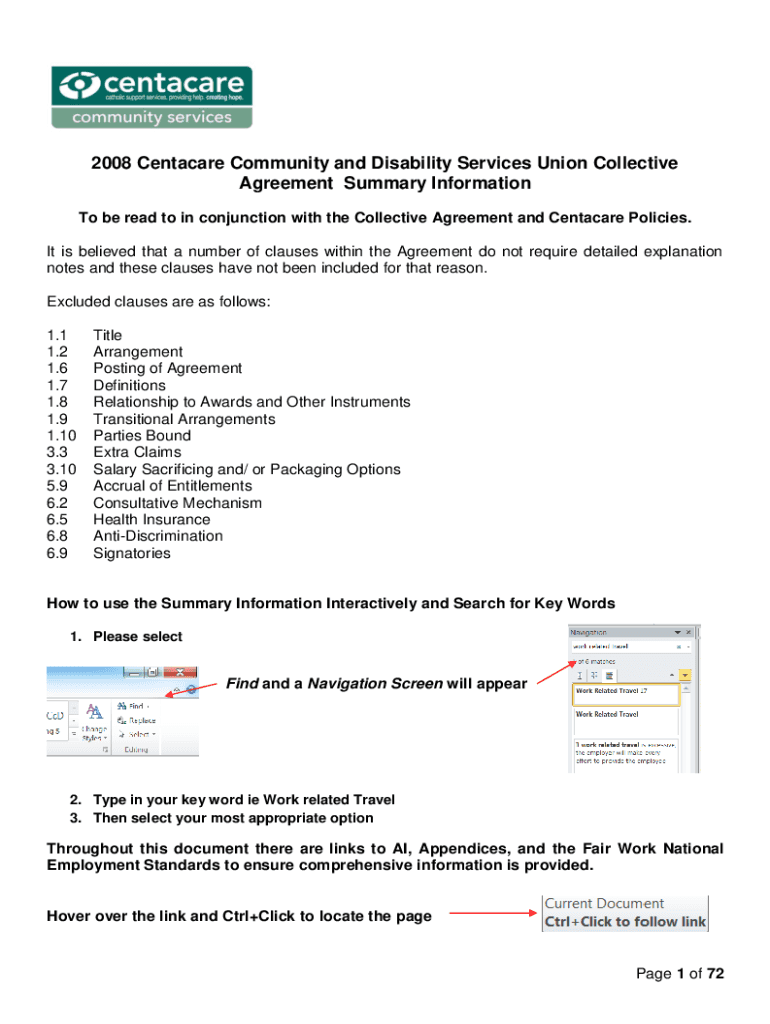







Definition and Meaning
The 2008 Centacare Community and Disability Services Union Collective Agreement serves as a comprehensive document outlining the employment terms and conditions for employees engaged in community support and disability services. It defines key aspects such as employment classifications, wage structures, and employee entitlements. This agreement emphasizes adherence to Catholic Social Teachings and highlights the principles of fair treatment and workplace productivity.
Major Components
- Employment Classifications: Defines various roles within community and disability services, ensuring clarity on employee responsibilities and expectations.
- Wage Structures: Details the pay scales applicable to different positions, addressing regular pay, overtime, and other monetary compensations.
- Leave Entitlements: Outlines the types of leave available, including annual leave, personal leave, and special categories of leave such as bereavement or parental leave.
- Employee Obligations: Highlights the duties and conduct expected from employees under the agreement, ensuring adherence to organizational standards.
Key Elements of the Agreement
Understanding the core elements of the agreement is crucial for both employers and employees in the community and disability services sector.
Employment Definitions
This section provides specific definitions related to employment status, such as full-time, part-time, and casual employment. Each category has unique conditions governing work hours, entitlement eligibility, and pay rates, crucial for determining an employee's benefits.
Wage and Salary Determinations
The agreement sets forth detailed guidelines on how wages and salaries are determined, emphasizing fair compensation practices. It includes special provisions for wage adjustments based on experience, educational qualifications, and length of service, ensuring equitable pay across the board.
Steps to Complete Duties Under the Agreement
Employees and employers must adhere to specific steps to ensure compliance with the agreement’s provisions.
- Review Employment Status: Confirm the classification of employment to understand applicable terms and entitlements.
- Understand Wage Provisions: Verify applicable wage scales and ensure accurate payroll processing.
- Familiarize with Leave Policies: Review leave entitlements and application processes to ensure proper documentation and approvals.
- Acknowledge Employee Obligations: Employees should familiarize themselves with their responsibilities to maintain adherence to the agreement's standards.
Compliance and Verification
- Regular Check-Ins: Employers should conduct regular reviews to ensure compliance with agreement terms.
- Employee Feedback: Institutions should facilitate channels for employee feedback regarding agreement-related issues, promoting transparency and resolution.
Legal Use and Implications
The legal scope of the 2008 Centacare Community and Disability Services Union agreement is integral for ensuring lawful operation within the sector.
Legal Framework
- Adherence to Fair Work Standards: The agreement is structured in alignment with national employment standards to ensure compliance with broader legal requirements.
- Dispute Resolution Mechanisms: Provides detailed processes for addressing and resolving disputes related to employment terms.
Importance of Compliance
Failure to adhere to the agreement can lead to legal repercussions, including but not limited to disputes, penalties, and potential litigation. Both employees and employers must understand their rights and obligations under the agreement to mitigate such risks.
Who Typically Uses the Agreement
The agreement is primarily utilized by organizations and employees involved in community and disability services.


Primary Users
- Non-Profit Organizations: Organizations focused on social services utilize the agreement to standardize employment conditions.
- Employees: Individuals working within the sector, including social workers, aides, and administrative staff, operate under the agreement's provisions.
Role of Employers
Employers play a crucial role in implementing the agreement's terms, ensuring that the workforce is informed about their rights and responsibilities while maintaining optimal working conditions.
Important Terms Related to the Agreement
Several critical terms are associated with the collective agreement, ensuring clarity and understanding.
Wage Adjustment Clauses
Provisions that allow for adjustments to employee pay based on predefined criteria, helping maintain fair compensation aligned with industry standards.
Leave Entitlement Definitions
Specific descriptors for various types of leave available to employees, ensuring clarity on duration, eligibility, and applicable processes.
- Personal Leave: Covers leave for personal illness or injury, and extends to short-term caregiving responsibilities.
- Parental Leave: Tailored for new parents, providing guidelines on applicable leave duration and return-to-work processes.
Digital vs. Paper Version
The agreement is accessible in both digital and paper formats, each with its advantages for users.
Digital Version
- Accessibility: Offers easy access and distribution via email or organizational intranets, facilitating quick updates and searches.
- Environmentally Friendly: Reduces paper consumption and associated costs.
Paper Version
- Traditional Preference: Some stakeholders prefer having physical copies for record-keeping and ease of reference.
- Documentation: For environments where digital access may be limited, paper versions ensure a reliable backup.
Understanding these aspects ensures that organizations can effectively utilize the agreement to optimize their operational and human resources strategies.




