







Definition & Meaning
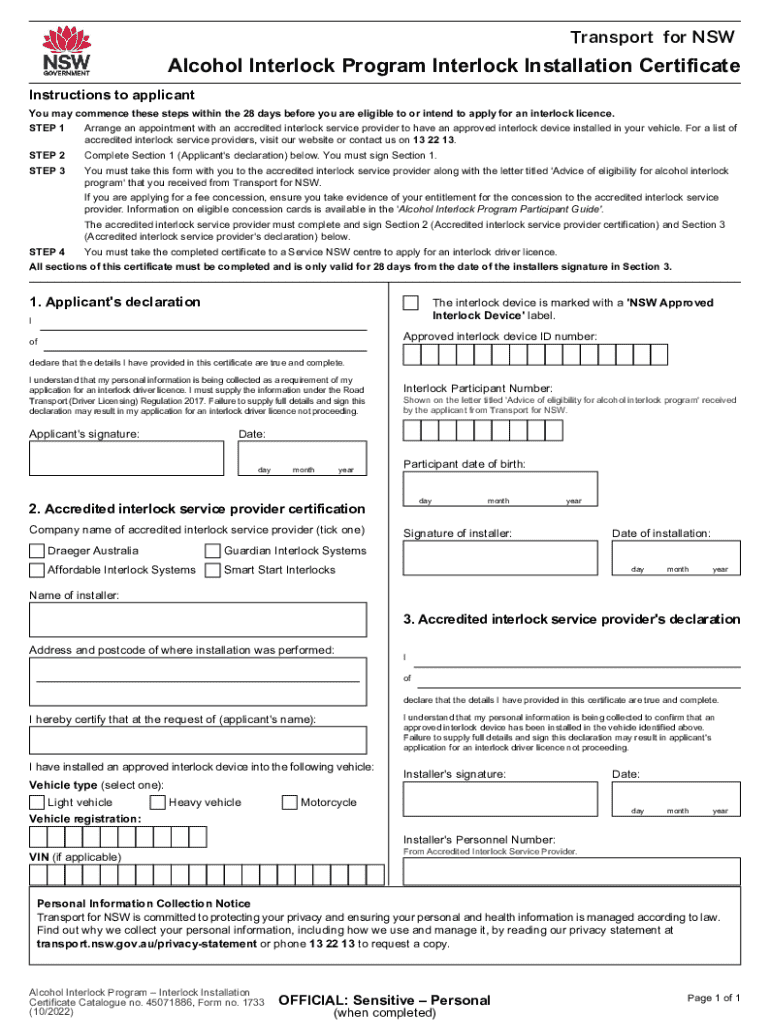
The Interlock Installation Certificate is a formal document that verifies the installation of an alcohol interlock device in a vehicle. This certificate is typically used by individuals who are legally required to have an interlock device installed due to previous DUI (Driving Under the Influence) offenses. The interlock system prevents the vehicle from starting until the driver successfully passes a breath alcohol test, thus ensuring safe driving practices.
The purpose of this certificate is to document compliance with legal requirements imposed by the court or relevant transportation authorities. This provides a way to demonstrate to law enforcement and licensing bodies that an installed interlock device is operational and functioning as intended. By using this certificate, there is an assurance that the mandated safety measures are in place to prevent further violations.
How to Use the Interlock Installation Certificate
The Interlock Installation Certificate functions as both a compliance document and a monitoring tool. Here's a breakdown of how it may be used:
-
Driver Presentation: Individuals must present this certificate when renewing their driver's license or as proof of compliance at traffic stops.
-
Legal Evidence: The document serves as evidence in legal proceedings related to DUI cases, showing that the required interlock device has been installed.
-
Employer Assurance: For those required to drive as part of their job, presenting this certificate can reassure employers of compliance with legal obligations.
-
Insurance Verification: Some insurance policies may require proof of interlock installation as a condition for coverage, making this certificate a necessary proof document.
These applications underscore the certificate's role as a critical piece of documentation in maintaining legal driving privileges while ensuring public safety.
How to Obtain the Interlock Installation Certificate
To acquire an Interlock Installation Certificate, follow these steps:
-
Choose an Accredited Provider: Contact a certified interlock service provider approved by your state. It’s crucial that an accredited provider installs the device to guarantee compliance.
-
Schedule Installation: Book an appointment to have the interlock device installed in your vehicle. Providers often have multiple locations to choose from for your convenience.
-
Installation Process: Attend the scheduled appointment. The provider will install the device and conduct a training session on its use, ensuring you understand how to operate it correctly.
-
Certification Issuance: Once installed, the provider will issue the Interlock Installation Certificate. This certificate confirms that the device is properly set up and ready for use.
-
Submit to Authorities: Depending on state requirements, submit the certificate to the appropriate authorities, such as the Department of Motor Vehicles or the court, to finalize compliance.
Steps to Complete the Interlock Installation Certificate
Completing the Interlock Installation Certificate also entails specific steps that must be carefully followed:
-
Form Fill-Out: Provide all necessary personal information, including name, address, and driver's license number, on the certificate form.
-
Device Details: Ensure the form includes details about the installed interlock device, such as the make, model, and serial number for accurate identification.
-
Provider Confirmation: The installing provider must fill out their section, adding their business details and confirming the installation meets all regulatory standards.
-
Verification Signature: Both the installer and vehicle owner must sign the form, verifying the information is accurate and the device is operational.
-
Copies Distribution: Keep a personal copy of the completed certificate and provide copies to any party that requires verification, such as legal representatives or your insurance company.
By adhering to these steps, the completion of the Interlock Installation Certificate becomes streamlined, ensuring all parties have the information they need to proceed confidently.
Key Elements of the Interlock Installation Certificate
The Interlock Installation Certificate includes several critical components necessary for full compliance:
-
Owner Information: Full name and contact details of the individual for whom the device is installed.
-
Vehicle Information: Make, model, and Vehicle Identification Number (VIN) of the vehicle equipped with the interlock device.
-
Device Information: Details of the interlock device, including its type and the serial number for tracking purposes.
-
Provider Credentials: The name, address, and certification details of the interlock service provider, affirming the provider's authorization to install the device.
-
Installation Date: The specific date the device was installed, which aligns with compliance timelines set by legal or administrative authorities.
Understanding these elements helps ensure that the certificate covers all required information to satisfy compliance checks.
Legal Use of the Interlock Installation Certificate
The Interlock Installation Certificate is vital in legal contexts, providing documented evidence of compliance with DUI-related probation conditions. It ensures:
-
Court Compliance: Courts may require periodic evidence of compliance, and this certificate serves as official proof.
-
Law Enforcement Relations: This document is crucial in interactions with law enforcement to verify that the legally required interlock device is in place and functioning.
-
Administrative Compliance: Licensing agencies may require the certificate as part of reinstating driving privileges post-DUI incidents.
Through its legal functionalities, this certificate plays a key role in maintaining public safety and enforcing judicial requirements effectively.
State-Specific Rules for the Interlock Installation Certificate
Regulations for the Interlock Installation Certificate may differ significantly from state to state. Understanding these variations is crucial for compliance:
-
Different Requirements: States may have varying lengths of time for which an interlock must be installed or specific procedures for verification and reporting.
-
Certification Validity: Some states may require periodic renewal of the certificate to align with monitoring and compliance intervals.
-
Provider Lists: Each state typically maintains a list of approved providers, and it's important to select from these to ensure the installation is recognized.
Knowing these state-specific rules ensures that the Interlock Installation Certificate is consistently valid and accepted across different jurisdictions.
Examples of Using the Interlock Installation Certificate
Real-world scenarios can illustrate the utility of the Interlock Installation Certificate:
-
Court Appearances: An individual facing a court review for a prior DUI conviction can present the certificate to prove compliance with mandatory safety measures.
-
Traffic Stops: If a driver is pulled over and questioned, displaying the certificate can provide immediate evidence of adherence to legal requirements.
-
License Reinstatement: Those seeking to reinstate a suspended driver's license might need the certificate to demonstrate all conditions have been met.
Each scenario highlights the diverse uses of the certificate in supporting legal and administrative processes, demonstrating its essential role in maintaining driving privileges.




