







Definition & Meaning
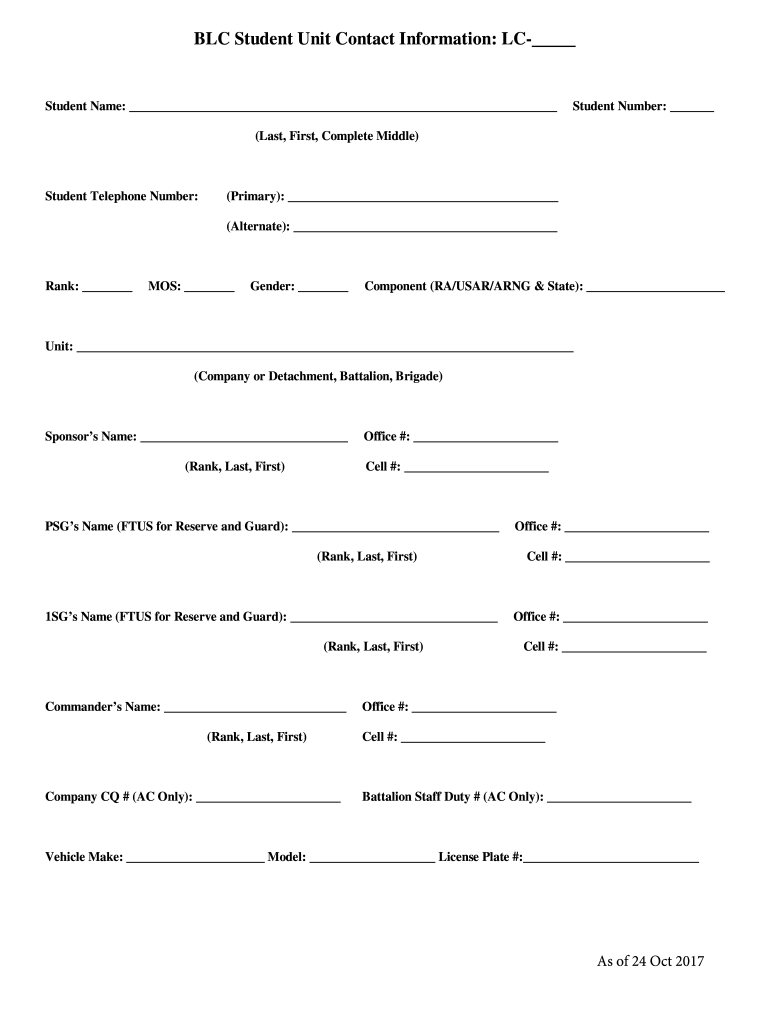
The "BLC Student Unit Contact Information: LC-" form is a specialized document designed to collect comprehensive contact details of students within a military context. This includes essential personal details such as the student's name, student number, and contact information. Additionally, it captures military-specific data like rank, military occupational specialty (MOS), gender, component, and unit affiliation. The form efficiently organizes and catalogues key personnel contacts within the unit, making it a vital resource for both administrative and logistical purposes. This document serves as a critical link between students and their respective military units, ensuring streamlined communication and data management.
Key Elements of the BLC Student Unit Contact Information: LC-
Unpacking the core components of this form is essential for comprehensive understanding. Key elements typically include:
- Personal Details: Name, student number, and contact numbers are the fundamental identifiers that ensure accurate record-keeping.
- Rank and MOS: These details provide context about the student's military role and responsibilities. The rank signifies the student's level and authority, while the MOS indicates their specialty within the military, offering insight into their skills and capabilities.
- Unit Affiliation: Knowing the unit with which the student is associated allows for effective communication within the military hierarchy and facilitates logistical coordination.
- Contact Information for Key Personnel: This includes information of direct superiors or mentors within the unit, ensuring that students have access to guidance and support.
Each of these elements plays a pivotal role in maintaining the integrity and reliability of military student records.
How to Use the BLC Student Unit Contact Information: LC-
Proper utilization of the form is vital to maximize its effectiveness. Here’s a step-by-step guide:
- Gather Required Information: Begin by collecting all necessary data from the student, ensuring accuracy in personal details, military context, and unit affiliations.
- Fill in Personal and Military Details: Enter the student's name, student number, and rank accurately. Ensure the MOS and unit affiliation reflect the latest assignments.
- Add Contact Information: Include current phone numbers and email addresses, both personal and unit-based, for comprehensive communication options.
- List Key Personnel Contacts: Document the pertinent details of superiors or unit mentors to provide students with access to required support systems.
- Review and Verify: Double-check the entered information for accuracy and completeness to avoid any future discrepancies.
- Official Submission: Once completed, submit the form through the appropriate military channels, ensuring all protocols are followed to maintain the confidentiality and security of the data.
Steps to Complete the BLC Student Unit Contact Information: LC-
To ensure a seamless process, adhere to these detailed steps in completing the form:
- Preparation: Gather all necessary documents and information before starting to minimize errors.
- Accurate Data Entry: Use legible handwriting if completing a paper version, or ensure digital entries are free from typographical errors in digital submissions.
- Completing Military Sections: Verify rank and MOS with official records to prevent inconsistencies.
- Contact Details: Ensure contact information is current and includes all necessary phone numbers and email addresses for redundancy.
- Submitting the Form: Follow specific military guidelines for the form’s submission, whether through physical channels or secure digital platforms.
By following these steps, you can ensure the form is completed accurately and efficiently.
Why Should You Use BLC Student Unit Contact Information: LC-
Using this form is crucial for maintaining structured and up-to-date records of military students. Its application offers several benefits:
- Streamlined Communication: By organizing contact information and roles, it facilitates effective communication within military units.
- Efficient Record Keeping: The form serves as an organized database of student information, crucial for administrative efficiency.
- Accountability and Support: By documenting affiliations and key contacts, the form ensures students have access to appropriate guidance and support.
- Operational Readiness: Having detailed records aids in quick response times and adaptability in dynamic military environments.
These advantages underscore the form's role in promoting operational efficiency within military structures.
Important Terms Related to BLC Student Unit Contact Information: LC-
When dealing with this form, familiarity with specific terminologies is beneficial:
- MOS (Military Occupational Specialty): This code classifies a military job and is essential for understanding a service member's role.
- Unit Affiliation: Refers to the specific military unit a member is assigned to, important for the chain of command and administrative purposes.
- Key Personnel: Individuals within a unit who play critical roles in management, supervision, or mentoring.
Understanding these terms provides clarity and aids in the effective use of the form.
Examples of Using the BLC Student Unit Contact Information: LC-
Consider these practical scenarios showcasing the utility of the form:
- New Assignments: When a student is assigned to a new unit, this form helps quickly integrate them by providing contact details and affiliations.
- Emergency Communication: In situations requiring rapid contact, the form serves as a reliable source of accurate student information.
- Performance Reviews: Regular updates using this form keep track of student progress and position changes.
These examples highlight the form’s importance in maintaining operational smoothness and responsiveness.
Digital vs. Paper Version
Choosing between digital and paper versions of this form depends on specific needs and operational contexts:
- Digital Version: Offers ease of updating and sharing, with enhanced security features for sensitive information.
- Paper Version: Provides a tangible record, beneficial in environments with limited digital access.
Each format has its advantages, and the choice largely hinges on logistical capabilities and preferences within the operational unit.




