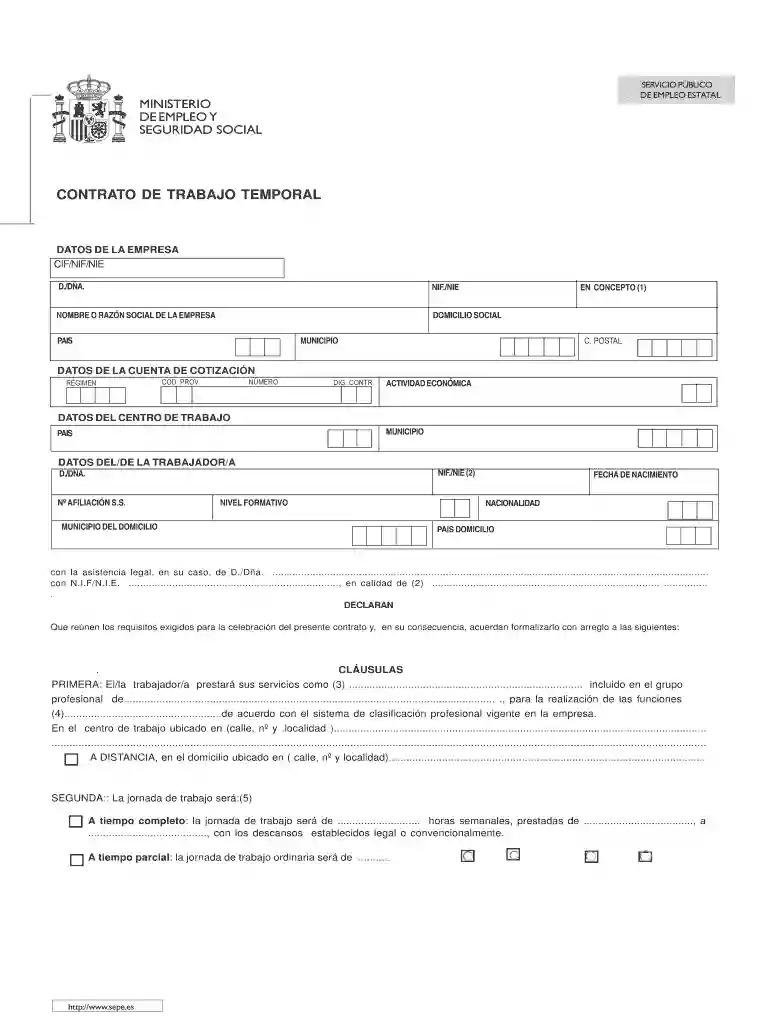
Definition and Meaning of CONTRATO DE TRABAJO TEMPORAL
The "Contrato de Trabajo Temporal" refers to a temporary employment contract typically used in countries with Spanish-influenced labor laws. This agreement outlines the terms under which an employer hires an employee for a specific duration, often to cover short-term needs like seasonal work or maternity leave. It is regulated by national labor laws to ensure fair employee treatment, specifying roles, responsibilities, salaries, and working conditions. This type of contract is essential for businesses that require flexibility in staffing while maintaining compliance with legal standards.
Key Elements of the CONTRATO DE TRABAJO TEMPORAL
A well-structured "Contrato de Trabajo Temporal" usually consists of several essential elements that ensure clarity and compliance with labor regulations:
- Duration: Specifies the start and end dates or indicates the event upon which the contract will terminate.
- Job Responsibilities: Details the duties and tasks the employee is expected to perform.
- Compensation: Outlines the salary or wage agreed upon, including payment intervals and any bonuses.
- Working Hours: Defines the number of hours per week or day the employee is expected to work.
- Legal Obligations: Ensures compliance with labor laws, including minimum wage and safety regulations.
- Vacation and Leave Policies: Explains entitlements related to personal leave, holidays, and sick days.
Each element needs to be completed carefully to prevent misunderstandings or legal disputes.
Legal Use of the CONTRATO DE TRABAJO TEMPORAL
The legal framework governing temporary employment contracts is designed to protect both the employer and the employee. These contracts must comply with national employment laws, which dictate:
- Non-Discrimination: Ensures hiring practices do not favor or disfavor candidates based on non-job-related factors.
- Termination Provisions: Clearly states the conditions under which the employment relationship may be ended by either party.
- Data Protection: Adheres to privacy laws regarding handling personal information during and after the employment period.
- Compliance with Benefits Legislation: Ensures employees are granted any legally mandated benefits, even when employed temporarily.
Employers must adhere strictly to these regulations to avoid penalties or legal challenges.
Steps to Complete the CONTRATO DE TRABAJO TEMPORAL
Completing a "Contrato de Trabajo Temporal" involves several steps to ensure it is thorough and legally compliant:
- Drafting the Contract: Use a standard template that meets legal requirements and tailor it to the specifics of the job.
- Reviewing Job Specifics: Confirm all job details, including duration, responsibilities, and pay, are accurate.
- Collecting Required Information: Obtain employee details, such as identification and tax information, for inclusion.
- Legal Review: Have the contract reviewed by a legal professional to ensure compliance.
- Employee Verification: Confirm the potential employee understands all terms and has the opportunity to ask questions.
- Signatures: Both parties need to sign the contract, acknowledging their agreement to all terms and conditions.
- Copy Distribution: Provide copies to both the employee and employer for their records.
Who Typically Uses the CONTRATO DE TRABAJO TEMPORAL
The "Contrato de Trabajo Temporal" is widely utilized across various sectors and for different needs, including:
- Seasonal Employers: Businesses in agriculture or tourism that experience fluctuations in demand.
- Event Management Firms: Companies needing short-term staff for specific events or projects.
- Substitute Needs: Organizations requiring temporary cover for permanent employees on leave.
- Startups and Small Businesses: Companies testing the viability of new roles without long-term commitments.
Each scenario benefits from the contract's flexibility while ensuring labor law compliance.

Why Should You Use a CONTRATO DE TRABAJO TEMPORAL
Using a "Contrato de Trabajo Temporal" offers multiple advantages:
- Flexibility: Adapt to varying business needs without permanent commitments.
- Cost-Effective Staffing: Manage labor costs by employing workers only when required.
- Risk Management: Reduce legal exposure with clear, legally compliant terms.
- Agility: Quickly respond to market changes or unexpected events without long-term constraints.
These benefits help businesses operate efficiently while aligning with strategic goals.
How to Obtain the CONTRATO DE TRABAJO TEMPORAL
Securing a "Contrato de Trabajo Temporal" requires understanding procurement routes:
- Legal Templates: Available through law firms specializing in employment law.
- Online Resources: Websites offering customizable contract templates that meet general legal standards.
- Human Resources Consultants: Professionals can tailor contracts to fit specific organizational needs.
- Labor Authorities: Some countries provide standard templates via governmental labor departments.
Choosing the appropriate source ensures the contract's legality and appropriateness for the specific employment scenario.
Important Terms Related to CONTRATO DE TRABAJO TEMPORAL
Key terms associated with "Contrato de Trabajo Temporal" help clarify its scope and purpose:
- Provisional Employee: Refers to an individual employed for a duration specified in the contract.
- Non-Permanent Status: The employee's employment does not extend beyond the agreed term.
- Mutual Agreement: Both parties must consent to the employment terms laid out in the contract.
- Renewal Clause: Details the process for extending the contract if both parties desire continuity.
- Trial Period: Sometimes included, which allows both parties to assess suitability before fully committing to the term.
Understanding these terms can prevent misunderstandings and ensure mutual satisfaction.