Definition and Meaning
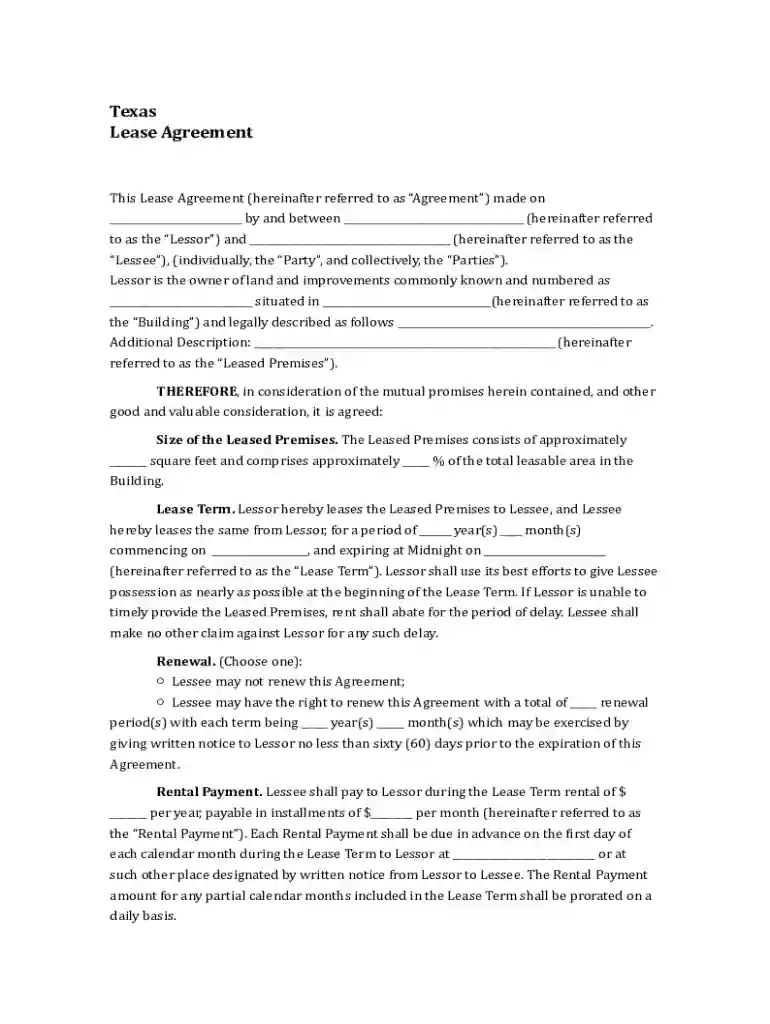
A Texas-Standard-Residential-Lease-Agreement-Template is a formal contract designed for leasing residential property in Texas. It outlines the agreement between the property owner (lessor) and tenant (lessee), providing clear definitions of roles and expectations over the lease term. This legally binding document covers important elements, including rental terms, payment arrangements, security deposits, and duties for property maintenance. By clarifying these aspects, it ensures mutual understanding and compliance with Texas tenancy laws.
Major Components
- Lease Duration: Specifies start and end dates.
- Rent Payment Details: Includes amount, due date, and acceptable payment methods.
- Security Deposit Requirements: Outlines the amount and conditions for its return.
- Use of Property: Limits permissible activities to maintain residential integrity.
Steps to Complete the Texas-Standard-Residential-Lease-Agreement-Template
Finalizing a Texas-Standard-Residential-Lease-Agreement-Template involves several key steps, ensuring all necessary information is accurately captured. Following a structured approach facilitates a clearer understanding for both parties involved.
Gather Necessary Information:
- Collect details about the landlord, tenant, and property.
- Confirm the lease start and end dates.
Fill Out Basic Details:
- Enter personal information like names and contact details.
- Record property specifics like address and description.
Define Financial Terms:
- Specify monthly rent, due date, and payment method.
- Detail lease deposits and pet fees if applicable.
Outline Maintenance Responsibilities:
- Allocate duties for property upkeep to relevant parties.
- Include provisions for repairs and improvements.
Include Legal Clauses:
- Address tenant rights and obligations under Texas law.
- Add terms for early termination, renewal, and eviction processes.
Review and Finalize:
- Go through each section carefully to ensure accuracy.
- Both parties must sign the document to make it legally binding.
Key Elements of the Texas-Standard-Residential-Lease-Agreement-Template
The Texas-Standard-Residential-Lease-Agreement-Template is structured to encompass various essential elements that govern residential tenancy efficiently. These components are crucial to establishing a fair and enforceable lease contract.
Important Elements
- Identification of Parties: Clearly states landlord and tenant names.
- Property Description: Detailed description of the premises being leased.
- Lease Term: Defines the period for which the lease is valid.
- Rent and Expenses: Covers rent amount, payment schedule, and other charges.
- Security and Maintenance Responsibilities: Assigns roles for upkeep and repair of the property.
Supplementary Clauses
- Insurance Requirements: Specifies any insurance coverage required by tenants.
- Subletting Rules: Conditions under which a lessee may sublet the property.
- Dispute Resolution: Procedures for resolving conflicts between parties.
State-Specific Rules for the Texas-Standard-Residential-Lease-Agreement-Template
In Texas, residential leases must align with specific legal requirements to ensure enforceability and protect tenant and landlord rights. Understanding these guidelines helps in drafting a compliant lease agreement.
Notable Texas Provisions
- Lead-Based Paint Disclosure: Mandatory for properties built before 1978.
- Security Deposit Limits: No specific state limit, but conditions for deductions must be justified.
- Multi-Family Unit Regulations: Specific rules if leasing multiple units.
- Notification of Landlord’s Address: Must be disclosed for receiving notices.
Compliance Requirements
- Mandatory Disclosures: Inform tenants of environmental or safety hazards.
- Privacy Notice: Landlord’s right to enter property must align with state requirements.
Legal Use of the Texas-Standard-Residential-Lease-Agreement-Template
Proper legal use of the Texas-Standard-Residential-Lease-Agreement-Template ensures that the lease aligns with statutory regulations, providing protection for all involved parties.
Legal Considerations
- Statutory Compliance: Conforms with Texas Property Code and state tenancy laws.
- Contractual Obligations: Clearly defines duties, rights, and remedies in case of breach.
- Fair Housing Laws: Ensures there’s no discrimination in housing practices.
Enforcement Protocols
- Judicial Processes: Establishes framework for resolving disputes through Texas courts if required.
- Tenant Defense Rights: Outlines rights to contest unjust eviction or termination.
Primary Users
- Property Owners and Managers: To formalize rental agreements aligning with statutory requirements.
- Real Estate Agents: When handling leases on behalf of clients or property owners.
- Tenants: To safeguard tenant rights and clarify rental expectations.
Secondary Users
- Legal Professionals: For preparing or reviewing legal compliance in lease documents.
- Potential Lessees: Before entering into tenancy agreements, to understand lease terms.
Examples of Using the Texas-Standard-Residential-Lease-Agreement-Template
Examples of practical application of the Texas-Standard-Residential-Lease-Agreement-Template can offer insights into how it functions in real-world scenarios.
Case Studies
Situation 1: Young Professionals Sharing Rent Two individuals rent an apartment in Dallas, sharing responsibilities and rental costs outlined in the lease.
Situation 2: Family Renting a House A family leases a two-bedroom house in Austin, understanding lease terms such as maintenance and pet policies.
Application Scenarios
- Prospective Tenants: Reviews the document to ensure comprehensive understanding of rights and duties.
- Landlord in Transition: Uses the document to switch tenants while maintaining continuity in lease terms.
Important Terms Related to Texas-Standard-Residential-Lease-Agreement-Template
Understanding the terminology associated with the Texas-Standard-Residential-Lease-Agreement-Template is crucial for effective navigation and implementation.
Key Terms and Meanings
- Lessor vs. Lessee: The property owner, and the tenant respectively.
- Lease Term: The duration for which the residential lease is valid.
- Default: Breach of lease conditions by tenant or landlord.
- Sublease: Transfer of lease agreement from current tenant to another party.
Contextual Clarifications
- Rent Abatement: Temporary suspension or reduction of rent due to specific conditions.
- Holdover Tenant: Lessee who remains in the property after lease expiration without renewal agreement.
Form Submission Methods (Online / Mail / In-Person)
Finalizing the Texas-Standard-Residential-Lease-Agreement-Template requires clear understanding of submission and management methods post-completion.
Submission Channels
- Online Submission: Preferred in digital form using secured platforms like DocHub.
- Mailing Hard Copies: Traditional method; ensures signed paper copies are physically exchanged.
- In-Person Submission: Direct handover, typically for official documentation or copies exchange.
Document Management
- Digital Archives: Use platforms like DocHub for secure storage and quick retrieval.
- Paper Copies: Retain signed originals for legal referencing if disputes arise.