
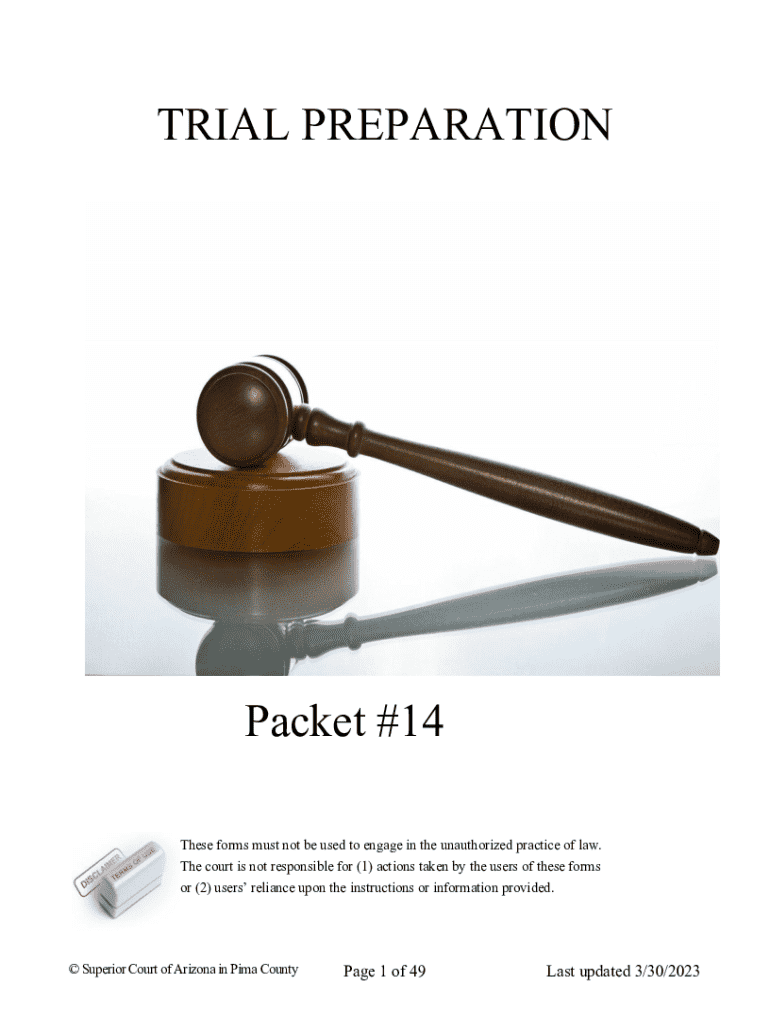







Understanding County Packet 14
"County Packet 14" refers to a collection of legal forms and instructional materials typically used by individuals involved in family court trials within specific counties. These documents are essential for filing the necessary paperwork related to family court proceedings, such as divorces, custody arrangements, and protection orders. The packet often includes forms that a court system might mandate for preparing and proceeding through various legal stages.
Components of County Packet 14
-
Motion to Set Trial Date
- Purpose: Requests the court to assign a date for the family court trial.
- Importance: Establishes the timeline for legal proceedings and ensures all parties are adequately prepared.
-
Pre-Trial Statement
- Function: Outlines each party's position, proposed resolutions, and evidence to be presented at trial.
- Utility: Helps streamline court proceedings by providing a clear summary of the case.
-
Financial Affidavits
- Role: Discloses income, expenses, assets, and debts of the involved parties.
- Relevance: Influences decisions related to alimony, child support, and asset distribution.
Legal Use and Compliance
Filing Deadlines and Important Dates
- Each document within County Packet 14 must be submitted by specific deadlines, which vary by county and case type. Failure to meet these deadlines can result in delays or dismissals.
Required Supporting Documents
- Identity Proofs: Such as a driver's license or passport.
- Financial Records: Includes bank statements, tax returns, and pay stubs.
- Relevant Court Orders: Previous judgments or ongoing legal obligations.
Steps to Complete County Packet 14
-
Obtain the Packet
- Source: Local courthouse, county website, or legal aid offices.
-
Complete Required Forms
- Follow detailed instructions accompanying each form.
- Provide accurate and comprehensive information.
-
File Forms Appropriately
- Methods: Online submission through court's website or physical submission at the courthouse.
- Ensure all additional documents are attached.
Eligibility and Application Process
- Primarily designated for individuals engaged in family court proceedings.
- Individuals must verify eligibility by consulting legal authorities or court clerks to ensure the forms apply to their specific case type.
State-Specific Rules
Variations Across States
- Document Names and Numbers: Variations in form titles and numbers can occur, necessitating confirmation with local court systems.
- Submission Protocols: Online and mail-in submission options might differ, as well as the necessity for notarization.
Execution of Forms
- Certain forms might require notarization or witnessing, depending on state laws and the nature of the case.
Common Users of County Packet 14


Typical User Profiles
- Divorcing Couples: For dividing assets and determining child custody arrangements.
- Domestic Violence Victims: To secure protection orders and legally enforce safe environments.
- Custodial/Non-custodial Parents: Engaged in custody disputes and support agreements.
Examples and Practical Applications
Case Studies
-
Custody Modification: An individual uses County Packet 14 to request a change in child custody arrangements due to a change in circumstances, such as relocation or job changes.
-
Protection Orders: A victim of domestic violence utilizes the packet to file for restraining orders and protective custody of children.
Key Elements for Successful Submission
- Accuracy and Completeness: Double-check all entries for correctness.
- Legal Consultation: Consulting an attorney can ensure all forms are completed correctly, improving chances of favorable outcomes.
- Adherence to Court Rules: Understanding courtroom protocols and expectations for filing can avoid procedural errors.
By following these guidelines, users of the county packet 14 can navigate their legal responsibilities more effectively, reducing the risk of procedural mishaps and ensuring that they are adequately prepared for court proceedings.




