
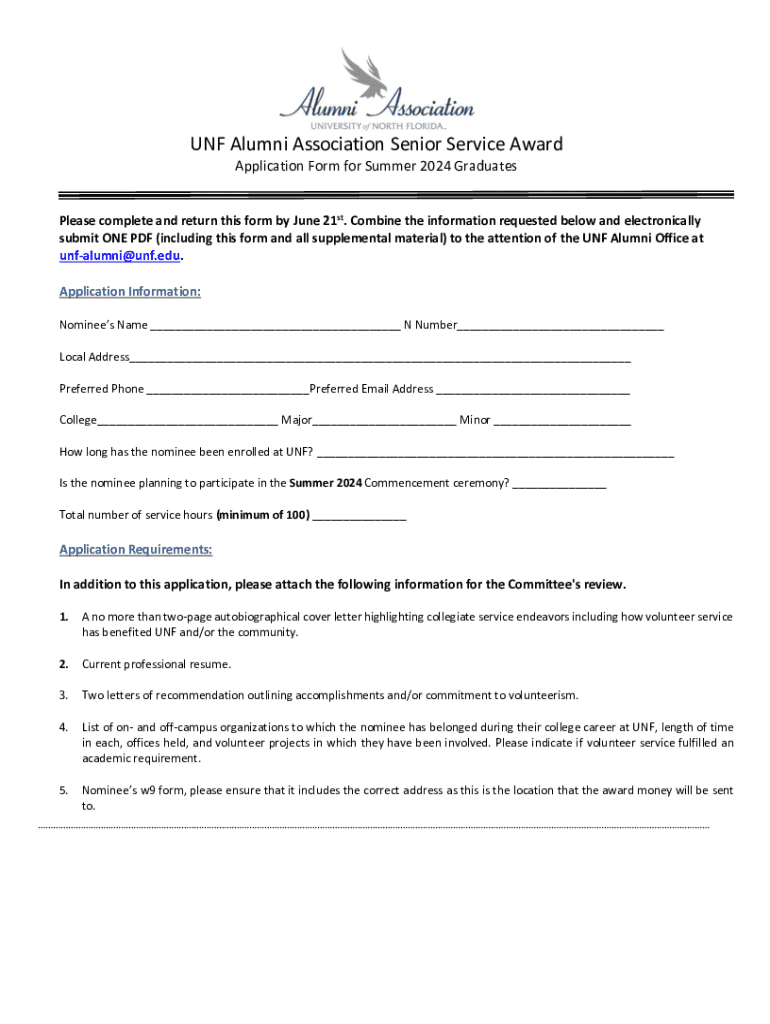







Definition & Meaning
The term "Alumni Recognition Awards" refers to accolades given by educational institutions to honor former students for their achievements after graduation. These awards recognize contributions in various fields such as community service, professional accomplishments, or personal development. Their purpose is to highlight and celebrate the success of alumni while reinforcing the ongoing relationship between the institution and its former students.
Purpose and Impact
Alumni Recognition Awards serve several purposes:
- Acknowledging Accomplishments: They formally recognize individuals who have made significant achievements post-graduation.
- Strengthening Bonds: Such awards help strengthen the bond between alumni and their alma mater by keeping former students engaged with the institution.
- Inspiring Current Students: These awards can serve as an inspiration for current students, showcasing the potential futures awaiting them after their education.
How to Use the Alumni Recognition Awards
The process of utilizing Alumni Recognition Awards involves various stages from nomination to award distribution. Institutions typically follow these steps to use these awards effectively:
- Nomination Process: Alumni, faculty, or students can nominate individuals who have demonstrated exceptional accomplishments.
- Evaluation Criteria: A committee usually reviews nominations based on specific criteria such as impact, innovation, and service.
- Award Categories: Institutions might offer awards in different categories like leadership, volunteerism, or professional success.
- Ceremony and Recognition: The culmination is often a formal event where awardees are publicly acknowledged and celebrated.
Practical Examples
- University of Example: Nominees are evaluated on community engagement, and recipients are honored at an annual gala.
- State College of Arts: Awards individuals in fields such as the arts, literature, and humanities, highlighting diverse accomplishments across sectors.
Steps to Complete the Alumni Recognition Awards Process
Completing the Alumni Recognition Awards process involves several key steps:
- Gathering Required Documentation: Ensure all necessary forms, such as a resume, cover letter, and letters of recommendation, are collected.
- Completing the Nomination Form: Fill out the nomination form with detailed information about the nominee's achievements.
- Submitting Verification Information: Include verification from an authoritative source like the Registrar's Office regarding academic standing.
- Compiling Service Records: Document service hours or involvement in relevant organizations.
Detailed Instructions
- Fill Out All Sections: Each section of the nomination form should be filled out with precision to reflect the nominee’s achievements accurately.
- Attach Supplementary Documents: Attach all supplementary documents, such as a W-9 form, to substantiate claims.
Who Typically Uses the Alumni Recognition Awards
Alumni Recognition Awards are typically used by academic institutions, alumni associations, and sometimes corporate entities with education sponsorship programs. Key users include:
- Educational Institutions: They use these awards to maintain a connection with alumni and highlight their ongoing success and influence.
- Alumni Associations: These groups often organize awards to unite former students and celebrate collective achievements.
- Corporate Sponsors: Companies that partner with educational institutions may leverage these awards to recognize and foster talent.


Important Terms Related to Alumni Recognition Awards
Understanding terminology specific to Alumni Recognition Awards is essential for navigating the process:
- Nominee: The individual being considered for an award.
- Evaluator/Committee: The group or individuals responsible for reviewing nominations and deciding on recipients.
- Service Hours: A measurement of time contributed by the nominee to community or institutional service.
- Verification: Documented proof of eligibility or specific achievements, often provided by the Registrar's Office.
Key Elements of the Alumni Recognition Awards
To ensure the awards process is both efficient and successful, several elements must be clearly defined:
- Eligibility Criteria: Clear guidelines outlining who can be nominated, such as alumni who graduated within a certain timeframe or who have met specific achievement thresholds.
- Award Categories: Diverse categories that align with the institution’s values and mission.
- Evaluation Process: A well-documented procedure that ensures transparency and fairness in selecting awardees.
- Recognition Events: Planning and execution of an event or ceremony to celebrate awardees publically.
Examples of Using the Alumni Recognition Awards
Alumni Recognition Awards have been successfully implemented across various institutions:
- Example University of Excellence: Award ceremonies are live-streamed, allowing global participation from international alumni.
- Arts College of Imagination: They publish a bi-annual magazine feature highlighting awardees and their work.
- Tech Institute for Innovation: Uses awards as a platform to foster mentorship programs between awardees and current students.
Form Submission Methods
Submitting forms for Alumni Recognition Awards typically offers multiple channels to accommodate applicants' preferences:
- Online Submission: Forms are uploaded via a secure portal on the institution's website, ensuring quick and easy access.
- Mail: For those preferring traditional methods, institutions often accept applications through postal services.
- In-Person: Some institutions allow submissions at designated drop-off points on campus, facilitating direct delivery with personal interaction.
Considerations for Submission
- Digital Tools: Platforms like DocHub can streamline the completion and submission process, facilitating electronic signatures and form management.
- Security Measures: Ensure data protection protocols are adhered to by using secure submission portals or encrypted emails for sensitive documents.




