




01. Edit your ocdcp supervisor reference form online
Type text, add images, blackout confidential details, add comments, highlights and more.

Type text, add images, blackout confidential details, add comments, highlights and more.

Draw your signature, type it, upload its image, or use your mobile device as a signature pad.

Send it via email, link, or fax. You can also download it, export it or print it out.
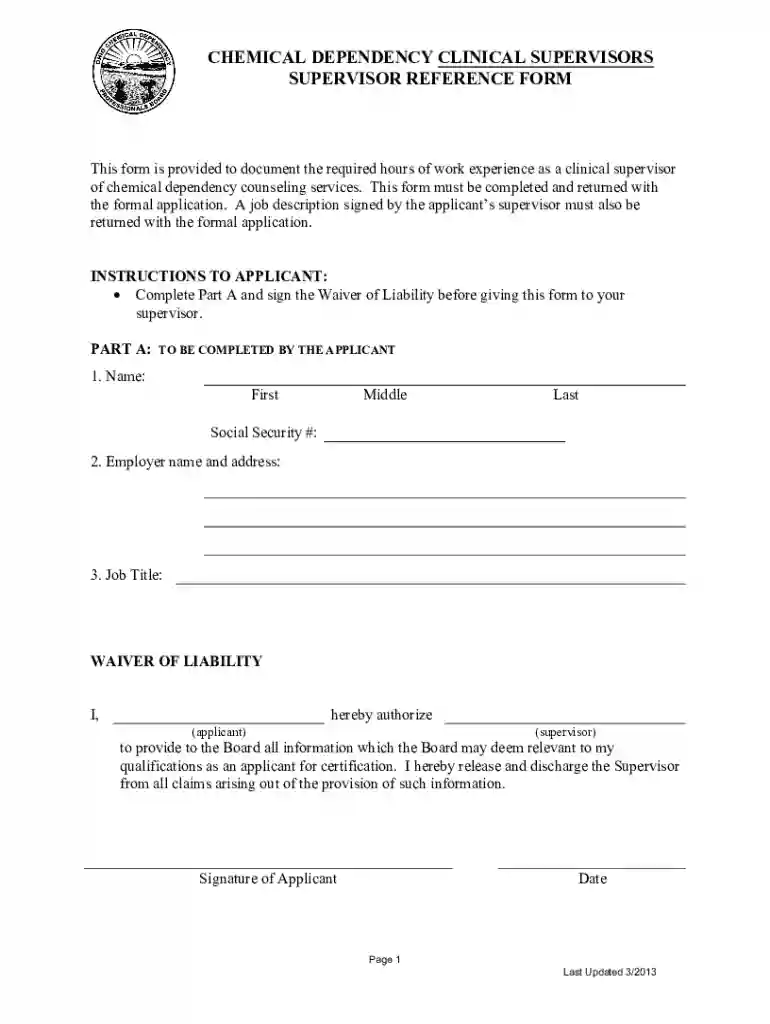
The LCDP Counseling Experience Form - State of Delaware is specifically designed for applicants seeking licensure as Licensed Chemical Dependency Professionals (LCDPs) in the state of Delaware. This form serves a critical role in documenting the applicant’s supervised counseling experience, which is required for licensure. It ensures that candidates have met the necessary professional experience requirements set by the licensing board. By accurately detailing the hours and types of supervised counseling services provided, the form helps verify that the applicant has the practical experience needed to perform professionally as an LCDP.
Obtaining the LCDP Counseling Experience Form is a straightforward process that generally involves a few key steps to ensure compliance with state requirements:
Visit the Delaware Board of Professional Counselors' Website: Navigate to the official website dedicated to professional licensing in Delaware, where you can find and download the form.
Request from Professional Associations: Professional counseling associations in Delaware may provide resources and support to help individuals obtain the required forms.
Contact the Licensing Board Directly: For further assistance, reaching out directly to the Delaware licensing board can provide you with guidance on accessing the form and any additional requirements.
Filling out the LCDP Counseling Experience Form requires careful attention to detail to ensure that all information is accurate and complete:
Part A – Applicant Information: Enter personal details, including full name, contact information, and certification number.
Waiver of Liability: The applicant must sign a waiver of liability, indicating an understanding of the requirements and conditions associated with application submission.
Part B – Supervisor Information: Provide detailed information about the supervisor, including their credentials, license number, and their role in the supervision process.
Documenting Counseling Experience: Record the total hours of supervised work, specifying types of counseling performed, to guarantee that all practical experience aligns with state mandates.
Supervisor’s Recommendation: The supervisor should complete their assessment of the applicant’s capabilities and endorse their qualifications for licensure.
The form includes several critical elements that applicants need to accurately fill out:
This form is primarily used by:


Understanding key terminology is vital for successfully navigating the form:
Delaware has specific criteria that applicants must adhere to when filling out this form:
When submitting the form, applicants often need to include additional documentation:
There are several methods for submitting the LCDP Counseling Experience Form, ensuring flexibility and convenience for applicants:
The legal use of this form encompasses:
Failure to comply with the submission requirements can result in:
We've got more versions of the ocdcp supervisor reference form form. Select the right ocdcp supervisor reference form version from the list and start editing it straight away!
At DocHub, your data security is our priority. We follow HIPAA, SOC2, GDPR, and other standards, so you can work on your documents with confidence.
4.1.2 Experience. Counseling experience shall be defined as the accumulation of 3,200 hours in no less than 2 years, providing chemical dependency servicesRead more
The purpose of this form is to verify the hours of substance abuse counseling that an applicant has provided while not under the supervision of an approved


