







Definition & Meaning
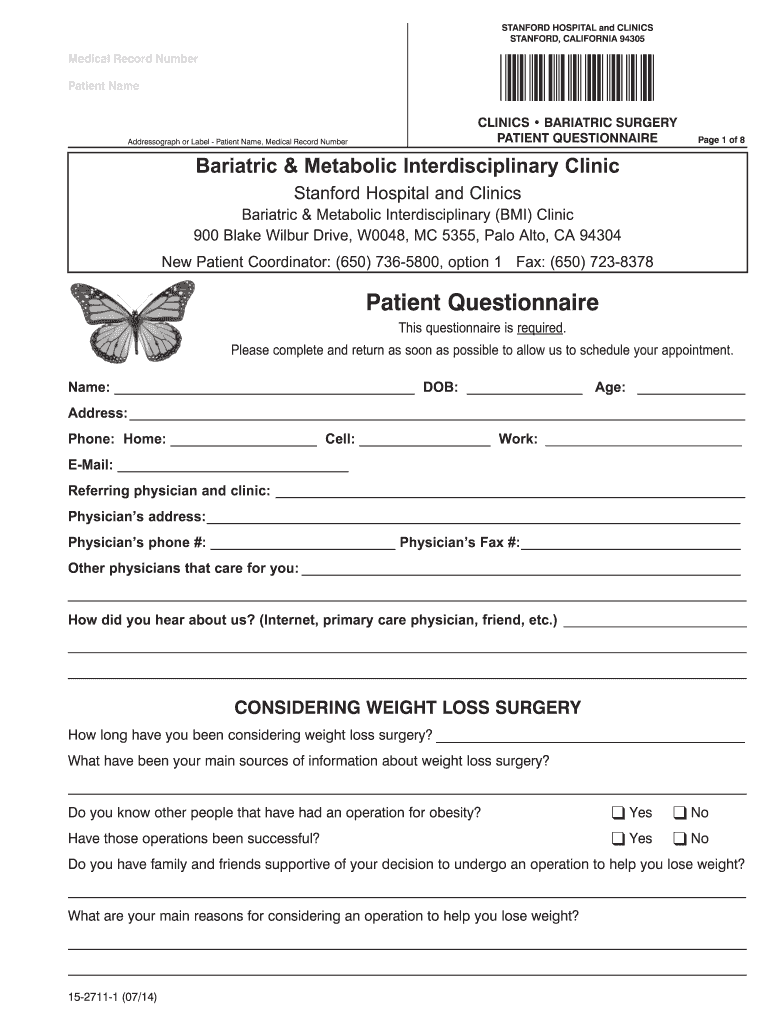
The "ca patient questionnaire" is a structured document designed to collect crucial health-related information from patients considering various medical treatments, including significant interventions such as weight loss surgery. This document functions as an extensive data-gathering tool, capturing personal and medical histories, lifestyle choices, and other relevant information. It ensures healthcare providers, like those at the Bariatric & Metabolic Interdisciplinary Clinic at Stanford Hospital, can customize treatment plans based on detailed patient profiles.
Steps to Complete the ca Patient Questionnaire
-
Personal Information: Start by filling out basic details, including your full name, contact information, and insurance details. Accurate personal data ensures smooth processing and follow-up.
-
Medical History: Provide comprehensive medical history, including past surgeries, chronic conditions, and current medications. This section is critical for assessing patient risks and treatment implications.
-
Diet and Exercise Habits: Document your dietary patterns and exercise routine. This information helps healthcare providers understand your lifestyle and formulate effective health interventions.
-
Family Health History: Indicate any hereditary conditions or diseases prevalent in your family. Family health patterns can influence medical advice and treatment options.
-
Social History and Habits: Note any lifestyle choices such as smoking or alcohol consumption, as these factors can affect treatment viability and outcomes.
-
Symptoms Review: Carefully detail any symptoms you are currently experiencing. This section can highlight potential areas needing further medical evaluation.
-
Medication and Allergies: List all medications you are taking and any known allergies. Accurate medication records prevent adverse drug interactions and allergic reactions during treatment.
Completing these steps thoroughly ensures that healthcare providers have a holistic view of the patient's health, which is essential for crafting personalized care plans.
Important Terms Related to ca Patient Questionnaire
-
Body Mass Index (BMI): A measure of body fat based on height and weight, crucial for assessing obesity levels and eligibility for specific treatments.
-
Metabolic Function: Refers to the chemical processes in the body that maintain life, influencing weight management and treatment responses.
-
Anesthesia Risk Assessment: Evaluation process to determine potential risks associated with anesthesia during surgeries, based on the patient's health status.
Understanding these terms clarifies the questionnaire's sections and aids in providing accurate responses.
Key Elements of the ca Patient Questionnaire
-
Comprehensive Health Profile: Involves gathering data on medical history, current health status, and family history to form a complete health narrative.
-
Lifestyle Factors: Includes diet, exercise, and social habits that may impact health outcomes, requiring consideration in treatment decisions.
-
Symptom Detail: Precise recording of present symptoms to inform diagnostic processes and healthcare planning.
These elements collectively ensure that healthcare providers receive the necessary information to deliver optimal care.
Who Typically Uses the ca Patient Questionnaire
The primary users of the "ca patient questionnaire" include:
-
Patients: Individuals considering surgical or medical interventions fill out the questionnaire to inform their healthcare providers.
-
Healthcare Providers: Medical teams, such as those at interdisciplinary clinics, use the data for treatment planning and risk assessment.
-
Administrative Staff: Responsible for processing, filing, and ensuring the completeness of the questionnaire for clinical use.
These users rely on the questionnaire to facilitate effective communication and ensure comprehensive patient care.


Legal Use of the ca Patient Questionnaire
Legal considerations for the ca patient questionnaire encompass:
-
Privacy Protection: Adherence to HIPAA regulations to protect patient information confidentiality.
-
Informed Consent: Patients must understand the purpose and use of the data collected, ensuring they voluntarily agree to provide their information.
Maintaining these legal standards ensures the ethical and secure handling of patient data.
Collecting Complete Data with the ca Patient Questionnaire
To maximize data accuracy:
- Use clear and concise language when completing the questionnaire.
- Double-check all sections to ensure completeness.
- Update any previous information that may have changed over time.
This thoroughness ensures the healthcare team can create a reliable patient profile, crucial for tailored healthcare strategies.
Synchronizing Digital and Paper Versions
Patients may have the option to fill out the questionnaire in either digital or paper form. Both versions should capture the same data, providing flexibility and convenience in completion. Digitally enabled forms can be integrated with platforms like DocHub for editing and signing, streamlining the data submission process.
Ensuring alignment between both versions guarantees consistency in the information collected and processed.




