


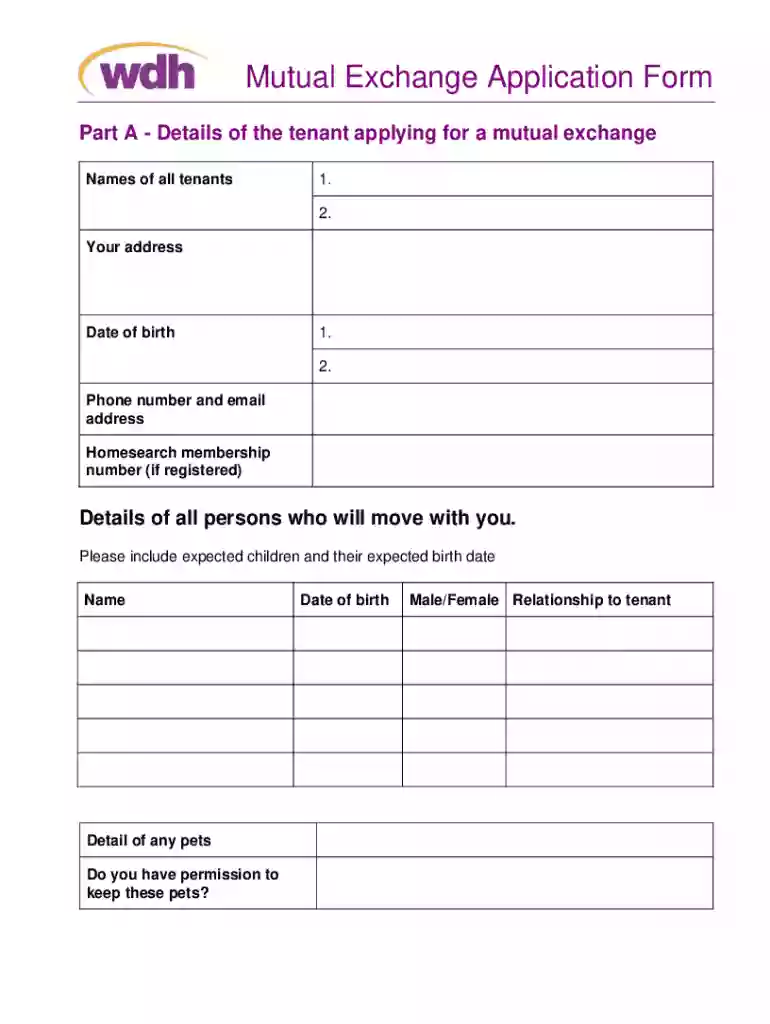
01. Edit your wdh mutual exchange form online
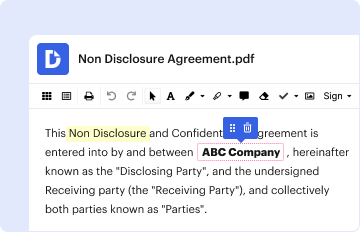
Type text, add images, blackout confidential details, add comments, highlights and more.

Type text, add images, blackout confidential details, add comments, highlights and more.
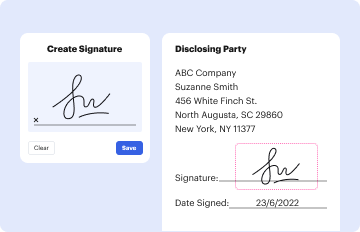
Draw your signature, type it, upload its image, or use your mobile device as a signature pad.

Send it via email, link, or fax. You can also download it, export it or print it out.
In today's digital age, an "online form" refers to a digital version of a traditional paper document that can be completed and submitted over the internet. These forms are designed to collect user information effortlessly and efficiently. They can range from simple contact forms to complex multi-page application forms. Online forms are crucial in numerous industries for streamlining data collection processes, reducing paperwork, and improving response times. By using forms online, users can engage with businesses and institutions remotely, saving time and resources.
Using an online form is a straightforward process that enhances accessibility and ease of use. Begin by accessing the web page where the form is hosted. Follow these steps for an optimal experience:
Open the Form: Access the online form via a web browser on any device. Ensure a stable internet connection to prevent data loss during submission.
Read Instructions: Before filling out the form, read any provided guidelines or instructions to understand what information is needed.
Input Details: Enter your details into the designated fields. This may include text fields for names, checkboxes for preferences, or dropdown menus for selections.
Submit the Form: Once completed, double-check your entries for accuracy. Click on the "Submit" button to send your information to the form's recipient.
Forms online are often equipped with features like autocomplete, conditional logic for fields that appear based on prior answers, and error notifications to ensure complete and correct submissions.
To obtain an online form, users can follow a straightforward set of guidelines:
Visit the Host Website: Navigate to the official website of the organization or entity issuing the form.
Download Link or Form Portal: Look for a link or portal specifically labeled for accessing forms. This is often found in sections titled "Resources," "Downloads," or "Services."
Search Functionality: Utilize the website's search functionality to find the specific form by name or related keywords.
Direct Access: Some websites allow direct completion and submission of the form online, while others may offer a downloadable PDF version that can be printed and filled manually.
Always ensure the legitimacy of the website before downloading or filling out sensitive information to protect your data.
Completing an online form involves the following sequential steps to ensure accuracy and efficiency:
Preparation: Identify the required documents and information needed to complete the form.
Access the Form: Open the form using a compatible web browser on your device.
Fill Out Personal Information: Enter personal or required information in the appropriate fields. Ensure accuracy and completeness.
Add Necessary Attachments: If the form requires, upload any additional documents or evidence as attachments. Check the file format and size restrictions.
Review and Edit: Prior to submission, review all entered information for errors or omissions. Use form features for error checks if available.
Submit and Save: Submit the form electronically by clicking the provided button. Save a copy of the completed form and submission confirmation, if available, for personal records.
These steps help users to submit forms online efficiently while ensuring all necessary data is accurately captured.
The advantages of using forms online are numerous, especially in the current technology-driven environment:
Using the form online aligns with modern expectations for prompt service and digital convenience.
Understanding certain terms related to online forms can enhance user experience:
A grasp of these terms improves user navigation and ensures effective interaction with online forms.
Online forms can carry the same legal weight as their paper counterparts under certain conditions:
Understanding legal considerations helps ensure compliance and secure data management.
An online form typically comprises several key elements to facilitate functionality and usability:
Input Fields: Include text boxes, radio buttons, checkboxes, and dropdown menus for user entries.
Labels and Instructions: Clearly indicate the purpose of each field to guide users.
Navigation Controls: Buttons such as "Submit," "Next," and "Back" enable smooth transitions and form completion.
Validation Mechanisms: Ensure complete and valid entries through real-time checks and feedback.
These elements collectively provide a robust structure for collecting user input effectively and intuitively.
We've got more versions of the wdh mutual exchange form form. Select the right wdh mutual exchange form version from the list and start editing it straight away!
At DocHub, your data security is our priority. We follow HIPAA, SOC2, GDPR, and other standards, so you can work on your documents with confidence.


