




01. Edit your complextq online
Type text, add images, blackout confidential details, add comments, highlights and more.

Type text, add images, blackout confidential details, add comments, highlights and more.

Draw your signature, type it, upload its image, or use your mobile device as a signature pad.

Send complex trauma questionnaire pdf via email, link, or fax. You can also download it, export it or print it out.
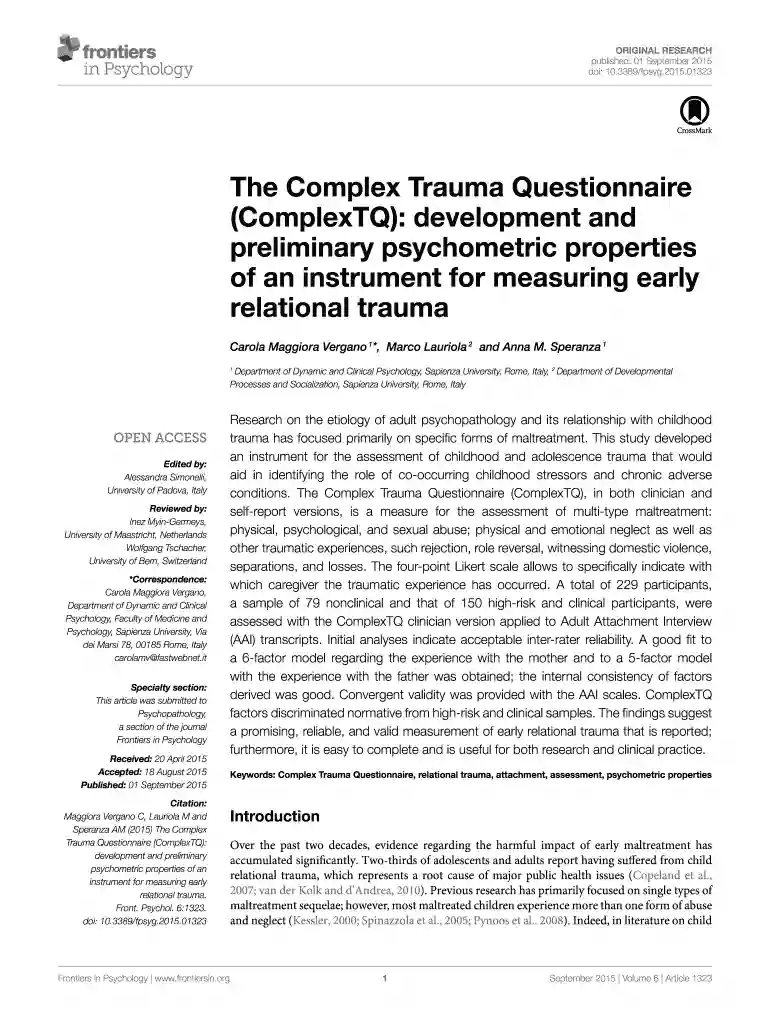
The Complex Trauma Questionnaire (ComplexTQ) is a specialized instrument designed to assess early relational trauma in children and adolescents. It addresses various forms of maltreatment, including physical, psychological, and sexual abuse, along with neglect and other traumatic experiences. This questionnaire is an essential tool for professionals seeking to identify trauma's impact on later psychological health.
The ComplexTQ entails several critical components that make it a robust tool for trauma assessment:
Using the ComplexTQ requires careful consideration to ensure accurate results:
Completing the ComplexTQ involves several structured steps:
Employing the ComplexTQ in practice offers numerous benefits:
The ComplexTQ is primarily utilized by:


Professionals might use the ComplexTQ in scenarios such as:
Understanding the ComplexTQ requires familiarity with specific terms, including:
The ComplexTQ must be used within the boundaries of legal and ethical guidelines:
Several versions or related tools can be used in conjunction with or as alternatives to the ComplexTQ:
By understanding the ComplexTQ's applications and methodology, professionals can effectively use it to assess trauma's long-term effects on individuals and tailor interventions to support recovery and improve mental health outcomes.
We've got more versions of the complextq form. Select the right complextq version from the list and start editing it straight away!
| Versions | Form popularity | Fillable & printable |
|---|---|---|
| 2015 | 4.1 Satisfied (39 Votes) |
At DocHub, your data security is our priority. We follow HIPAA, SOC2, GDPR, and other standards, so you can work on your documents with confidence.


